Fitch confirms Poland's rating at A– with a stable outlook and raises Polish GDP forecasts
21:51
The Fitch agency confirmed the long-term rating of Poland in foreign currency at A– with a stable outlook, the agency said in a press release. At the same time, for methodological reasons, the short-term foreign currency IDR rating was increased to F1 from F2.
According to the agency, the current level of long-term foreign currency rating offsets on the one hand a diversified economy, stable economic growth in recent years, and a strong macroeconomic framework, and on the other hand governance indicators and income levels below the rating basket.
"The stable outlook for the rating reflects the resilience of the Polish economy to the shock related to the pandemic, the expected support for economic growth from the EU Reconstruction Fund and the agency's expectations that after a strong deterioration in the budget deficit and public debt levels in 2020, both indicators will improve in 2021," Fitch added.
There are methodological reasons behind the increase of the short-term foreign currency rating – the improvement of Poland's international liquidity position.
The agency raised the forecast of Poland's GDP growth for 2021 to 5.2 percent from 4.4 percent, to 4.5 percent in 2022, and to 3.8 percent in 2023. Economic growth forecasts assume support from the EU Reconstruction Fund. The current lack of acceptance by the European Commission for the Polish National Reconstruction Plan, which is the basis for the disbursement of funds from the Fund, has, in Fitch's opinion, a political basis and does not pose the risk of canceling the granting of funds to Poland.
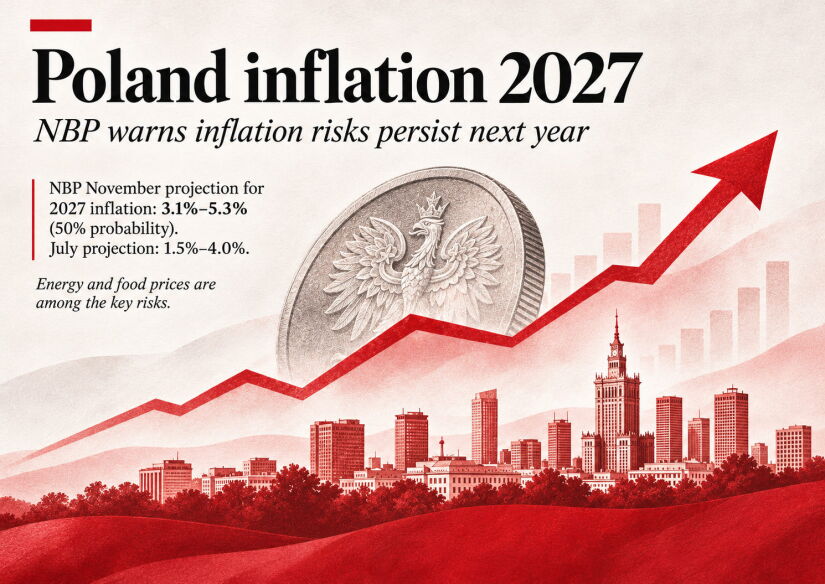
According to Fitch's forecasts, inflation in Poland on average in 2022 will amount to 3.9 percent, and in 2023 to 3.6 percent. The agency estimates, commenting on a 5 percent inflation reading for July, that although regulatory factors, food, and some services contributed in part to price increases, at the same time there is a growing demand-driven inflationary pressure.
(PAP)