New Public Finance Act carries the risk of Poland's indebtedness exceeding its actual needs
21:00
Following the amendment to the Public Finance Act adopted by the parliament, the clause of returning to the application of the standard stabilizing expenditure rule will be extended to 2022. The new regulations extend the scope of this rule to state special-purpose funds, but at the same time, the expenditure of, inter alia, from the Covid-19 Prevention Fund.
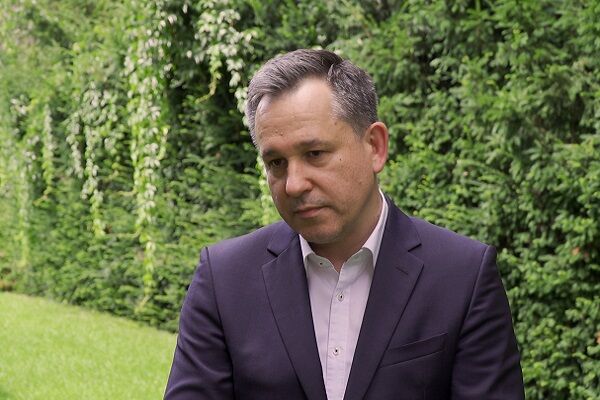
"On the one hand, the government closes one gate, and opens several large gates to bypassing the expenditure rule," noted Civic Development Forum (FOR) chief economist, Dr. Sławomir Dudek.
As he emphasizes, this increases the space for deepening the deficit.
On Wednesday, August 11, the Sejm rejected almost all of the Senate's 12 amendments to the Public Finance Act, which is to determine the way of returning to the stabilizing expenditure rule in the pre-covid form, adopting only an amendment of a formal nature. Thus, i.a. he gave the go-ahead to transferring budget expenditures and blocking them personally by the prime minister, although the senators wanted it to require the approval of the entire government.
"The Public Finance Act provides for the extension of the transitional period in the expenditure rule, so we can return to the expenditure rule a year later," Dr. Sławomir Dudek, chief economist and vice-president of the board of the Civic Development Forum, representative of the Society of Polish Economists, believes.
It is about a provision obliging the government to a savings budget after exceeding 55 percent of public debt to GDP, and according to the EU methodology, this threshold was exceeded, and at the end of the first quarter of 2021 it was 59.1 percent, i.e. it was just below the 60 percent limit set in the Constitution as impassable. However, even breaking the level of 55 percent would force the government to make austerity measures, such as a balanced budget for the next year (or at least one that would allow for a debt reduction), a wage freeze in the budget, or an indexation of pensions at a level no higher than the previous year's inflation.
(Newseria)