Poland broke another inflation record in August
23:30
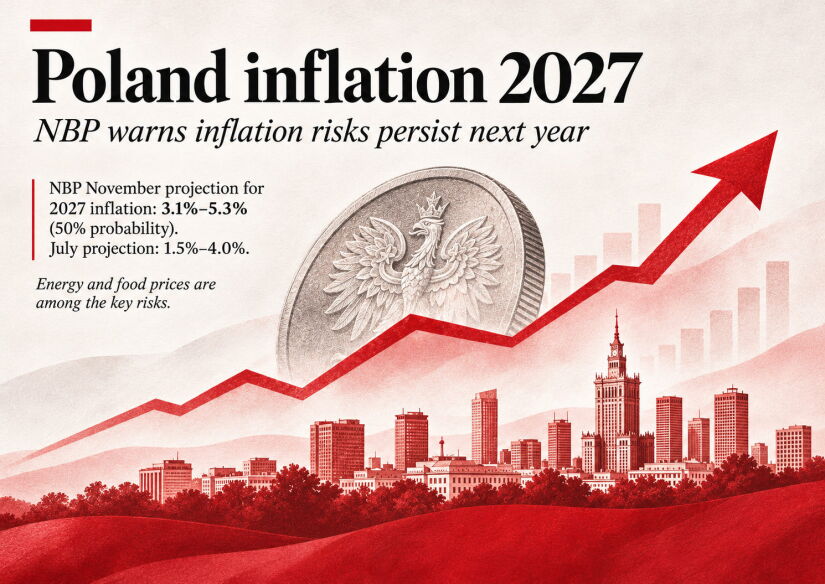
Inflation in August, according to the preliminary estimate published by the Central Statistical Office (GUS), amounted to 5.4 percent y/y, which is much more than analysts expected (forecasts at 5.2 percent). This is the same as in the US (5.4 percent y/y) and almost twice as much as in the euro area (3 percent y/y).
“The last time we had such high inflation was in June 2001. The reading shows that we are still dealing with a strong increase in the prices of energy (an increase of 6.1 percent y/y) and food (an increase of 3.9 percent y/y). Inflation is not expected to fall in the coming months. This increases the pressure on the Monetary Policy Council in terms of interest rate hikes. And the next meeting of the Council will be held on September 8. Simultaneously with inflation, we got to know the GDP reading for the second quarter – it amounted to a record 11.1 percent y/y. Consumption increased by 13.3 percent y / y, an increase in investments by 5 percent is also important. y / y,” Paweł Majtkowski, eToro market analyst in Poland, said.
"Such high inflation means that annual bank deposits with average market interest rates, completed in August 2021 (assumed in September 2020) brought a real record loss of over 5 percent," the analyst added.
According to Witold Gadomski from Gazeta Wyborcza daily, the pro-inflationary policy of the NBP will hurt the economy in the long run.
"The NBP conducts monetary policy in such a way as to help the government regardless of the long-term consequences for the economy and society. It does not implement Article 3.1 of the Act on the National Bank of Poland, which says that the primary goal of NBP's activity is to maintain a stable level of prices, while supporting the government's economic policy, as long as it does not limit the basic goal of the NBP," Gadomski wrote.
In his opinion, the central bank buys government bonds from commercial banks, thus facilitating debt financing. Interest rates have been cut virtually to zero, which reduces the cost of servicing the government debt, but increases the hidden inflation tax that holders of bank deposits pay.
"What's more – the debt, which this year will reach 60 percent of GDP this year, according to the Ministry of Finance's forecasts, is actually decreasing thanks to inflation and artificially lowered interest rates. Economists call this a financial repression," the journalist added.
(WBJ, Gazeta.pl)