



Cloudy forecast
15:33
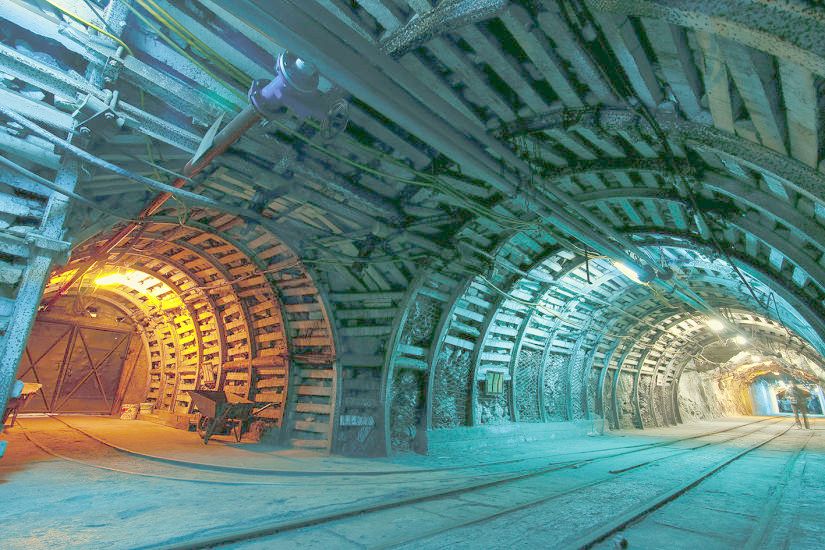
The largest miners’ protests in years forced the government to back down from a proposal to dissolve four mines in the Silesia region. Both the trade union members and Prime Minister Kopacz announced the agreement as a grand success. But who really won?
By Sergiusz Prokurat
Coal currently provides 40 percent of the electrical supply worldwide. It is the second source of primary energy after oil and also the most important source of electrical energy. Poland has large coal deposits and this is why the country, as one of just a few in Europe, bases over 90 percent of its energy security on coal. Utilizing already operational mines and considering planned investments, 19 billion metric tons remains available for extraction. This is roughly a 50-year supply. Another 25 billion tons may be exploited by new investments. And yet paradoxically, Poland, despite being one of the main coal producers in the world and a major exporter, simultaneously imports this resource. Furthermore, the export and import numbers are basically equal – in 2013, we sent 9.6 million tons abroad and imported – mainly from Russia and the Czech Republic – 10.8 million tons.
However, coal in Poland is a political subject. For 25 years it has been stirring emotions and is the cause of frequent strikes and protests, such as the one from 2003, when miners wreaked havoc in the capital and got just what they wanted.
In early 2015, a new round of intensive miner protests took place. Some miners protested underground. Union leaders organised protests, street marches, blocking railways and roads. All this with the support of the inhabitants of Silesia. Upper Silesia has not seen so much turmoil in years. The reason for the unrest was the reform plan for coal mining company Kompania Węglowa, which is basically a financial corpse. This problem could not be ignored any longer – soon KW would have to announce its bankruptcy. The company currently has losses of PLN 200 million a month, with PLN 42 being added to each ton of coal it extracts. During 11 months of the previous year, KW lost PLN 1.14 billion on coal sales, and its liabilities at the end of November 2014 amounted to PLN 4.2 billion.
Prime Minister Ewa Kopacz placed a condition on the survival of the largest coal company in the European Union, which employs a total of 47,000 workers. She demanded the liquidation of the worst-performing mines – Brzeszcze, Sośnica-Makoszowa in Gliwice and Zabrze, Bobrek-Centrum in Bytom and Pokój in Ruda Śląska. The four facilities together with the Piekary mine generate nearly 80 percent of the company’s losses, and this to an astronomical tune of PLN 800 million a year. Up to 3,100 people were to be out of work in return for severance packages, whose maximum amount in the case of miners would amount to two years’ wages. This was not to the liking of the trade unions. The opinion polls showed that the miners’ strike is backed by 68.5 percent of Poles and that was a significant factor for the government to strike a deal ASAP.
The protests finally ended with the signing of an agreement between the government and the unions. Prime Minister Kopacz made a TV appearance, thanked for the compromise and spoke about a repair program for Polish mining. However, the agreement does not solve the problems, because no facility will undergo liquidation, and all workers have guaranteed employment. The majority of the company’s 14 mines will be taken over by a new state-owned company (Spółka Res-
trukturyzacji Kopalń), while the four mines earmarked for closure are in line to be merged with existing state-controlled energy firms. That move makes it possible to recapitalize mines with public money in accordance with EU laws, however without serious changes and reforms the problem will linger. Mines are spending too much and have outdated technology. The agreement wasn’t the only solution. The other one, privatization, wasn’t seriously considered, even though Selena FM owner Krzysztof Domarecki had publicly expressed interest in taking over some coal mines from Kompania Węglowa.
The result of the negotiations is not a surprise. No government in Poland has yet won with the miners’ trade unions. This time was no different. After the miners started protesting underground, their wives came to Warsaw, railways and roads were being blocked in Silesia, which could lead to broader social unrest. The government was quick to surrender. This led to the danger of more protests, which in an election year would be political suicide for the ruling party.
[caption id="attachment_86030" align="aligncenter" width="300"] Image: Shutterstock[/caption]
The escalating crisis in the state coal mines has been caused by three reasons. The most important of these is the proprietary oversight of the mines by the government, which has lead to many pathological practices, including nepotism, the supremacy of trade unions over market inertia. Most mines only work five days a week, and due to long arrival times and numerous pauses the effective work time is three to four hours. In the 1980s, when the government was able to provide a monopoly on coal trade, not allowing private mines to appear and creating very high tariffs on imported coal, this industry worked. Now, even though state-owned Polish mines are profitable in some years, especially in those, when coal price is peaking, they still lack adaptation abilities.
The agony of state mining was prolonged after the EU accession due to a lack of serious incentives to compete. It’s too comfortable to function as a state-owned coal mine in Poland, meanwhile the EU’s search for cleaner energy and a cut in subsidies is putting pressure on Europe’s coal-mining industries. Currently, the way to solve the problem of Polish mining is the complete privatization of all mines and limiting miner privileges, including the huge budgetary burden of miners’ pensions. The individual cases of privatized mines such as Zakład Górniczy Siltech in Zabrze or Przedsiębiorstwo Górnicze Silesia show us that profitability on the mining market is possible. They extract two to three times more coal per worker.
The second reason for the current crisis in Polish coal mining is the “shale revolution” in the US and Canada. Cheap shale gas has caused lower coal and oil consumption in the US economy. And because natural gas cannot be sent without the right infrastructure, American miners have flooded the market with black coal. Add to this production in South Africa, Australia and Russia. Currently, millions of tons of coal worldwide are waiting for buyers, meanwhile workers from the coal-mining industry are clamouring for a complete ban of cheaper imported coal from abroad. This would be a huge loss for the Polish economy, because electricity plants would be forced to produce electrical energy at higher prices than they would thanks to cheaper foreign coal. In consequence, bills for electric energy would rise.
[negative]Polish coal mining is in deep crisis. The lucrative contracts for delivering coal to Western Europe have run out[/negative]
The third reason in terms of importance is the “fight against global warming” in the European Union, where coal is being replaced by natural gas, “green energy” and nuclear. Coal is the greatest pollutant out of all fossil fuels, and is responsible for 43 percent percent of carbon dioxide emissions from energy production worldwide; meanwhile, the energy security of Poland is mainly based on coal whose use largely contributes to climate change. The European Union wants to reduce overall greenhouse gas emissions by 20 percent compared to 1990 levels, meaning that fossil fuels would have to be substituted with something else.
Polish coal mining is in a deep crisis. The lucrative contracts for delivering coal to Western Europe have run out. In the north and east of Poland, cheaper Russian coal or wood is used for heating. Coal extraction is uneconomic because at times its extraction costs are above its sale price. Thus Poles are subsidizing an ineffective industry and costly worker benefits awarded back in communist times under very different conditions. The problem also lies in the lack of intention in reforming organizations such as Kompania Węglowa. Other facilities, which need deep overhauls, may also come back to haunt the government. Perhaps the problem of liquidity of Kompania Węglowa will return in a couple of months and once again protesting miners will demand support. The only positive effect is that miners and trade unions already know that they have to start realizing that things will never be the same again.


