



Funding Culture
16:01
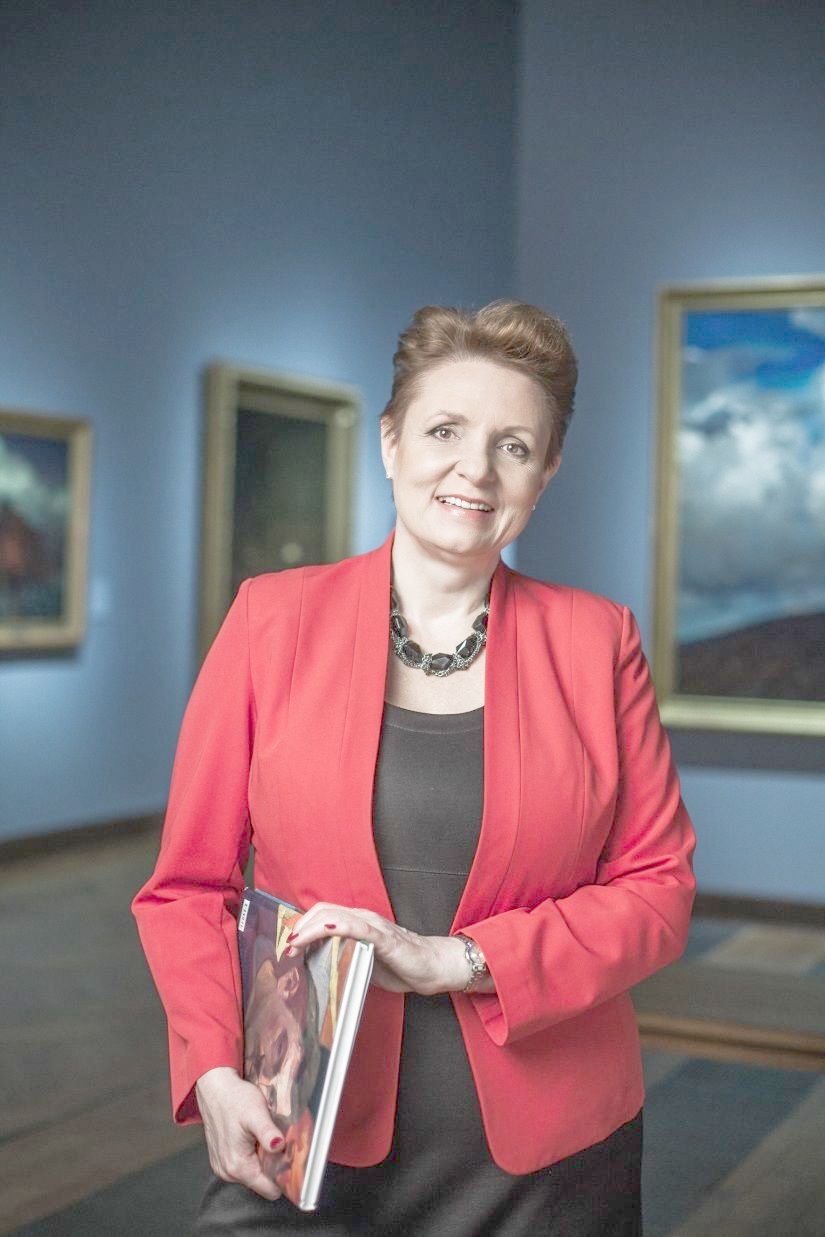
Małgorzata Omilanowska, Minister of Culture and National Heritage, talks with WBJ Observer about securing the equality and freedom in activity of all cultural subjects, the position of culture in strengthening social capital and economic development, ways of distributing state and EU funds for culture and the growing participation of Polish business in financing cultural events
Interview By Ewa Boniecka
WBJ Observer: Many events connected with freedom of expression, like lately the attack in France, show that with today’s global communication technology, the issue of freedom of expression is becoming a subject of sharp confrontation between societies with different political, ethical and moral values. While in democratic societies the confrontations between different views regarding freedom of expression are shaped by a framework of laws, they are often influenced by the cultural policy of the state. How do you see this role as the Minister of Culture?
Malgorzata Omilanowska: The prevailing role of the minister of culture is making sure that all subjects in the domain of culture are acting according to the law. They have to obey national laws regarding the functioning of cultural institutions and also laws applying to events connected with freedom of speech and artistic expression. I want to stress that in Poland we have a law forbidding the offense of religious feelings. However, what seems to be most important is to make sure that all subjects and communities acting within the framework of the law have freedom of expression, have their place in culture and can fulfill themselves through culture. Discrimination due to religion, ethnicity or any other reason is not allowed in the cultural policy of the state. All groups in society have equal rights to express their needs and aspirations in the field of culture.
When a big controversy erupted associated with the withdrawal of the performance of “Golgota Picnic” from the festival in Poznań due to the protests of some religious groups, you defended the right to present the performance.
Yes, I expressed such an opinion, which referred to the right of engaging in any artistic activity within the framework of the law and my statement did not have any ideological context.
What financial instruments do you have for conducting cultural policy?
[caption id="attachment_86043" align="alignleft" width="300"] Image: Ministry of Culture[/caption]
The Ministry of Culture has at its disposal a substantial amount of money, which is distributed for various programs and undertakings in the field of culture. Some of that money is distributed through contests organized by the local governments and non-governmental organizations and the competition is quite strong.
It is sometimes very difficult to make sure that Poland’s diverse cultural scene is fully represented and that all cultural institutions requesting state support receive public funds. The decisions are taken by established special committees of experts and not due to personal inclinations. They evaluate the institutions’ and artistic groups’ requests and make a well-informed decision.
I am aware that this system of fund distribution, which has been functioning already for long time, is not perfect. Members of the committees, however qualified and respected, also have their own preferences. The Ministry of Culture constantly seeks to improve the system of distribution of state funds. The goal of this process is the securing of objectivity and selection of the best and most interesting projects and avoiding any ideological preference towards any political viewpoint.
Some analysts have expressed opinions that culture is marginalized by many Poles and that government authorities do not regard culture funding as a truly important task and obligation. Meanwhile, many artists and cultural activists complain that state funds for culture are too small. How do you assess this?
I do not agree with this opinion. The facts show that the condition of Polish culture is strong. Polish theater and films have gained international recognition. There are many interesting art exhibitions, cultural festivals and artistic events and new concert halls and museums are established, like the Museum of the History of Polish Jews or the European Solidarity Centre. Naturally, everybody hopes for more money for culture, but the fact is that every year the amount of money the state provides for culture is growing. The amount of money at the disposal of the Ministry of Culture has risen from 0.54 percent of the national budget to 0.93 percent, from PLN 2 billion to PLN 3.5 billion. If we add the funds for culture which are at the disposal of local governments, the amount would reach close to 1 percent of the budget. And in the new financial framework of the European Union for 2014-2020, Poland is on top of the list of members receiving funds for regional development, the protection of historical monuments and culture as well. This funding will reach €1.4 billion.
Lately, a very interesting report was published by the European Union, presenting the role of culture in the economy. The report states that the culture sector is the third biggest employer in the EU. In 2012, it employed 7 million people and was worth €505 billion. Does this mean that culture is over-commercialized?
I think that every aspect of culture has its place. After the change of the system towards a democracy and a market economy, the prevalent thinking in Poland was that culture should be a source of profit and should be an important element of economic development with the idea: today I invest in culture, tomorrow I reap profits. We have transitioned smoothly to the commercial distribution of films, book selling, organization of pop concerts. Some sectors of culture were possible to commercialize, whereas others were not and are still not commercially viable in Poland or in any other European country.
If you ask me about the role of culture in the economy, in my view, what is more important is the method by which participation in culture and its consumption create social capital. Building social capital provides an economic impact in the long run, because it is a process that makes the consumer of culture a more creative person, who understands the world around him/her better. Such a person’s social competences make him/her better prepared for work, for being more innovative. This will have a positive impact on economic development. In cultural processes, I see, above all, the possibility for the development of social competences of employees as well as employers. And a very important aspect of culture is building social ties, building people’s identity and sensitivity, so they can become more conscious participants in local communities and state institutions. Looking at the whole cultural environment, it is obvious how culture upgrades the quality of social and economic life and inspires people to create new jobs. I would point to its crucial role for our country’s overall development.
In many European countries, along with state support for cultural institutions, business plays a very important role in financing, so there is a mix of public-private financing for culture. In Poland, the leading theaters and museums have steady state support, but in recent years private theaters, local private museums are being established and most of them do not receive money from the central budget. Do you predict that the European model of public-private sponsorship of culture will develop in our country and to what extent is Polish business already participating in financing of cultural institutions and events?
I think that a public-private model of culture financing will develop in Poland. There is a growing interest on
[caption id="attachment_86042" align="alignright" width="300"] Image: Ministry of Culture[/caption]
the part of business in co-financing cultural institutions. The most spectacular examples were Jan Kulczyk’s foundation, which donated PLN 20 million for the Museum of the History of Polish Jews and Wojciech Pawłowski’s financing of the reconstruction of the Faras Gallery at the National Museum in Warsaw. I have observed that big firms who conduct business in Poland have devoted expenditures for supporting cultural events. Banks are very active here. What is noticeable is that businessmen support not only highly visible cultural institutions and events but also many local cultural initiatives and smaller institutions.
We also have many examples of businesspeople getting involved in the recovery of art objects lost by Poland during World War II and after 1945. After conducting successful negotiations, the Ministry of Culture needs to pay for transport and lawyers’ fees. Private businessmen have helped cover extra costs and secured the safe return of artifacts belonging to Poland.
There is one important problem, which your ministry was not able to resolve: the fee for public television and public radio. It was announced nearly two years ago by your predecessor that a new bill abolishing the present payment form will be passed. At the same time, a new simple and effective fee will be introduced. How do you want to deal with the situation in the midst of a financial crisis at TVP?
It is a problem I have inherited as the minister of culture. The number of Poles paying fees for TVP and Polish Radio is very small. This income covers only 20 percent of the broadcasters’ budgets. So, at present, there are a lot of commercial advertisements. We have the highest proportion of ads among all public televisions in the European Union and this is highly annoying for many users of public TV and public radio.
According to the law, these institutions are state-owned companies, so grants from the state budget are forbidden because the European Union specifically excludes such forms of aid. Currently, the Ministry of Culture can support only cultural programs and only on a level that does not exceed the EU recommendations. The preparations for introducing a new bill for fee payments has taken much longer than was predicted two years ago. It is necessary to convince the average Pole and to sway general public opinion towards funding for public TV and public radio. The parliament needs convincing as well. At the Ministry of Culture, various analyses are being made to find ways to solve the problem.


