



Hoping For Returnees
14:55
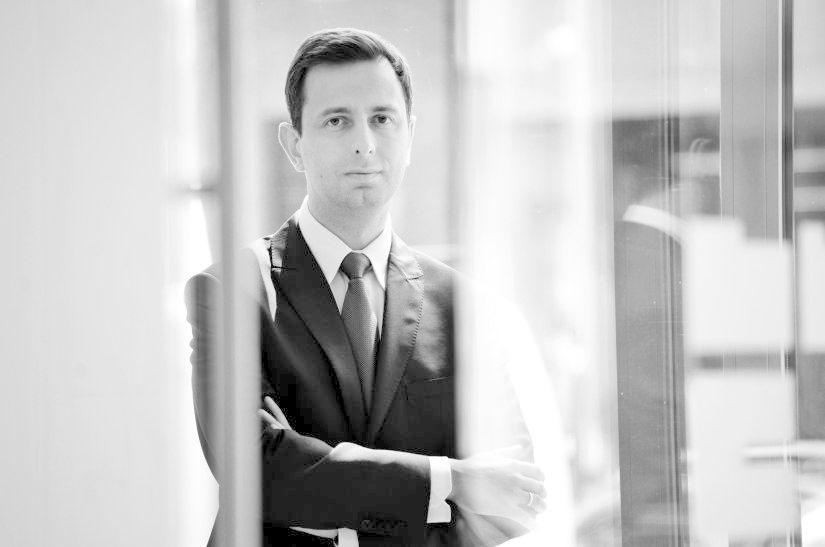
Władysław Kosiniak-Kamysz, the Minister of Labor and Social Policy, deputy chairman of the Polish People’s Party (PSL), sat down with WBJ Observer to talk about the government’s social and labor policy, reducing unemployment, establishing a new forum for dialogue between trade unions, employers and the government and PSL’s chances in the presidential election
By Ewa Boniecka
WBJ Observer: We are talking at a time of protests organized by various groups against the government’s labor policy. How do you see your ministry’s role in reducing social tensions, considering that the Trilateral Commission for dialogue between trade unions, employers and the government hasn’t met in two years?
Władysław Kosiniak-Kamysz: There is an urgent need to open up the dialogue between trade unions, employers’ organizations and the government. We are working to establish such a forum. On the basis of a proposal prepared during talks between trade unions and organizations of employers, my ministry is now implementing our suggestions and the project is in the process of being analyzed jointly by our experts.
We are already working in a group representing all three sides and now there are talks about establishing a rotating presidency of the new body. In my opinion, after the final evaluation of the whole document, there is a big chance for approving it even before summer holidays. The new body will be named the Forum of Social Dialogue and should have an effective formula for better understanding of the economic aspects of labor problems in our country, allowing representatives of government, trade unions and employers to negotiate and thus limit picketing in the streets.
Within business circles, an opinion is circling that the government is not communicating with entrepreneurs, is afraid of trade unions and that the present bill about trade unions, established in 1991, does not fit the present economic and labor conditions. What is your reaction to this?
I have regularly invited representatives of trade unions and employers for talks. I am in favor of strong trade unions and strong entrepreneurs’ organizations and for a state model, where the government pays attention to both sides and consults both groups on decisions concerning labor problems.
[negative]The Forum of Social Dialogue should have an effective formula for better understanding of the economic aspects of labor problems in our country , allowing representatives of government, trade unions and employers to negotiate and thus limit picketing in the street[/negative]
One of the biggest social problems is unemployment, especially among young Poles. You have initiated a reform of the labor offices in 2013. But we’ve heard some voices point to financial gratification-seeking behavior instead of improvement in the labor market. What’s your opinion on the matter?
I disagree with this version of the story, because I do not see anything wrong in financial gratification for managers. The focus is on effectiveness of labor offices, which cooperate with private agencies to help unemployed people return to the job market, especially those who have been jobless for a long time. This has been working. For the first time in a few years, the rate of unemployment dropped about 2 percentage points. In 2013, it was 14 percent, and at the end of 2014, it was 11.5 percent. In 2014, the labor offices register more than one million job offers, 25 percent more than the year before. This positive trend continues.
But still, unemployment in Poland is high and Poles are emigrating to the West for jobs, while consecutive governments have not presented any program to convince those people to return to their country. What should be done in your view?
Emigration for jobs is a complicated problem as are the motives of people who decide to leave Poland. According to a recent report of the Central and Eastern Europe Development Institute, the trend of job emigration from those countries is weakening.
[caption id="attachment_85810" align="alignleft" width="300"] Image: shutterstock[/caption]As to the lack of a formal program encouraging Poles to return, it is not a matter of having a plan on paper, because the issue of encouraging Poles to return is linked with the improvement of the quality of life in Poland, improvement of the situation of families, improvement of the job market, better salaries, longer maternity leaves and all those social problems that are being dealt with now by the government. So, only the synergy of all these actions, along with cooperation at the European Union level for fighting unemployment and creating new jobs, can bring results. I want to stress that our attitude towards social policy in Poland has dramatically changed for the better.
What do you consider to be the most urgent policy currently addressed to families?
Along with the continuation of parental leaves, construction of daycares and application of the Charter of Big Families; starting in January 2016, we will introduce regular financial support for unemployed mothers and students who have children and are on parental leave. As our population is aging, there are various forms of support For seniors as well, such as the Senior-Vigor program.
The foundation for all those programs is the maintenance of Poland’s economic growth. One can complain that there is not enough money for family policy, even while budget support is growing every year, but it’s not economically possible to fulfill all demands, not to mention the demagogic promises given by some opposition politicians. Certainly, the PO/PSL government is doing the most our state budget can provide for family policy. And the results are visible – last year there were 6,000 more childbirths than the year before.
The Polish People’s party is considered to be the party of moderation and pragmatism, referring to its long peasant traditions and conservatism, but is also pro-European and open to changes. Yet, there is now certain confusion regarding PSL, because of your reserved attitude towards the Ukrainian crisis and Russia’s aggressive policy, taking a stand that is different than the position of the government. What is your attitude towards this?
I think that the need for a cool evaluation of Polish interests is the most important. We have to support Ukraine. And if there is a Ukrainian request for the purchase of defense weapons, in my opinion, we should sell them on the condition that they are produced in Poland, which would be good for our armaments industry. On the other hand, the European Union should speak with one voice and no country should act on the matter by itself. I would not want Poland to stand ahead of the EU. Our task is to strengthen the unity of the European Union.
PSL has gained an opinion that it is willing to form a coalition with any party which wins the parliamentary elections. Is such an opinion justified?
No, it is not. We have a strong identity and program and have proved in the past that we are not a so-called turncoat party. We would never form a coalition with Law and Justice (PiS) and we are satisfied with the coalition with the Civic Platform (PO). I am a strong supporter of that coalition and I hope that we will win the coming parliamentary elections and our parties will govern together in order to develop Poland and satisfy the needs of the people.
You are in your second term serving as the minister of labor and social policy. Do you feel that you have strong executive power in implementing policy in your domain?
I have no reason to complain about my executive power. The number of bills we have passed during 40 months of my ministerial duties speak for themselves. These laws have brought fundamental changes in our labor and social policy. They are addressed to much larger groups of the society, focus on the people’s ability to use public funds better and to raise their own activity level on the job market.
You have underlined governmental legislative achievements, but what do you consider to be the biggest obstacles in the implementation of labor and social policy?
In my opinion, the biggest obstacle is the bureaucratic burden at the lowest levels. The number of papers which a Pole must produce while dealing with administrative matters in various offices is frustrating and harmful to the functioning of our state. Our task is to reduce the bureaucratic burden and build greater trust between the state and the citizens. I consider this to be the biggest challenge, we have to resolve to improve the quality of life in Poland. U


