Little chance for new right-wing in Europe: LSE
14:37
The European right has too many differences to be able to form a new, unified pan-European alliance, according to a report by the London School of Economics (LSE). The analysis is based on the voting results in the European Parliament in 2014-2019. They were ranked according to the votes indicating "complete disagreement" between MEPs or "complete agreement".
The results obtained showed that the radical right in the EP is much more divided than any other political group. These divisions are even deeper between the right in the west and east of Europe.
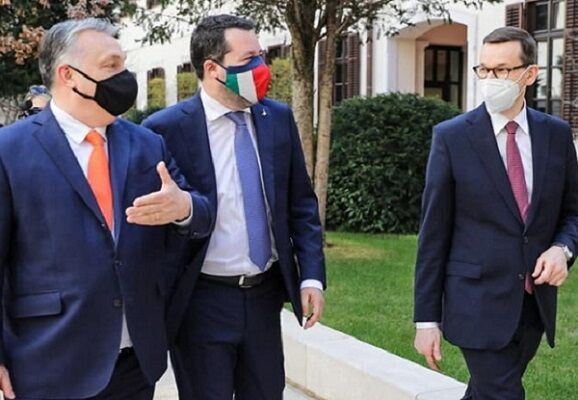
The report was presented at a time when talks are underway between the leaders of Poland, Hungary, and the right-wing League in Italy on the creation of a new political force at the European level. On April 1, prime ministers Mateusz Morawiecki, Viktor Orban and the head of the Italian Liga group – Matteo Salvini met in Budapest, during which politicians discussed their vision for the future of Europe.
However, LSE analysts point out that such cooperation is unlikely due to too deep differences between European right-wing politicians. The document stated that the differences largely relate to economic issues, such as regional development, international trade, or relations with China and Russia. According to the authors of the report, economic and political nativism, i.e. the need to maintain one's cultural identity, additionally divided by East-West perspectives, makes such a right-wing alliance unlikely. Matthias Diermeie of the LSE points out that “there is little chance that the differences between right-wing politicians can be resolved through the alliance. It would be so weak that it would make no sense."