



Looking back to the future
15:41
It’s crystal ball gazing time again, when we reflect on the previous year and try to
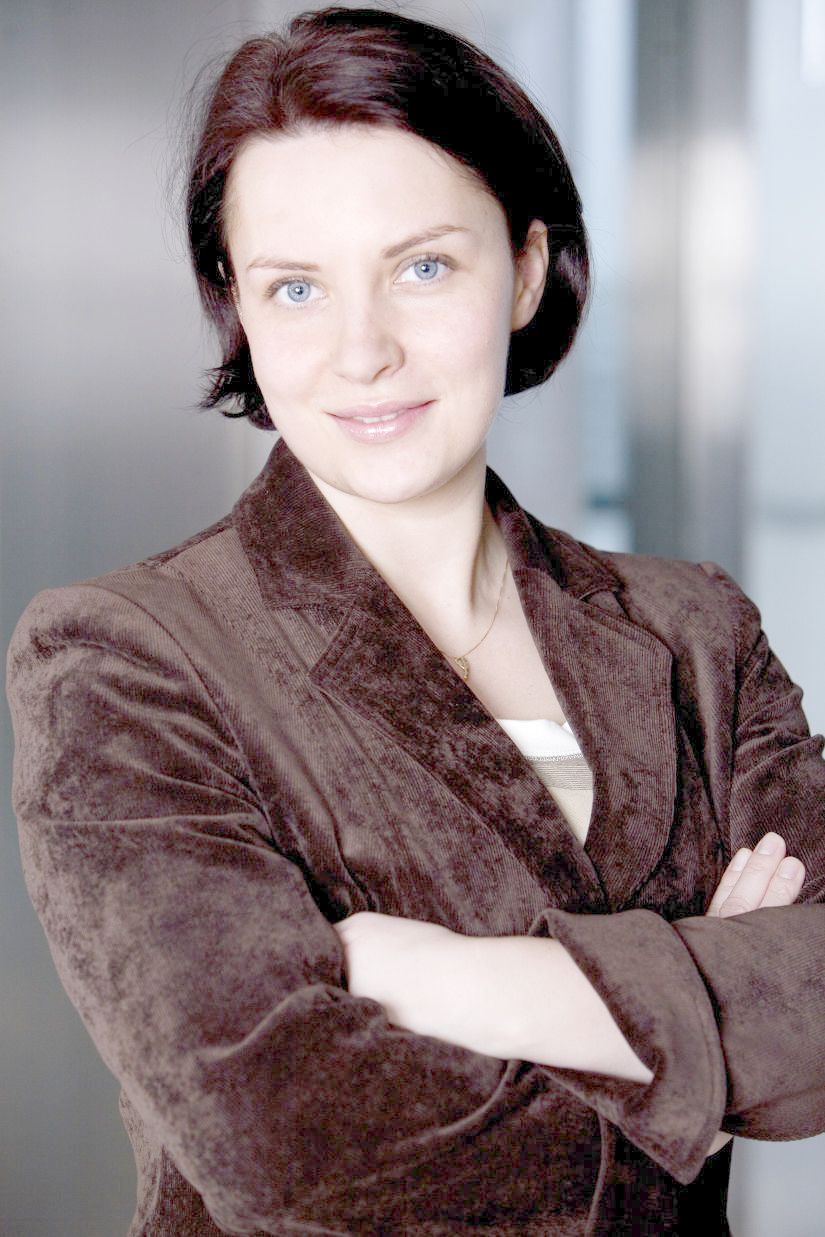
predict the trends that will shape the current new year. We spoke with Joanna Mroczek, the head of research consultancy and marketing at CBRE Poland
Interview by Alex Hayes
WBJ Observer: What was the biggest surprise of 2014?
Joanna Mroczek: Frankly speaking, there were no big surprises – things are progressing as expected. In fact, the big events that might be seen as a surprise rather confirm the general positive trends. These are for example large investment transactions such as Rondo 1, Metropolitan, and Poznań City Center.
We could call the purchase of Złota 44 by Amstar a surprise, but on the other hand it only shows that there are no hopeless situations and Poland is attracting foreign investors that believe in its potential. Poland is interesting for different types of capital coming from Europe and the US, but also from Dubai.
Not only are there funds, but also developers looking for new sites and new opportunities, even despite the huge pipeline and intense competition. Global companies always have a wider perspective and a different perception of the situation and that difference has always been seen as a surprise from a local point of view.
I understand that now office take-up is at a cyclical low while there is a lot more space coming onto the Warsaw market. Is that true?
The 2014 total office take-up in Warsaw was slightly below the 2013 level and this was due to the situation five years ago when many fewer leases were signed in a crisis year. However, 2015 should see continued growth as companies are still very active. A lot of corporations see the current opportunity and they are looking for a better office in a better location, corresponding with their growing needs and flexible enough to adjust to a changing business environment.
Newcomers are mostly coming from the outsourcing sector such as shared service centers and BPOs, which usually take up a lot of space. Warsaw, even if it is a little more expensive in terms of labor and in terms of rents, has comparable prices to regional cities in its non-central locations, while providing a larger choice of students and potential employees.
[negative]The retail market, whether it is e-commerce or not, should continue to grow and diversify, feeding the warehouse sector as well[/negative]
Is this the trend for the coming year?
I generally think that this sector has been constantly getting stronger, expanding not only in Wrocław and Kraków, but also in many other locations. The service sector has become one of the most important in the Polish economy and a mature approach of the cities is encouraging newcomers and existing companies to expand. The international situation, in countries such as Russia and Ukraine, is also helping us to some extent in terms of offshore investments.
CBRE is talking of a downward pressure on rents. Is this set to continue for some time?
For sure. Because of the oversupply and because there is a lot of new space under construction, particularly in the city center, which directly impacts the prime headline rents. There are buildings like Rondo 1, which will always keep high rents, but there is only a small number of these prime buildings. Average rents will continue to fall, at least till the end of 2016, when hopefully the majority of the new space, such as Warsaw Spire and Q22, should be absorbed to some extent.
Moving onto the industrial and warehouse sector, was 2014 a successful year?
I think that it was the best performing sector in fact. Because of the expansion of logistics operators, related to growing e-commerce and industrial investments, logistics assets have attracted a number of investors and the market has been revived. This was the sector where you could see much of the growth in rents resulting from the drop in vacancy rates and a lot of new speculative construction being launched.
There’s been a lot of talk about e-commerce lately. How much do you expect this sector to grow?
CBRE has stated that e-commerce takes up around 5 percent of the warehouse space. The e-commerce sector has been developing rapidly for a few years. When I see Amazon coming to Poland, sooner or later they’re going to enter the market with their sales strongly competing with others. Many of these companies will have to reorganize, to speed up deliveries for example, which means that a lot of parcel delivery companies will have to change their locations and adjust to the customers’ expectations and this is going to impact their locations.
It’s difficult to say in what direction it’s going to move, but for sure it will cause movement to more opportunistic locations. I would expect a growing demand for small business and warehouse units within the cities, which is difficult to provide due to land prices.
On the other hand, Amazon’s decision to enter Poland as an investor will encourage others. The retail market, whether it is e-commerce or not, should continue to grow and diversify, feeding the warehouse sector as well. We see the take-up of warehouse space at a level of 2 million sqm per year and for the last four years it’s been quite stable. On average it’s been quite high and quite stable and this will be the base for investors’ and developers’ strategic decisions.
[negative]If large projects don't find tenants, then the whole market is going to have problems[/negative]
You’re saying that there’s not going to be any rapid change but would you say that e-commerce is nonetheless revolutionizing the market?
I think it is happening, this revolution. At the beginning, when e-commerce was starting up you could order things that were stored in Western Europe. In some cases, you could buy things and they were shipped to you from France or Spain. So some time ago, when you were buying things on Zalando it took you two weeks to get the goods. Right now they do it within a few days so that means that they are adjusting to the needs of the market. The more orders they receive, the more they will need to move to Poland and organize their deliveries within Poland. Particularly in light of Amazon’s decisions, this revolutionary retail thinking and adjustments will get stronger.
That also brings up the question of whether e-commerce is replacing traditional retail formats?
I don’t think so right now. Doing shopping in a mall is not only about buying things but also about spending time. And I think that e-commerce is making the malls try harder and of course this is a challenge. In some cases, such as electronics, they have changed formats and some retailers have already decreased the size of their stores, but at the same time the fashion brands simply need to try harder to provide better service, they need to advise the clients and e-commerce is forcing retail to reach for a higher level.
So I don’t think it’s going to impact malls because if you look at the number of new openings, it’s still high. Developers have moved from small cities to large cities looking for opportunities; high street retailing is becoming important, so I would say that e-commerce is making the retail market in Poland more interesting.
But is it true that there are no more locations for new malls in Warsaw?
There are still a few places where you could place a large mall in Warsaw. And mostly those places are former retail parks or locations where retail to some extent has existed like Centrum Jupiter on ul. Towarowa or first generation centers where you have Tesco or Auchan. These locations have already been recognized and can be expanded into something more exciting.
I think that this is the safest way of expanding retail. When you look at totally new places it is more difficult because then there is already a lot of retail in existence and it is quite difficult to find tenants that would locate their stores one next to another. There are still districts, like Wawer and Rembertów, where you don’t have anything and the Promenada center is benefiting. I think that developers are rather trying to focus on those locations because if you are looking for another Złote Tarasy or another Arkadia or Galeria Mokotów, then it would be quite difficult to find a place.
CBRE reported that 21 brands entered the market last year, how many do you expect to come this year?
We are seeing a lot of restaurants opening; we have seen interested fashion retailers; we have seen American retailers coming but it all depends on the availability of the best units. There are some retailers looking for high street units and without a good opportunity they just don’t want to open anywhere else. There is no room for them in Złote Tarasy. They would like to have a brand with the first store in the best location and there aren’t many such locations. Because we are seeing new projects coming to the high streets, we should expect new retailers to come as well.
Over the past three to four years the development of high streets has been marginal. Why are you saying that it is sure to happen now?
We are seeing new projects coming on ul. Marszałkowska, Al. Jerozolimskie and Pl. Trzech Krzyży. Ul. Świętokrzyska has gone through a major improvement with the new metro line. Projects like Cedet, Centrum Marszałkowska and Ethos that will provide prime space are coming to mind, and we think that this is the moment when the high streets can improve.
So you think 2015 will be the year of the high street?
Let’s hope so. Perhaps not 2015 because those projects will be delivered in 2016. The agreements are being signed right now but it’s rather 2016 that will see new openings.
What are your biggest worries for the coming year?
I would worry a bit about the office market in Warsaw. Are tenants going to expand further and if not then who is going to fill this empty space? If large projects don’t find tenants, then the whole market is going to have problems. This also relates to the attitude of the city authorities in attracting new investors to Warsaw, who will not only buy real estate but also provide employment. I would not worry about other cities as the markets have been quite flexible and cautious there.
I always worry about the agency market. The market is becoming more mature and all the players on the market need to be open to more mature cooperation and trust as is the standard in Western countries. The market and particularly transactions should be more transparent and the value of the independent advisory should be highly appreciated. We can see this trend developing and in the longer term it should become stronger. Also the public sector is becoming more open to cooperating with advisers and is entering the modern real estate market.
Well we’ve already seen a few such deals. Is this a trend for the future?
This is a kind of trend and we see a number of modern office lease transactions signed by state-owned companies or public institutions. There are also Polish companies that previously couldn’t afford A class buildings. They have been located in C class buildings and right now they can afford B class buildings. The market is becoming mature and there are more and more opportunities appearing. Developers are becoming increasingly flexible and they see how they can find advantages even despite a very competitive environment.
The Polish economy has seen uninterrupted growth for a number of years now. Surely we can expect these good times to come to an end sooner or later?
But this is very moderate organic growth (3 percent expected in 2015). It’s not rapid jumps. We are still very much behind Western Europe in terms of salaries. In terms of investments, Warsaw has only half of its ring road, two metro lines and I think there is still lots to be done. I think that we don’t need to worry about our economy, as Poland has proved resistant and flexible enough following the global trends. We can see structural changes in employment and this may turn out to be a challenge. For example, forecasts show growth in technology sectors rather than public or financial companies. Such trends will for sure bring many changes, but I believe all are positive to the economy and real estate.


