Office must be better than home: research
15:15
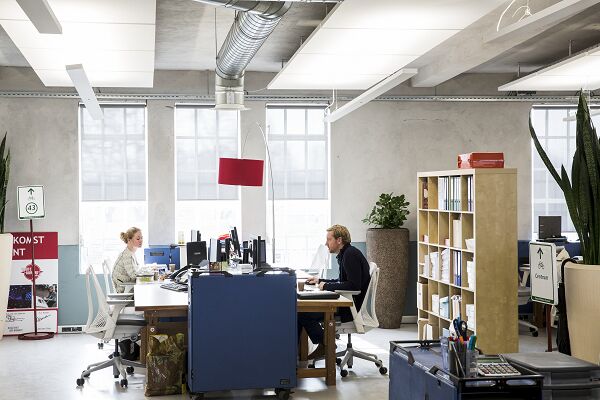
In the latest study, specialists from the research company Leesman focused on finding answers to what extent modern offices – launched from March 2020 – have lived up to the test of the "covid era". The survey results clearly show that what distinguishes a home from an office the most are better conditions for working in concentration and for video conferences and scheduled meetings – and this translates into a sense of greater efficiency.
“If we compare working at home with a noisy open space, a home will almost always win. Unfortunately, in modern offices, open spaces are often designed as if employees were to perform only tasks that do not require much concentration. Nothing could be more wrong," Magda Szubert from Ecophon Saint-Gobain, a company implementing acoustic solutions, said.
"Open space, if it is to survive, should be designed to reduce noise, provide greater privacy, and the ability to work productively without getting tired of excessive stimuli," she added.
Leesman reports drew attention to the problem of noise even before the pandemic – an average of 30 percent of employees was satisfied with the sound levels in the office, and 70 percent complained more or less. The acoustics of the interior were indicated as the decisive factor whether the office would be considered a place supporting effective work or not. The pandemic only highlighted the weaknesses of the existing work environments. The offices are now largely empty – not only for epidemiological reasons but also because employees choose to work from home. This is a signal that the arrangement of space must change in order to attract staff again.
“Good acoustics supports employees who perform their duties easier and better. Reducing unnecessary sounds makes people feel better at work and after work," Magda Szubert said.
The Leesman Index is the most comprehensive, independent study of work environments. They cover several thousand companies all over the world, including Poland. At the same time, they compare data collected on a continuous basis, since 2010, on a pool of over 800,000 employees from different continents and sectors of the economy.
(WBJ)