11:47 17 September 2026
PHU Lechmar Conference Maps Future of Military Energy
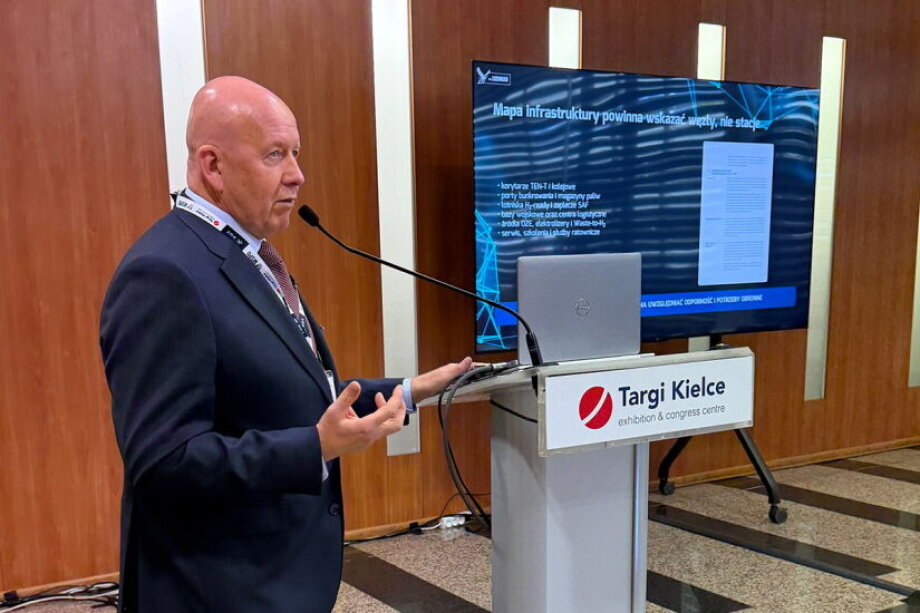












Kielce, 14 September 2026 – During the 34th International Defence Industry Exhibition (MSPO) in Kielce, PHU Lechmar organised a two-part conference devoted to the role of hydrogen, fuel cells, synthetic fuels and new energy infrastructure models in building the resilience of the armed forces. The sessions, held on 8 and 10 September, were moderated by Żaneta Kłostowska and Brig. Gen. Grzegorz Grodzki.
The starting point for both sessions was the premise that energy does not merely support military capabilities – it is one of the conditions for sustaining them. Modern reconnaissance, communications and command systems, drones, robots, microgrids and base infrastructure all require stable, resilient power supply. At the same time, concentrating the production, import, storage and distribution of fuel in a limited number of nodes can increase the vulnerability of the entire system to disruption and adversary action.
The experience of the war in Ukraine has shown the importance of decentralisation, redundancy and reducing dependence on long logistics chains. Every fuel transport to a forward base or unit involves personnel, vehicles and infrastructure, thereby increasing the exposure of the logistics system. For this reason, solutions that allow energy to be generated, stored and converted closer to the point of use are becoming increasingly important.
“The resilience of a state can no longer be measured solely by the size of its stockpiled fuel reserves. Equally important is the ability to generate energy locally, to store it, to convert it, and to make use of different carriers. The more distributed and flexible a system is, the harder it is to strip it of its operational capability” – Żaneta Kłostowska.
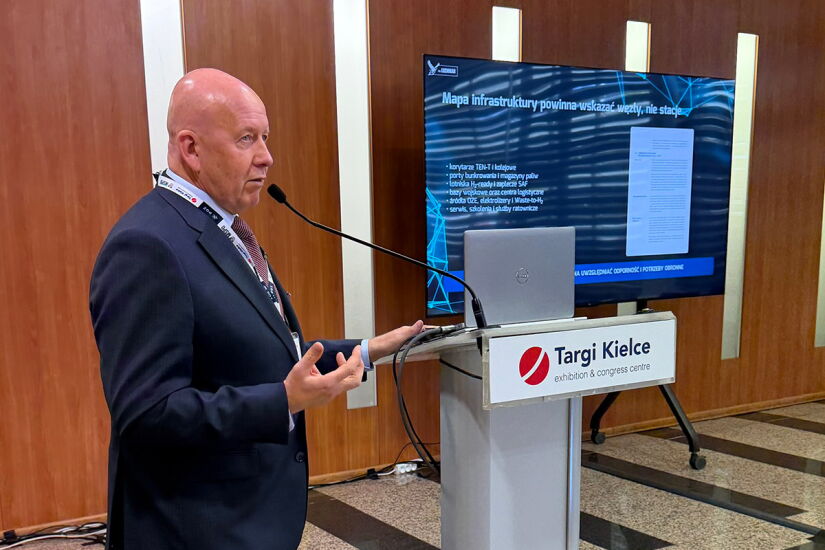
“Ukraine has shown us that today’s war is also being fought over access to energy, not only over territory. Every fuel convoy is a piece of logistics that has to be protected. Reducing the number of transports and enabling partial on-site energy generation increase the operational resilience of units” – Brig. Gen. Grzegorz Grodzki.
Experts presented the concept of a multifuel energy architecture, in which technologies are matched to the nature of the mission, the required degree of autonomy, available resources and existing infrastructure. In this model, hydrogen is one element of a broader system that also includes electricity, battery energy storage, conventional and synthetic fuels, and hydrogen-derived carriers.
The technical part of the conference covered various methods of hydrogen production, storage and transport technologies, as well as the possibilities of using hydrogen in energy conversion processes and as a feedstock for producing fuels and energy carriers. Power-to-X (PtX) ecosystems were also presented, covering the conversion of energy and hydrogen into end products tailored to the needs of individual sectors and users.
The discussion covered not only the parameters of the technologies themselves, but the entire value chain: availability of energy and raw materials, production, storage, transport, distribution, conversion, safety, operation and end use. It was noted that the real usefulness of a solution for the defence sector is determined by its ability to function under conditions of limited infrastructure, supply disruptions and the need for rapid restoration of capability.
Within such a system, hydrogen can perform various functions: it can serve as an energy store, as a fuel for fuel cells, as a feedstock, or as part of a local energy hub. Depending on the mission, it can work alongside batteries and renewable energy sources, and serve as a feedstock for producing other energy carriers. The key, therefore, is not to identify a single target technology, but to combine multiple solutions into one resilient architecture.
An important part of the discussion concerned the possibility of using and adapting existing energy, fuel, transport and logistics infrastructure. Transformation does not have to mean building an entire system from scratch. In many cases it is possible to integrate new technologies with existing storage facilities, terminals, distribution installations, and port, rail and airport infrastructure, as well as local energy systems.
Each such adaptation, however, requires an individual assessment of material compatibility, operating parameters, process safety, fire and explosion-protection requirements, and compliance with applicable regulations and standards. In practice, some assets can be used after relatively limited modernisation, others will require deep retrofitting, and some will need to be replaced entirely.
Retrofitting on the end-user side is equally important. Instead of replacing entire platforms, vehicles, generators or power systems, it may be possible – depending on the application – to modernise selected fuel, propulsion and power systems and to integrate new power sources with existing equipment. This applies, among other things, to generator sets, base infrastructure, selected rail and maritime applications, auxiliary systems and logistics.
“In practice, the question needs to shift from ‘what new technology should we build?’ to ‘which existing assets can we use, which require modernisation, and which need to be replaced?’” – it was emphasised during the conference.
Such an approach can reduce capital expenditure, shorten implementation time and make use of existing competencies and logistics chains. In the defence sector this carries additional significance, as it allows energy resilience to be increased gradually without making operational capability dependent on a single fuel or a single technology.
Experts also related the proposed architecture to the Polish context. The development of publicly available hydrogen refuelling infrastructure in Poland is still at the stage of scaling up, and further investments should be increasingly tied to actual demand, transport corridors and key logistics hubs. Locations that combine several modes of transport and multiple types of users may be of particular importance.
The EU’s framework for developing alternative fuels infrastructure reinforces the need to move from individual, isolated projects towards a coherent network. For hydrogen, this means building infrastructure in conjunction with heavy transport, public transit, logistics, rail, ports and airports. From a national security perspective, such a model also opens up the possibility of creating dual-use infrastructure.
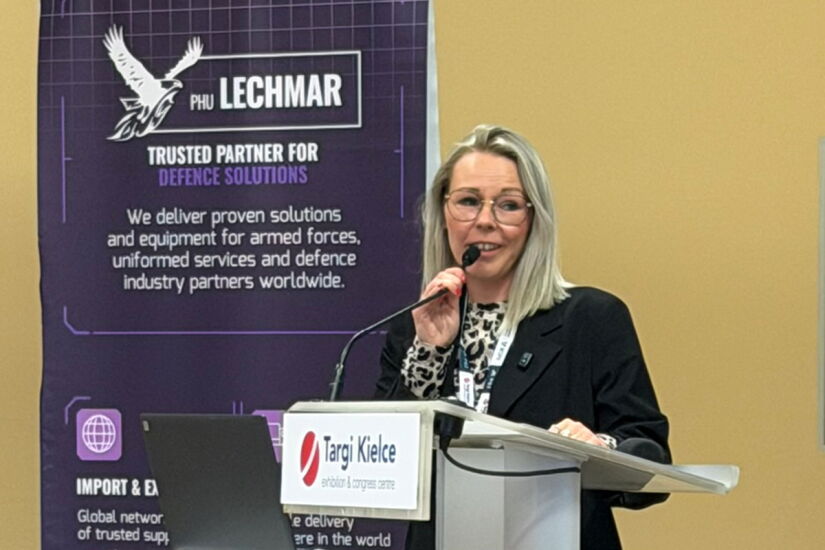
“We should not build hydrogen infrastructure in silos. Its value grows when the same hub can serve transport, port operations or airport needs, while also supporting the security and defence system in a crisis situation. That is precisely the dual-use logic – we are investing not only in fuel infrastructure, but in the resilience of the state” – pointed out Żaneta Kłostowska.
A dual-use model can improve the economics of investment, increase the degree to which infrastructure is utilised, and reduce the risk of creating assets intended for a single application only. At the same time, it requires security needs, fuel availability, supply redundancy, interoperability and the ability to rapidly scale up capability in a crisis to be taken into account at an early stage.
Conference participants emphasised that moving from the concept of a multifuel architecture to its practical implementation requires close cooperation between the armed forces, research centres and technology suppliers. A key element of this process is field testing and the certification of solutions under conditions close to real operations, rather than in the laboratory alone.
Attention was drawn to the need to standardise interfaces and energy-exchange protocols between different carriers, so that new systems can work with existing equipment without the costly replacement of entire platforms. Open standards and flexible architectures are becoming increasingly important in this context, allowing further technologies to be added progressively as the market and available infrastructure mature.
The total cost of ownership and the life cycle of new energy systems were also a significant theme. Alternative solutions may involve a higher purchase cost but lower operating costs, fuel logistics costs and costs of maintaining combat readiness over the longer term – factors that should be taken into account already at the procurement-planning stage, not only after implementation.
Experts agreed that the choice of a specific technology should not be driven by market fashion, but by an analysis of the specific operational scenario – the mission, the location, the available infrastructure, and requirements regarding reliability and speed of response.
“Introducing new energy technologies into the military is a process, not a one-off equipment purchase. It requires joint planning with industry, field testing, and building confidence in the reliability of these solutions” – emphasised Brig. Gen. Grzegorz Grodzki.
The main conclusion of the conference was a shift away from thinking of hydrogen as a single fuel, towards a distributed, redundant and multi-fuel energy architecture. Hydrogen does not replace other energy carriers – it complements them wherever its use can increase autonomy, flexibility and operational resilience.
In practice, the future energy system of the defence sector will combine various technologies: grid and local power sources, battery energy storage, liquid fuels, hydrogen, and fuel cells – depending on the application. The choice of solution should be driven by the mission profile, the availability of infrastructure and fuel, safety, interoperability and logistics.
PHU Lechmar has announced its continued commitment to developing solutions that increase energy and logistics resilience, and to continuing the expert cooperation launched during both parts of the conference at MSPO 2026.
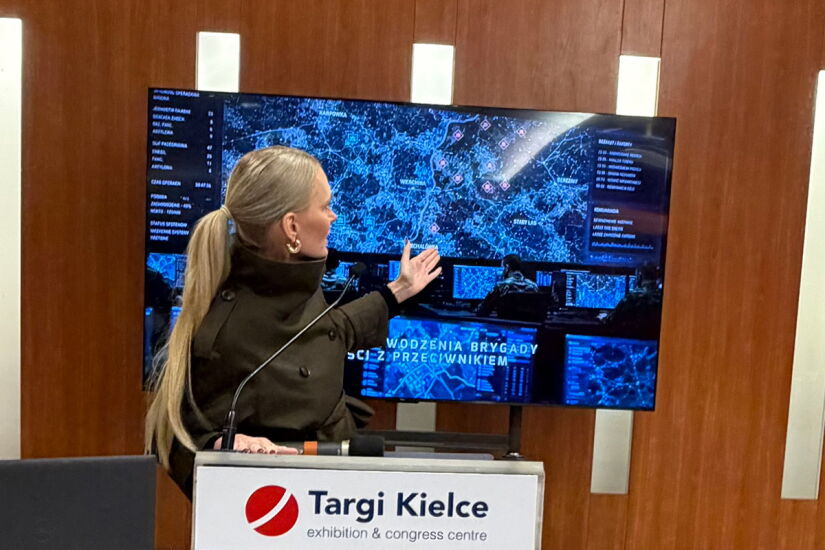
“I believe that the coming years will bring a real acceleration in the use of hydrogen in the defence sector – not as a single technology, but as part of a broader, resilient energy architecture. Our ambition is to accompany this change and to consistently develop the competencies that will allow Polish industry to be an active participant in this process, rather than merely an observer” – says Karolina Siudyła, spokesperson for PHU Lechmar.
About PHU Lechmar
PHU Lechmar is a Polish company operating in the defence sector, supplying military equipment that supports the armed forces of Ukraine and engaged in building the logistics and energy resilience of the military. The company is also consistently developing its expertise in hydrogen technologies, taking part in shaping the future energy architecture of the defence sector.