



Price alone does not luxury make
16:54
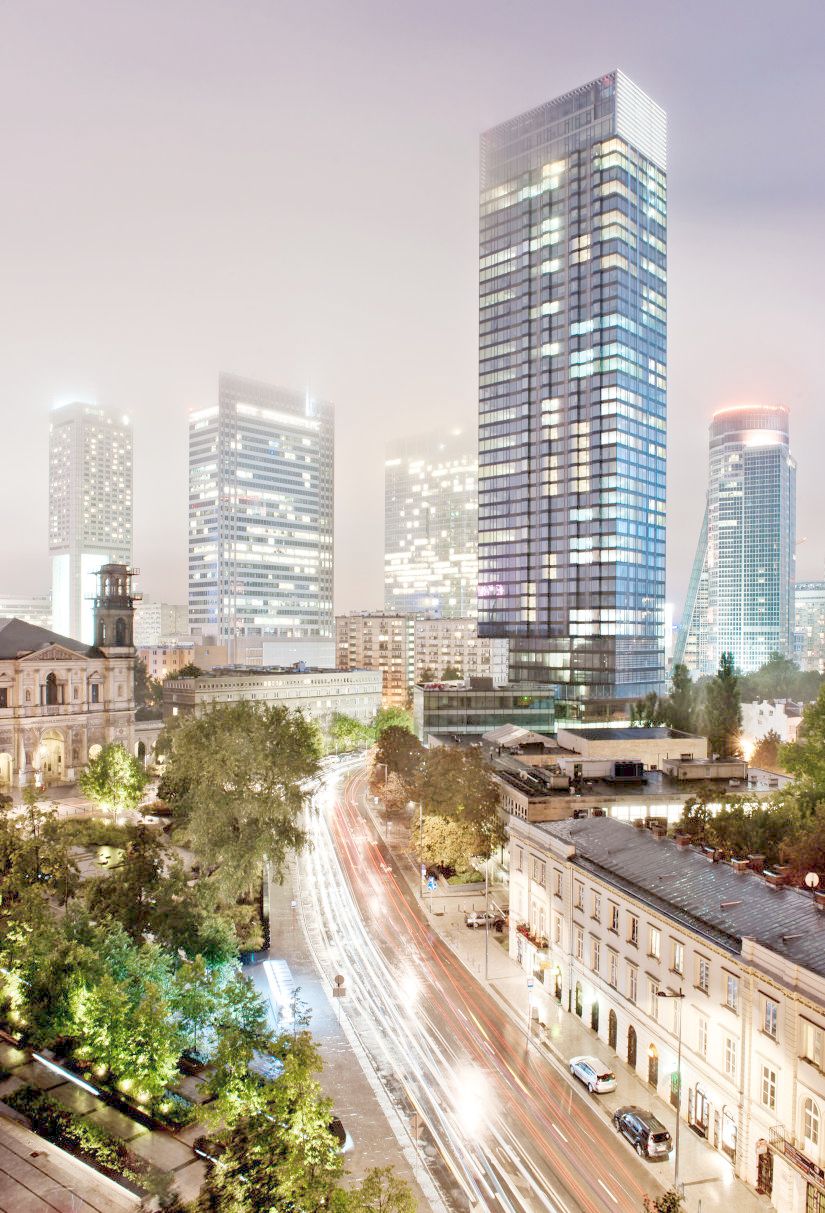
A 200-sqm apartment on the top floor was once considered a penthouse. Now buyers expect a spa, five-star concierge services and 16th-century architecture
By Beata Socha
Luxury real estate is the fourth biggest luxury goods category in terms of total value, after cars, clothes and accessories as well as hotel and spa services. According to a recent report by KPMG, the luxury real estate market in Poland was valued at a total of around PLN 1.134 billion (an 8 percent share of the whole luxury goods market) in 2015, which marked a 3 percent increase upon the previous year. The increase last year was not nearly as impressive as in 2014, when the segment grew by as much as 25 percent, from PLN 900 million to PLN 1.1 billion.
Top five
Only five major Polish cities offer what can be described as luxury real estate. These are: Warsaw, Kraków, Wrocław, the Tri-City and Poznań. Out of the five, Warsaw remains the biggest market for luxury apartments in Poland, with transactions totaling PLN 600-800 million a year for the period between 2009 and 2015. The remaining four major agglomerations altogether see annual transactions worth a total of PLN 500-600 million in the same time period. Unsurprisingly, top-shelf luxury apartments, with prices exceeding PLN 16,000 per sqm, are to be found almost exclusively in Warsaw. The capital offered 156 out of a total of 179 apartments of this class at the end of Q1 2015.
How much is luxury these days?
The prices for luxury apartments are also the highest in the capital, with the average price at PLN 16,581 per sqm and the highest reaching as much as PLN 65,227 per sqm. But, while Warsaw remains the biggest market in the luxury residential segment, Wrocław and Kraków are quickly catching up. In terms of price at least, they are not that far behind. For the period 2009-2015, the average price for a luxury apartment stood at some PLN 12,000-13,000 per sqm in these markets, while the top units went for as much as PLN 42,000 per sqm in Wrocław and PLN 36,471 in Kraków.
What makes Poles and foreign investors want to pay so much for a residential property and what distinguishes “luxury” apartments from regular ones?
City bustle
Most luxury residential developers agree that what makes a residential project “luxurious” is first and foremost its location. “There is a pan-European trend to move back to cities and it is around the city centers that new investments will be launched, targeting the most demanding customers – those who love being in the heart of city life but look for a peaceful enclave,” said Agnieszka Śliwa, Communications Director at Tacit Investment, the investor that delivered Cosmopolitan in 2014. Warsaw has seen a few upscale apartment towers constructed in its very center over the past few years, the most notable examples being Cosmopolitan and Złota 44.
Other cities also have places that people are prepared to pay big bucks to live in. “There will always be demand for good location, a prestigious address and surroundings,” concurred Ron Ben Shahar, main partner at Angel Poland Group, the investor behind Kraków’s recently completed Angel Wawel project, located near Kraków’s historic Wawel Castle. The project involved the renovation of a 16th century monastery and two chapels, one of which now houses the scheme’s most expensive “royal” apartment.
Creating demand
Design is another important thing that distinguishes luxury from regular properties. Back in the 1990s a spacious apartment on the top floor with a terrace was considered an upscale apartment or even a penthouse. Today, people expect more. Such as OVO Wrocław, a multi-function project housing both offices, retail and residential space, as well as a five-star Double Tree by Hilton hotel, whose services will be made available for penthouse residents.
Wrocław was in fact the first market to see a residential high-rise constructed: LC Corp’s Sky Tower, delivered in 2013. Suhuckie Ovadiah, investor and CEO of OVO Wrocław expects the market to grow, just like in Poland’s other major cities, even more rapidly than before. And the reason for the increasing demand is not only the fact that Poles are getting wealthier. “When we present and build a new project, we create demand for it,” he explained.
No way but up
Even though the market is still very young and small, it is expected to grow fast. Within the next three years, the market will be among the fastest-growing luxury goods sectors in the country. It is expected that its combined value will amount to approximately PLN 1.338 billion in 2018, which would mark an 18 percent increase upon the 2015 figure, according to KPMG.
The reason for the growth is not only due to the increased number of transactions but an expected rise in prices for luxury residential projects. “Given that the luxury goods market keeps growing faster than the economy and that demand in the segment is still increasing, prices for apartments of this class have nowhere to go but up,” concluded Śliwa.


