



Reinventing the dice
15:19
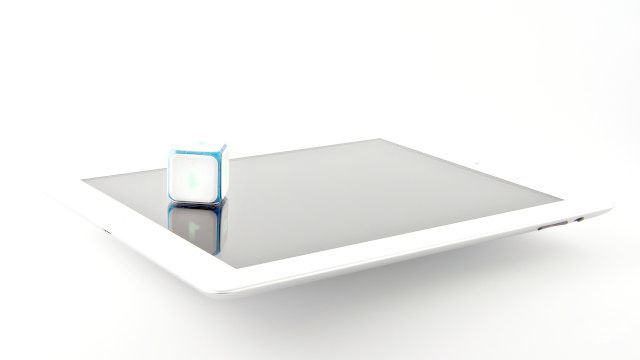
How two Poles brought a 5,000-year-old home entertainment system into the digital age
by Jacek Ciesnowski
ice have been around for as long as history remembers. The oldest known set dates back to 5,000 years ago. For centuries they were used by people to entertain themselves, and some call dice the first game controller or even game console. With its design not really changing over the years, redesigning it seemed like something impossible and even unnecessary.
Enter Patryk Strzelewicz and Michał Bąk, co-creators of Dice+. Strzelewicz is a board game enthusiast whose company, Q-Workshop, sells designer dice. Bąk is an IT specialist. Together they decided to bring the concept of dice into the digital age and so became the first Poles whose products started being sold in Apple Stores.
Digitizing board gaming
“When we looked at various forms of home entertainment, from TV to reading, we saw that the only one that had not been digitized yet was board gaming. That’s how we found our niche,” said Krzysztof Papliński, vice president of Game Technologies, the company behind Dice+.
The market is already there. Most board game producers have also decided to seize this opportunity and released digital versions of their games. However, such titles have a virtual dice feature implemented (the result of the roll is determined with the use of a computer algorithm), so Dice+ is unnecessary here. “We don’t intend to copy existing games and just add a rolling dice feature to them. Dice+ is much more than that and convincing others to spend $40 on a device that is just for rolling would be foolish on our part,” Papliński explained. That’s why the company is focusing on developing new titles that could fully make use of the controller (see box p. 42).
Following Nintendo’s path
Papliński cites Nintendo as an example they are trying to emulate. The Japanese videogame giant released its Wii game console back in the mid-2000s, and while some of the product’s specs were inferior to its competitors – Microsoft Xbox 360 and Sony’s Playstation 3 – Nintendo targeted casual gamers and families as their core audience, with games and motion controllers tailored specifically for them. The games were simpler and kid-friendly, but the customer base was much bigger. This all helped Wii become the best selling console of its generation.
“Families with children are our core target, with kids between 3-12 years old as the group we try to reach with our games,” Papliński said. We’re trying to show them a social gaming experience that they can achieve using Dice+ and its motion sensor abilities, similar to what Nintendo did with its Wii,” he added.
Game Technologies has its own subsidiary, Synergy IT, which is developing new games for the Dice+. The company is also cooperating with third-party software developers to expand the games library, which currently encompasses some 20 titles with, 2-3 new ones being added each month, mainly simple titles for younger players. With a classic game of Ludo (known in the US as Parcheesi) having been played for nearly 2,000 years and probably the easiest board game you can ever imagine, you can clearly understand why the firm has chosen such an approach.
Demanding group
The lack of more mature content is also understandable when you take into an account Dice+ creators’ business activity. Strzelewicz knows hardcore gamers like no one else. His beautifully designed traditional dice are well known and liked in the hardcore gamers circle. That’s why he knows that it’s not that easy to please them. “This is a very demanding group of customers. Developing products for them is very difficult and time consuming. We would have to create a completely separate project just for them, which we don’t currently have the manpower to do,” Papliński explains.
In the case of more complex titles there are also other barriers preventing them from being compatible with Dice+. Strategic and role-playing games usually require more than one dice to play and usually these dice have more than six sides.
But some more adult-oriented titles are in the works, as Game Technologies is apparently working on bringing The Witcher and Talisman to the platform. It is also working on securing some licensed properties such as Hello Kitty and Judge Dredd.
A plethora of devices
Dice+ works with tablets, smartphones and smart TVs. Set-top boxes, such as Roku and Amazon Fire TV, are also in the company’s plans. Tablets are however the firm’s main focus. They have their disadvantages such as smaller screens, but what they lack in that sphere they make up for in their availability. Just in 2013, 195 million of these devices were sold, with the majority of them supporting Dice+. They also have other features, like a touch screen, which smart TVs lack.
The device was launched last year in August and sales figures are not available yet. However, the company has already decided to scale down its plans to ship millions of units annually. “We decided on the soft-launch approach, to make the product available in a limited number of markets and places.
To launch a product globally and make it available everywhere we would need resources available to such giants like Sony and Microsoft, which we simply do not have, that’s why we lowered our initial targets,” explained Papliński, without giving any numbers.


