Remote learning to stay with us after pandemic as well
21:45
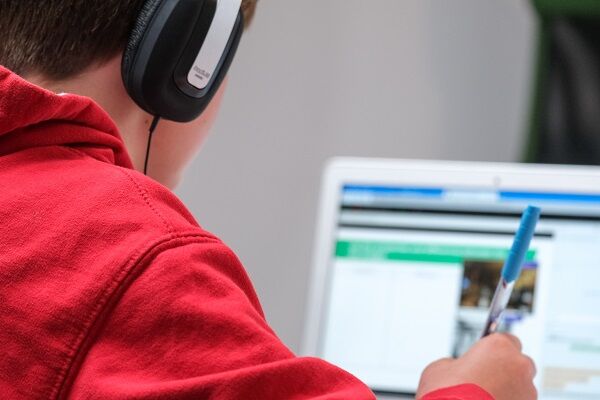
UNESCO calculated that Polish children spent almost the longest time in Europe on distance learning. When the data was released, in early April, only students from Macedonia, Bosnia and Herzegovina, Slovakia, and Latvian were ahead of us in this respect.
We know from research that remote learning has left its mark not only on tired parents and overworked teachers but also on students. Boredom, worse learning, stress, monotony, lack of concentration, distraction, loneliness, fatigue, discouragement, depression, and artificiality – these are associations with distance learning of students from Wrocław and Gdańsk aged 11 to 17 years. However, some parts of the pandemic school will be left behind, according to the researchers from the infuture.institute who follow the trends of the future on a daily basis. In its report The Future of Education. Scenarios 2046" which was created on the occasion of the 25th anniversary of the Collegium Da Vinci university in Poznań, the team of trends analyst Natalia Hatalska developed a vision of education of the future in several variants.
"The pandemic that forced distance learning was actually testing one of the scenarios of the future. We tried to live in a completely digitized space. Not only was the knowledge transmitted vertically: from teachers to students digital, but also the horizontal one – between peers. Many things have been taken away from us in our quantitative research, in which we interviewed 900 people aged 10 to 21. This scenario wreaked havoc on relationships and the students felt lonelier," Natalia Hatalska said.
Indeed, the infuture.institute survey shows that 64 percent of the surveyed students missed talking to their friends during remote lessons, 57 percent for the feeling of belonging to a group, 45 percent – for the atmosphere of the lessons in the classrooms. Only 12 percent noted that they do not lack anything and that they find nothing against online lessons.
Nevertheless, trend researchers say openly: we cannot run away from technology. Technologies and digitization will have the greatest impact on our future, so it is worth considering what to do to effectively weave them into education. Especially that – as the authors of the report emphasize – in the coming years e-learning will still be an important form of education.