



The next big thing
10:30
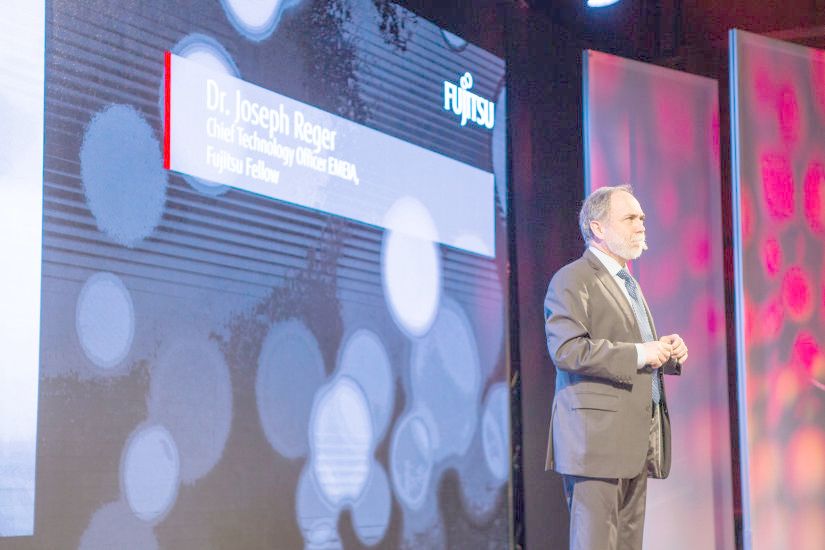
Joseph Reger, the CTO of Fujitsu, met with WBJ Observer to talk about the internet of things
Interview by Wojciech Rylukowski
WBJ Observer: You once said that the Internet of Things (IoT) would change our lives in the same way the internet did. Would you elaborate on that?
Joseph Reger: We should not talk about a single point solution, but about the potential of technology. What did the internet do? It introduced communication, which allows the sharing of information. The true potential of the internet is clear – that is the sharing of information, labor, ideas, and now also goods, cars or private rooms and so on. The Internet of Things, with its sensors and all kinds of information, which can be collected and analyzed using a few parameters, gives us something that we have never had before – contextual information. The context that we obtain through sensors, equipment and real-time data is game changing once we understand the possibilities that are hidden within that data. We have the context, but what we don’t know is causality – that is why something is happening – this we need to figure out. Sometimes it’s as easy as comparing data, for example the temperature exceeded 25 degrees therefore this equipment broke down. Sometimes it’s very complicated and it requires data from many sources. If you add that capability into the lot, we can figure out why things happen and how we can change them to become more optimized, so it’s way beyond the sharing of information and assets.
At which stage of the IoT revolution are we at now?
The IoT, with the huge amounts of data and contextual information, isn’t useful unless we can add machine learning and intelligent methods and algorithms into the means of analyzing it. Fortunately, our computational capabilities have been growing and growing, and we are able to deal with huge amounts of data and perform extremely demanding analysis. That is actually needed now, because the old style of analyzing – putting a hypothesis in there and watching what happens – made it difficult to discover anything, especially if the response to your hypothesis came after a few days when you were in a different state of mind. New computational levels are important because what they make possible is real-time feedback. You get answers immediately. With self-learning and cognitive algorithms you can set off installations to optimize themselves whichever way they think is correct, based on real-time and historical data. That combination is still the next big thing, because it’s difficult to say where it will end. And for the first time ever, we have huge amounts of data about the past, about the present and about the future – yes, we get data about the future, for example, mathematical models forecasting what will happen to a machine. It makes the IoT incredibly useful, therefore I think it’s going better than I predicted.
Why should we digitalize things?
We are putting information technology into more and more parts, pieces and objects, we are digitalizing everything around us and we are securing new opportunities to collect data, analyze and predict – to become more knowledgeable. The important thing for Europe is to understand that everything that surrounds us is old. Our history, roads, bridges, buildings, cities are old, these are all analogue objects. What we need to do is use digital technologies and make a bridge smarter by having sensors that provide advance warning if maintenance is needed. The same for roads, buildings and human bodies – medicine which is released when it is needed, based on measurements from sensors inside human bodies. That is digitalization – putting technology into analog objects, while digital is something that was born this way, for example, Facebook. We are a continent with a long history and infrastructure. When asked when the next Google will come from Europe – it’s not relevant, our future is decided by how we evolve what we already have. The IoT raises security concerns – orchestrated attacks are easier when there are so many things connected to the internet.
Should we be afraid?
These concerns are justified, therefore it is of paramount importance that companies invest in security technology, data privacy technology and identity management technology. If we don’t do that, this kind of business will not be possible, because it would be too dangerous. The beauty of IT technology is that it can protect itself with IT methods. Since the very beginning of technology, everything can be used as a tool or as a weapon – starting with a stone. Both sides are progressing very quickly, but with the power of new computers and new software, we are going to protect ourselves.


