



The power of festivals
16:13
Cities in Poland increasingly rely on marketing tools borrowed from business. Promoting their heritage, culture and identity requires ever more strategic and innovative aproaches
By Łukasz Cioch
Extreme cases aside, the very idea that a city should have an identity in the first place is complex and ephemeral enough to shun simplistic definitions. In the age of social networks and easily-digestible “messages” replacing quality communication, it is little wonder that packaging what a city stands for or chooses to represent, into an attractive set of prioritized, marketable characteristics has measurable benefits and huge capital gains attached to it. “Capital” is not just money available for running the day-to-day city affairs. The power of a city’s brand (equity) extends far beyond people’s good memories and positive associations after a three-day visit. In education, powerful brands make the best students travel from one end of the country (or continent) to another. In business, they make all the difference in determining where companies are headquartered and whether enough positive gossip is created to encourage others to join the flock. In culture, city brands are instrumental in attracting fashion, theater, ballet, music and film. With few limits left for CGI experts, the world’s leading film directors will likely favor film locations based on myth, legend, and loose association rather than architecture or spatial characteristics.
For this reason alone, every inch up the rungs of the reputation ladder translates into millions and billions gained or lost, both financially and in terms of what has come to be known as “social capital.”
Genius loci or ‘think different’?
In brand building, expressing “uniqueness” requires effective, custom-designed vehicles for the positive message to spread; in other words, for the city to be able to communicate powerful, positive associations to multiple recipients. Ideally, those seemingly isolated “brand-carriers,” such as festivals, should be so uniquely attractive in their respective categories that whoever sees what they stand for will happily jump to conclusions about the creative genius of the city. Brands rely on mental images and loose associations rather than rational confines of the cost-benefit analysis. As a result, cities’ cultural offerings can no longer afford to be a reflection of the taste of their elites or hyperactive minorities. For many cities, festivals have become important carriers of the city brand, if not the core identity strongholds.
The festival of festivals
Some cities in Poland, like Opole or Sopot, have benefited from a single festival brand for decades, while others organize dozens of festivals every year in chase of the golden goose, but also to cater to both domestic and international tourism. Kraków boasts over 100 festivals with a mind-blowing array of diversity, scattered throughout the year. Dodging scheduling overlaps is an art in its own right if you’re thinking of joining the game in Kraków.
In September and October alone, brands such as Sacrum Profanum, Film Music Festival, Unsound, or Conrad Festival, are among the established household names, with multinational audiences happily flocking to buy tickets months in advance. Outside Kraków, the National Festival of Polish Song in Opole, the Sopot Festival, Przystanek Woodstock, Off Festival, Open’er Festival or Orange Warsaw Festival have had their share of impact on the festival formula. For the film industry, the country’s menu is equally diverse, there is even the International Cycling Film Festival.
Big vs. the unique
Evolving with a strong penchant for prioritizing repertoire choices based on international chart-listings, the biggest festivals in Poland have consistently relied on a crude but effective formula for success: the bigger the star, the more marketable the product becomes. And yet, commercial festivals are far from “unique.” They can be easily replicated and improved upon elsewhere, with extra money to spice things up.
In the words of an expert, Robert Piaskowski, Deputy Director for Programme Planning at the Kraków Festival Office, “there are festivals in Poland which simply colonize cities without a trace of ambition to contribute anything more meaningful to the city’s social capital. From the perspective of the city’s social fabric, they are largely irrelevant.”
Piaskowski emphasizes that “perhaps the most important competitive advantage of Kraków’s festivals lies in the extent to which they differ from similar products in Poland and worldwide. From the perspective of Kraków’s social capital, purely commercial festivals would be mere fireworks – expensive toys without lasting impact.”
Some things don’t seem to change that much: big festivals still are, to a large extent, a reflection of popular tastes, while the small ones cater to more niche or refined expectations, with their success or continuity often depending on a variety of factors, state subsidies included.
[negative]“there are festivals in Poland which simply colonize cities without a trace of ambition to contribute anything more meaningful to the city’s social capital. From the perspective of the city’s social fabric, they are largely irrelevant.[/negative]
The recipe for success
In the cultural context of cities, for brand-building purposes at least, surprisingly egalitarian principles apply. Whether it’s business, science or art, there are cities that “lead,” consolidate and show the way for others, and then there is all the rest, i.e. the ones that follow and imitate. To achieve a true, long-term success, cultural innovation needs to learn how to communicate through clear, easily articulated and uniquely attractive messages, appealing with equal ease to both domestic and international audiences.
The “audiences,” i.e. the people who choose which cities to go to and why, tend to be very picky and intuitive about their decisions: they frown on cities that are unable to communicate themselves with enough focus and character. To say, for example, that a city is “international,” “cosmopolitan,” “business-friendly,” “historical” or “cultural,” is a proof of the city’s intrinsic marketing weaknesses.
Cities! Don’t take it personally!
For cities, unlike people, it may take as long as centuries to establish anything close to an identity. Our first impressions of cities are usually a complex interplay of factors – both personal and vicarious. Those usually include context-specific preferences, mood, word of mouth, random interactions between what we have learned, read, heard, seen, concluded (based on different exposure variables), tasted, and, last but not least, felt upon our first contact with a city. The very phenomenon of “first impressions,” so important in marketing, relies on the human brain doing what it does best: categorizing, simplifying and creating neat, easily-digestible boxes with information – generalized memories to be shelved somewhere between “I don’t want to go there,” “I want to know more” and “I can’t wait to see it.”
The myth is born…
Of the 100-plus vibrant festivals on offer in Kraków, many are yet to reach the coming of age. And yet, whether your interests lie in dragons, street theater, Jewish culture, dachshunds, sea shanties, film, jazz or student life, chances are that you’ll bump into a cultural event or two unlike anything you’ve seen before, irrespective of your arrival date. Over the last decade, Kraków has bet heavily on cultural diversity in shaping how its name sounds to both domestic and international audiences. The old-time capital of Poland is gradually becoming a true virtuoso in hosting breathtaking events. Some of those events have long been a profound reflection of Kraków’s cultural roots; others, increasingly smacking of a young rebel artist’s bravado, are designed to be niche, sophisticated sensual adventures for the few.
Of gigs and wizards
For festivals, the road between commercial and iconic takes a seasoned traveler, a true visionary with a rare set of skills allowing him or her to facilitate seamless cooperation between arts and business – a relationship that has hardly been one of harmony and mutual respect, historically speaking. Organizing dozens of city festivals, it may feel safer to put one’s eggs into multiple baskets, but creating a truly powerful brand requires a more focused approach and a stronger readiness to take risks and to aim much higher.
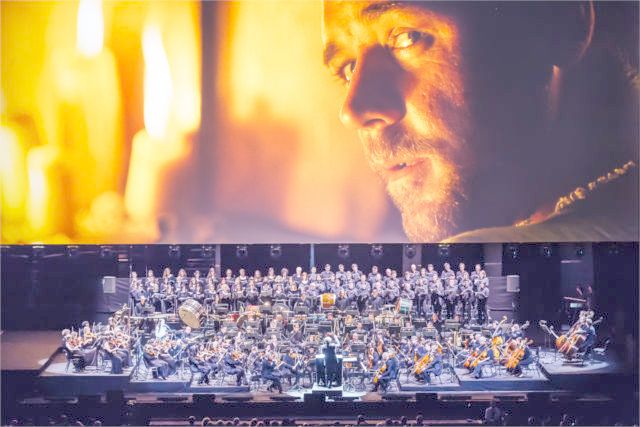
The Film Music Festival in Kraków (FMF), already in its 7th edition, is a truly remarkable event. Its underlying concept: organize a public screening of a famous or otherwise interesting film (or scenes from many different films) and perform the original soundtrack live before 3,000 to 15,000 spectators. Past performances included multiple choirs, world-famous orchestras, soloists and composers. For the FMF, the art and the venue become inseparable ingredients of the overall experience. Most of the FMF concerts to date have been staged in the heart of an operating steel plant, one that has a powerful story of its own. It is a truly hypnotizing experience to watch a live performance of an Oscar-winning film score at a distance so intimate that the overall experience is absolutely spellbinding.
[negative]“perhaps the most important competitive advantage of Kraków’s festivals lies in the extent to which they differ from similar products in Poland and worldwide. For the perspective
of Kraków’s social capital, purely commercial festivals would be mere fireworks – expensive toys without lasting impact.[/negative]
The FMF has definitely succeeded in attracting big names and ever-larger audiences. In doing so, however, it will have to recognize and respond to the textbook risk of commercializing the concept before it truly becomes “unique” If taken out of context, there simply isn’t enough innovation in the underlying idea of music performed live to the screening of a film. As such, it can be replicated and improved upon by any city, anywhere. It is the intimacy of the overall experience, linked very closely to multiple layers of context, that underpins the brand-building process, not its readiness for the en masse transition. There is a huge difference between (a) watching a film in an old industrial venue, powerfully evocative of its sweat-and-tears ethos, at an intimately immersive distance, and (b) watching the same film with 15,000 other spectators, inevitably from a distance so large that the magic is lost on you. It’s pure physics to understand that the sense of immersion, intimacy, and the quality of sound suffer with distance. The advantages of the en masse solution are obvious: budget scaling, pre-/post-event promotional leverage and, on a more individual level, the sense of belonging and participation, evocative of big sports events.
To become a true success story, Kraków’s artistic wizards of the future will have to learn how to think like Apple – retain the ability to continuously innovate, create new product categories and demand where none is believed to have existed – the fundamental ingredients of both cultural and business leadership. Last but not least, they should never, ever, lose sight of the quality of the individual experience.


