



Thoroughfares
15:56
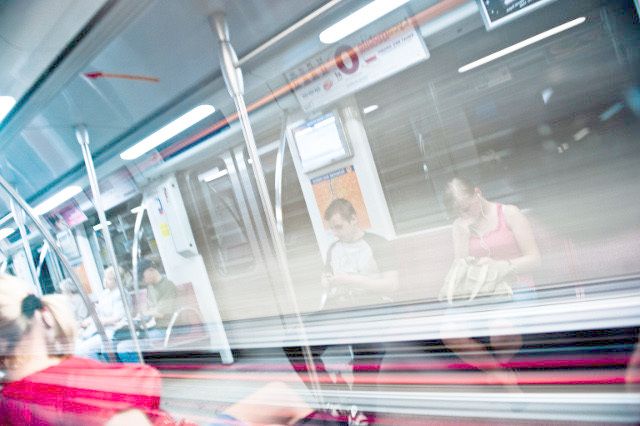
Reflecting on urban planning in the city of Warsaw, WBJ Observer decided to tackle the topic of transportation. What works, what doesn’t, and which ambitious plans will take shape in the upcoming months is presented with increasing clarity, as funding for ecological buses and rail infrastructure is readily available. The upcoming changes could influence real estate decisions dramatically, and hopefully for the better
By Matthew Czaja
We’ve all had the uncomfortable experience of being cramped inside a steamy bus with sweating bodies besieging us from each side. Nonetheless, the transportation system in Warsaw is still one of its best sides. Compared to other European cities, Warsaw fares very well with regard to transportation. About seventy percent of Varsovians walk, cycle or take public transportation to work. One asset is an integrated ticket for a network that spans the entire city, including fast urban rail, tram, underground and bus connections. According to research conducted during the Euro 2012 championships, foreigners spoke in superlatives about Warsaw’s transportation network. They were impressed with the punctuality, the density of stops and coordination of various transportation modes. The public transit authority has a lot more on tap.
Expanding urban rail
With Polish Railways (PKP) and HB Reavis building a huge office complex at the Warsaw West station, this transportation hub is bound to grow in importance. The new station will be accompanied by an office complex dubbed West Station, totaling 67,000 sqm of office space. It’s proximity to Wola will no doubt necessitate new rail connections. Regarding new fast urban rail lines, there are plans for new stops to be erected in Wola and Bemowo, among others. “In order to increase rail connections and stations, cooperation with the PKP PLK railway operator is key. “The city, in cooperation with rail authorities, is responsible for the recently opened Ursus Niedźwiadek station. So it’s possible,” said Igor Krajnow, press secretary for the Warsaw Transportation Authority. Coincidentally, Ursus is to become home to one of the biggest new housing urban development projects in Warsaw.
“Such new stations may appear in the near future at Powązki cemetery, Wola Park and Fort Wola shopping centers. The new stations serving Bemowo and Wola could facilitate the opening of new urban rail lines, among them Ożarów Mazowiecki-Rembertów, an exotic connection, which is impossible today.” With the EU’s 2014-2020 financial framework focusing on rail investments, the sector’s growth will speed up quite a bit. (For more info, see our article about the rail sector in the April 2015 issue of WBJ Observer).
New connections
Besides trains, there are plans for a new tram line to Gocław. The inhabitants of this part of the city led an active campaign to implement some sort of fast connection for the neighborhood: bus rapid transit, tram and metro connections were taken into consideration. Further solutions incorporating bus systems will be looked into, since the city has received the green light for funds to purchase ecological buses (electric, hybrid or gas). The city has recently been testing an electric bus variant on the Royal Route in the city center.
In addition to Gocław, the city has announced a planning project for a tram connection to Wilanów. This line will roughly follow the path from the West Train Station through Ochota, Mokotów and will end in Wilanów, with a node connecting to the first metro line in between.
Clashing interests
Investors in Warsaw are starting to feel the need for proper planning of transportation. According to the transportation authorities, development plans for new business parks often disregard possible solutions for transportation. Once these investments are built, employees have a hard time traveling to and from work. For example, traffic in the Służewiec area is maxed out, and adding new transportation lines is simply not possible. “This is usually followed by lament and calls for improved transportation, but such a solution is overdue by the time buildings have already been built,” said Krajnow. Adding to the pain of Służewiec this summer, is construction along the Woronicza-Wołoska-Marynarska tram line, where the suspended tram connection has been replaced by bus lines. This will no doubt have a dramatic effect on the efficiency of the employers in this part of the city and may encourage tenants to seek other well-connected business districts in the future. Służewiec trams had become a sort of urban legend, with the morning commuters resembling reptiles, pressed hard against the glass of an aquarium.
A lack of solid transport has long-lasting repercussions on the value of investments and their appeal to tenants. But not all is doom and gloom. “If investors seek out advice and plan with a longer term perspective in mind, they will find that there are fantastic places in Warsaw with lots of potential,” said Krajnow. The importance of consulting was underscored by Joanna Mroczek, director of CBRE Research & Marketing. According to Mroczek, getting to know investment opportunities through local consultants is the insurance policy that investors and tenants can utilize before making a move.
It is wise to build in places where the network is already, at least partially, in place. The method of building offices first, and then trying to bring transportation to them is very unsound and may prove to be difficult to implement in the near future. This is the case of the newer area of Wilanów, which was built first and now the city is trying to mitigate its connection problems by building a potential tram line. On the other hand, the Wola district has an interlaced transportation network right in its center. It is crisscrossed by multiple tram lines, a metro line and is serviced by a commuter train lines.
Harmonious coexistence
Cyclists and automobile drivers have long been at odds. According to the International Organization of Motor Vehicle Manufacturers, Poland has an ever-increasing motorization rate, with 600 automobiles per 1,000 inhabitants nationwide. The prevalence of road transport investments and a cultural shift to the automobile is very strong in Poland. It’s very difficult to convince people to leave the convenience and comfort of individual cars. But drivers must consider that it’s simply not possible to provide wider thoroughfares in the inner city.
“We want to provide alternatives and many options for Varsovians. This includes cycling, walking, public transportation or even carsharing and bikesharing,” said Krajnow. The entire idea is to spread out the congestion and allow drivers to use Park & Ride lots and continue their travel using the Metro. Likewise, carsharing utilizes fewer cars providing transport for more people, consequently freeing up parking spots in the city, which are usually packed with employees’ private cars during daytime hours.
The city council is about to give the green light for a carsharing project. It will be a free-flowing system, where users will be able to park in any legal parking spot. Registration will be necessary and there will be a system of fees – the carsharing project will be self-financing, and will not require additional funds from the city. The operator of this new system will be selected through a tender.
As mentioned before, the share of public commutes in Warsaw’s modal split is high, so there should be no problem in popularizing diversification of travel. Park & Ride lots are free for people who have a public transportation ticket – with time, this incentive has attracted more and more users. It’s an efficient way to avoid parking fees in the city center. Of course there are those people who refuse to budge from the steering wheel, even if it means sitting in hour-long traffic jams. But this is bound to change, as the realization sets in that driving within a congested city is no fun at all.
To be fair to drivers, the monthly “Critical Mass” bicyclists parade, which closes down a number of streets during rush hour, is a very aggressive way to try to influence biking laws in the city, to the ire of people who may not at all be against increased bike lanes. The bitterness between drivers and cyclists is quite visible at times. Nonetheless, new green office parks are equipped with bike stands and this is increasingly in demand among employees of corporate offices, according to Mroczek. “Tenants are becoming more and more demanding of a location. They want to have green space, bicycle paths and good transportation routes to and from work,” Mroczek added.
“The city must carry out a consistent transportation policy in order to prevent chaos and a paralysis of important neighborhoods. Our goal is to enable a mobile society, where any citizen, at any given place and time has alternatives and options for moving around, perhaps combining bike, walking and motor transport in one trip. That’s the essence of mobility,” summed up Krajnow. u


