



Warsaw back on track
12:07
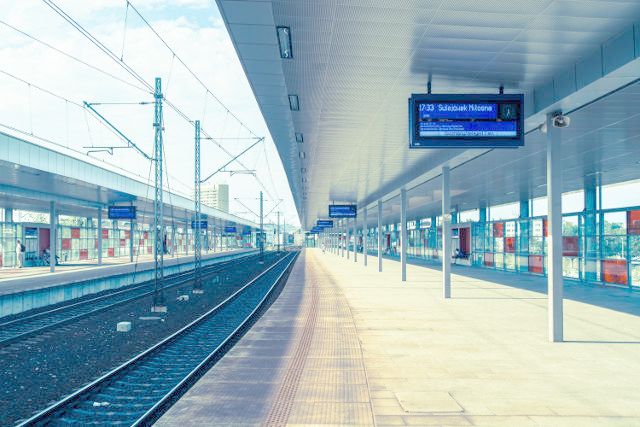
The long-awaited opening of Warsaw’s second metro line on December 14 will only be a part of the infrastructural changes that are set to transform the Polish capital
By Alex Hayes
The idea of a subway system for Warsaw was first proposed in 1927. However, it was not until 1995 that the first section of the capital’s metro line was actually opened. Construction work on the first line then continued until October 2008. It seems that Warsaw’s subway was a long time in coming. The second line is now to be opened on December 14 this year, with the Prime Minister Ewa Kopacz and the Mayor of Warsaw Hanna Gronkiewicz-Waltz having already ridden the length of the new line. However, this latest investment is not the end of the proposed infrastructural changes that are soon to hit Warsaw.
Remarkably, many of the city’s developers seem unfazed by the changes that are now occurring. Dom Development admitted in an email that all the proposed changes to the city’s infrastructure had already been factored into the company’s strategy: “We usually plan a few years ahead,” the company wrote.
Likewise, office and retail developers also show little astonishment at the changes taking place. IKEA is the owner of the Wola Park mall, which incidentally has been built almost on top of a proposed subway station to be built with future extension of the second line. Although they admit that they were fully aware of the proposed subway before the development of the center, the company underplays the significance of these future transportation links.
“Increased footfall will also be a result of the expansion and the way the center is managed as much as it will be of the new transport solutions,” said Dagmara Pozowska, the shopping center manager at Wola Park. In her opinion, the opening up of the city with new transportation links will not necessarily lead to the development of new locations: “Warsaw has one of the lowest rates of retail space saturation in Poland’s major cities. Currently, we have 438 sqm of retail space per 1,000 inhabitants, so the capital is begging for retail space. The solution is to extend and upgrade existing shopping centers, like we are doing with Wola Park, so they are more in line with the changing expectations and habits of today’s consumers.”
Taking a long term view
Despite their apparent nonchalance, developers (particularly of apartments) have been scrambling over each other to acquire and develop sites close to future subway stations: Atal is planning its Nowe Bemowo estate near the future Lazurowa station; Atlas Estates is currently completing its Capital Art Apartments next to the Rondo Daszyńskiego station; Dolcan is investing in its Czerwona Jarzębina II estate near the Zacisze station; Okam is completing its InCity estate just 300 meters from the Rondo Daszyńskiego station. The list just goes on.
Łukasz Maciak, the director in capital markets for DTZ is not surprised by developers’ lack of excitement while adapting their strategies to the new realities of Warsaw’s infrastructure: “The property market is all about vision and planning. Developers and investors are looking at the current market stage and always trying to predict the future. I am sure that the most active players are analyzing the neighborhood, surroundings and the city itself in the long term,” he said.
There is however, little doubt that the changes to Warsaw’s infrastructure will have a profound effect on the functioning of the city. “The opening of the second metro line, along with various other infrastructure improvements carried out over recent years, such as new bridges over the Vistula River and the modernization of several railway stations, in my opinion, may result in an increased interest in the Praga district,” explained Stanislav Frnka, the CEO of HB Reavis Poland.
“Up till now, Praga was among the least developed areas in the capital city in terms of office supply. This was mainly due to the poor state of many buildings, the poor transportation infrastructure and ‘the bad part of town’ image, which discouraged commercial property developers from any investments. However, things have started to change and there has already been a positive shift in the way the district is perceived. Today, with its revitalized post-industrial properties and bustling cultural life, Praga is seen as a trendy place and the second line of the metro is bound to improve access to the city and allow an easier commute for those employed with companies located in Praga,” he said.
He also admited that access to transportation is key when considering the viability of office projects. “Looking at the larger picture, I would say that the launch of the second line of the metro also increases the attractiveness of other non-central locations, such as those north of the city center. By improving the public transportation network and allowing people to move around faster and in a more comfortable way, locations in the vicinity of the Dworzec Gdański railway station, where we are currently developing the second phase of our Gdański Business Center project, are becoming even more appealing.”
[caption id="attachment_66481" align="alignleft" width="300"] Image: shutterstock[/caption]
A 7-minute ride into town
There can be no doubt that getting around the central part of the city will be much, much easier. “The central section of the second metro line will be the quickest and most convenient connection for Praga to downtown and also, after changing trains at the Świętokrzyska station, to the southern and northern areas on Warsaw’s left bank,” claimed the city of Warsaw.
“The trains running on the second line will be an alternative to traveling by car, because riding the subway from the Dworzec Wileński station to Świętokrzyska will take only 7 minutes.” The municipal transport authority estimates that the metro will take approximately 25 percent of the traffic from the roads between Wola and Praga; a similar number of passengers will substitute trams and buses for the subway. And this will mean that fewer cars will drive into the center and moving around the downtown area will be easier and more pleasant. “We expect a similar effect after the extension of the line by a further six stations (three to the west and three to the north-east). The second metro line will be the quickest and most convenient connection for Targówek and Bemowo with the center and connecting first line destinations. The journey from (for example) the Targówek II station or from the Księcia Janusza station to ul. Świętokrzyska will take around 10-12 minutes.”
Spending billions
Obviously there is a cost to all this investment. People often talk about Poland being modernized with EU funds and the scale of those funds comes to PLN 2.8 billion for this central section of the second line. The total cost of the investment (including the PLN 1.3 billion purchase of rolling stock) comes to nearly PLN 6 billion with most of the money coming from the city budget. But if you think these figures are large, you should see what the city and railways are now proposing to spend to improve the city’s commuter transport links.
A total of PLN 25 billion is to be spent by PKP (Polish State Railways), its subsidiary PKP PLK and the city of Warsaw between 2014 and 2022 on integrating and improving different forms of public transportation within the city. The city states that much of this money is to be spent on the further extension of the subway’s second line (the next stage should be opened in 2017, with a third stage planned for 2020, while no completion date has yet been announced for the final stages of the investment).
The city will also be investing in subway station parking lots, rolling stock (including buses and trams) and new tramlines. When it comes to investing in integrating the rail network with the subway system, Piotr Ciżkowicz, member of the management board of PKP said that, “Bringing the second line of the Warsaw metro to the Dworzec Wschodni station is still in the planning stage. It will only be undertaken after its final approval from the city. Of course, we will try in the meantime to integrate both forms of transportation as best as possible.”
However, there are already concrete plans in regard to other stations. For example, the next stage of Warsaw’s second metro line to be completed in 2017 will be integrated with the railway and with the Koło tram stop. There will be a 150 meter roofed platform, escalators and a footbridge over ul. Górczewska. A similar integration of the metro station with the railway is also being considered in the vicinity of the Wola Park mall.
And even more investment
But, it’s not just the city and the railways that are investing in Warsaw’s infrastructure. Eventually, Warsaw should not only have an extended subway system and improved commuter rail links but also two ring roads (an inner and an outer one), while the outer ring road will also include a 2.3 km tunnel under the city’s Ursynów district at a cost of around PLN 6.7 billion, but this time it is the General Directorate for National Roads and Highways (GDDKiA) that is making the investment with funds from the national budget.
The truth is that Warsaw’s infrastructure is in the middle of a long-term investment program that encompasses all aspects of the city’s public transportation network. According to DTZ’s Łukasz Maciak, “the transport investments like the construction of the city’s inner ring road will not only reduce the amount of time on a journey and allow redevelopment of certain parts of the city especially in retail development where catchment areas will be widened, thus increasing a project’s profitability. There are plans to redevelop Centrum Krakowska 61 and build an additional 20,000 sqm retail/fashion area. All believe that the new investments will boost economic growth in the city and make Warsaw a modern and vibrant city with potential for further growth.”


