



Well cast metals
11:00
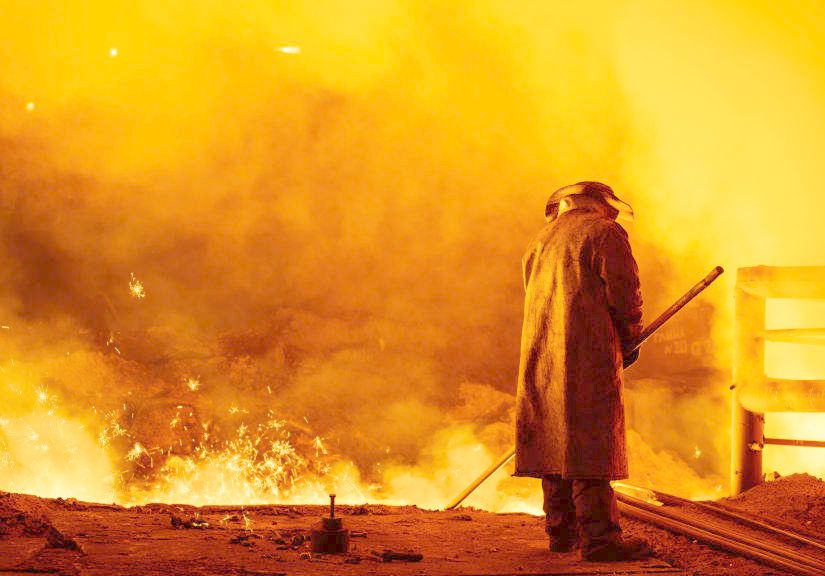
Poland is known as a major producer of a number of metals, including iron, steel, copper and silver. With growing global competition the industry has to prepare for tough times, but it may see a better future thanks to increased processed metals used in other sectors
By Kamila Wajszczuk
According to data from Euromonitor International, the Polish basic iron and steel market grew by 5.9 percent year-on-year in 2014 to a value of $ 19.96 bln. The basic precious and non-ferrous metals market grew by 4 percent y/y in to $ 1.52 bln in 2014.
As Stefan Dzienniak, president of the board at the Polish Steel Association (HIPH) pointed out, 2015 was also a good year for the steel industry. In 2014 steel consumption in Poland grew to a record level of 12.28 mln metric tons and the following year may be another record-breaker. “Data for the first ten months of this year confirm our projections that there may be another record and consumption may have grown by some 2-3 percent y/y,” Dzienniak said.
The Polish steel market stands out in Europe in terms of demand. Total demand in the markets of the European Union is now about 50 mln tons lower than it was before the economic crisis, the expert explained.
However, the situation for Polish producers was not always so good. A few years ago the Polish steel market was strongly hindered by a large shadow economy, stemming from tax fraud on so-called reverse VAT, especially in the reinforcement bar sector. In August 2013 the government introduced a legal change that put things back in place, obliging the buyers, rather than the sellers, to pay the tax. According to estimates quoted by Dzienniak, some 1.5 mln tons may have been sold in the shadow economy sphere before the amendment.
According to the Economic Chamber of Non-Ferrous Metals and Recycling (IGMNiR) the situation of the non-ferrous metals sector in Poland varies depending on the sector. The volume of basic metals production (electrolytic copper, primary zinc and refined lead) is expected to rise year-on-year in 2015.
Growth is also projected in the copper and aluminum rolled products sector, thanks to increased demand from the wiring sector and to exports. Increases are also expected in the sectors of extruded and drawn products from copper and brass, as well as in die casting aluminum alloys used in the automotive industry. At the same time, other areas, including copper and copper alloy sheets and tapes have most likely experienced a decline.
Though production increased in most areas, companies from the non-ferrous sector have been experiencing certain difficulties in financial terms due to significant price declines on the London Metal Exchange. On the other hand, electricity costs and excise levels were lower, the IGMNiR’s analysts remarked.
[caption id="attachment_94384" align="alignleft" width="300"] Image: Shutterstock[/caption]
A challenging environment
The overall good condition of the Polish metallurgy market may be largely attributed to growing demand in other sectors. The processing industries, from construction materials to household goods, are also expanding.
“Demand for basic iron and steel as well as basic precious and non-ferrous metal products is driven by growing Polish construction and automotive industries. Metal industries benefit greatly from infrastructure development financed by EU funds in Poland. As long as infrastructure development projects are in the pipeline, demand for steel remains stable in Poland,” said Andrius Balsys, industry analyst at Euromonitor International.
Nevertheless, Polish metals and metal products producers have to face increasing global competition, especially from China. “We have been forced to compete against imports from third-party countries, not from the EU market, but from countries such as China, India, Russia, Ukraine, Belarus and Moldova,” Dzienniak said. He explained that Chinese exports have increased significantly after a crisis on the country’s domestic market cut local demand.
What is more, Polish producers have to comply with strict CO2 emission regulations, especially as power generation firms usually aim to transfer their costs to buyers. Another difficulty is high natural gas prices. Non-EU sector companies are in a completely different market environment.
“The industry is also facing difficulties in relation to competitiveness in a global perspective. Polish producers are paying electricity excise in relation to carbon leakage, which is increasing costs for the steel industry. As other countries, like China, are avoiding carbon taxing, Polish producers are facing international competition based on unequal environmental requirements that distort competitiveness,” Euromonitor International analyst Andrius Balsys said.
Another issue is the ongoing downward trend in metals prices on global markets. “The global metals industry is affected by declining prices of most metals, including steel. A plummet in the price of iron ore of 28 percent in 2014 due to increased supply, in addition to reduced coal prices by 17 percent, has pushed international prices of steel down. The slowing down of the Chinese economy and a continued growth of the Chinese steel industry has increased supply in the world, thus adding pressure to steel products prices. Meanwhile, gold, copper and lead prices declined by 10 percent, 6 percent and 2 percent respectively, damaging non-ferrous metals industry growth,” Balsys added.
Polish sector associations and the country’s government are taking action to improve the situation. Talks with the European Commission are underway. “In 2015 the activity of sector organizations in this aspect has increased,” Dzienniak said.
“Following a Steel Action Plan signing at EU level, the Polish government is working on its own plan to protect and aid its domestic steel producers from unequal competition in relation to differences in environmental requirements. Initial steps to prepare such a plan were being made, though no results are yet available,” Balsys added.
Reaching further
Since domestic demand is high, exports are not an obvious solution for Polish metallurgy firms. According to data from the Ministry of Economy, in 2014 Poland recorded a trade deficit of €190 mln in metallurgy products, compared to a surplus of €650 mln a year earlier.
The industry’s exports grew by 3.3 percent y/y to €17.5 bln in 2014, while imports increased by 8.7 percent in the same period. The fastest-growing segments in terms of exports were aluminum and aluminum products (up by 11.8 percent to €2.1 bln) and cast iron and steel products (up by 8.8 percent to €5.6 bln). Exports of iron and steel fell by 5.5 percent to €3.5 bln and exports of copper and copper products declined by 9.8 percent to €3.1 bln.
Exports to the EU in 2014 stood for nearly €14 bln (up by 5.3 percent y/y), or 10.9 percent of total Polish metallurgy exports. Within that volume, exports of aluminum and aluminum products grew by 15.3 percent y/y to €1.8 bln and exports of processed cast iron and steel products grew by 11.1 percent y/y to €4.5 bln. Other important segments were copper and copper products (€2.3 bln, down by 10.3 percent y/y) and iron, cast iron and steel (€3.1 bln, down by 5.4 percent y/y).
“Players in every EU country are fighting for presence on the local market,” Dzienniak said. He stressed that in Poland’s case, demand is higher than domestic production. However, a number of companies are widely renowned and sell their products globally.
According to Balsys, “Polish exports of basic iron and steel, as well as basic precious and non-ferrous metals, will be troubled by increasing competition in international markets, especially from China.” Nevertheless, fabricated metal products or custom products are expected to sustain demand growth in Polish export markets as competition is less tense in these sectors.
In the Polish non-ferrous metals sector, exports stand for more than 70 percent of total sales value. “The 11 percent depreciation of the PLN against the US dollar was favorable for exporters,” the IGMNiR’s analysts said.
Dzienniak was optimistic about the future of the industry. “Steel processing is going strong in Poland. We are no. 2 in the EU in steel structure production volume and this year we might be no. 1,” he said. He also pointed to the growing demand for processed steel, resulting from a growing number of uses for the material.
The IGMNiR is in consensus. “Polish non-ferrous metals sector companies compete with foreign firms thanks to lower production costs, resulting from lower remuneration costs. It is worth noting that products of the industry comply with international standards,” its analysts said.
Balsys believes that major challenges faced by Polish metallurgy will include declining prices in world markets, carbon pricing and EU environmental policy compliance, as well as high gas and electricity prices in comparison to neighboring countries.


