World Car Free Day is just today
00:08
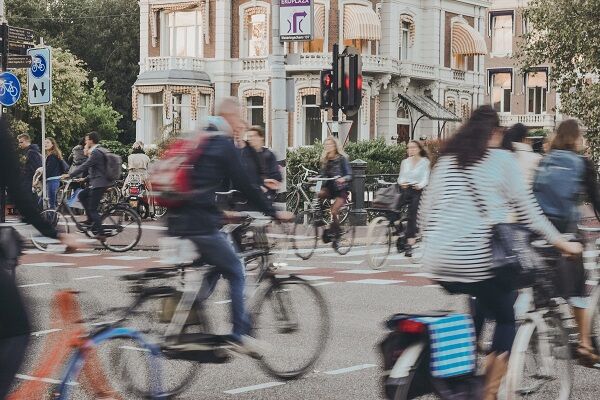
Every year on or around 22 September, cities across the globe celebrate World Car-Free Day, encouraging motorists to give up their cars for a day. The event highlights the numerous benefits of going car-free to citizens—including reduced air pollution and the promotion of walking and cycling in a safer environment.
World car-free day will help shed light on healthy lifestyles, the environment, and help prepare residents for the future of mobility. Cycling, walking, riding public transit, and using shared mobility, will grow in popularity as cities gradually turn their backs on passenger cars.
According to Fransua Vytautas Razvadauskas, Cities Consultant at Euromonitor International, personal car travel is the most popular mode of commuting, followed by public transport and walking.
“Personal car travel has embodied the 20th Century, and to this day, economic growth in emerging markets has fostered the rapid surge in car ownership. In 2020, the stock of passenger cars in use totaled 1.2 billion – a four-fold rise since 2000. China has fuelled growth, with passenger cars in use soaring 27-fold from a mere 8.5 million to 233 million in the same period. By 2040, the number of passenger cars in use will reach 1.9 billion. Much of this growth will be sustained in emerging markets,” Razvadauskas commented.
Also in Eastern European markets, personal car usage is relatively high, as having a car is often portrayed as a status symbol. According to Euromonitor’s 2021 Mobility Survey, 66.6 percent and 61.0 percent of respondents in Poland and Russia used a personal car for commuting – well above the global average of 48.9 percent. This is also supported by the greater distance traveled by car in Eastern European countries compared to the global average.
“Still, micro-mobility use in Eastern Europe will not suffice mainly due to climatic challenges. The solution lies in developing a well-structured public transport network, boasting effective first and last-mile integration as envisioned by proponents of mobility-as-a-service (MaaS),” The Euromonitor expert added.
(WBJ)