A difficult autumn
20:18
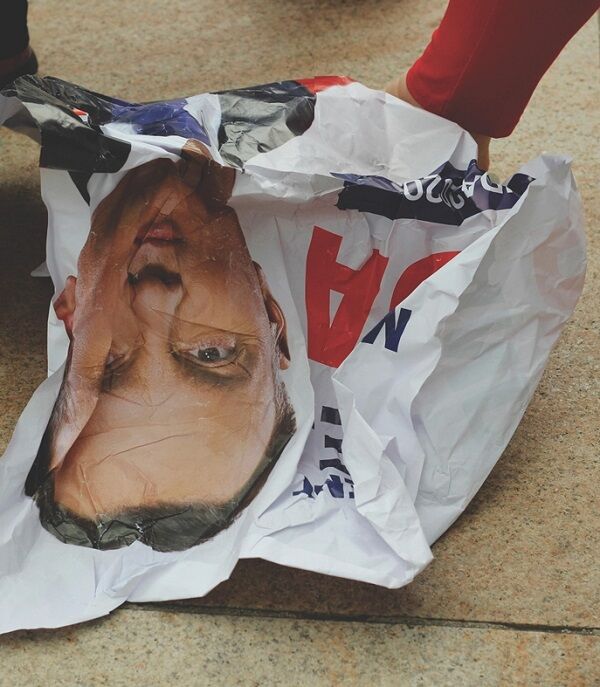
WBJ: After running neck-and-neck, Duda won a narrow victory in an election runoff on July 12, with slightly over 51 percent of votes. He was up against liberal Rafał Trzaskowski, Warsaw’s mayor. The results show that Poland is deeply divided. Do you think that this division, which splits our country into two halves, will lead to changes in PiS and the opposition? And how will the political life of our country look like now?
Andrzej Rychard: This division of our society is not only a political one but has a civilizational character. The election was a choice between two models of civilization – on the one hand, a model similar to the West, with its basic values such as democracy, law and order, European rules, strong self-government, respect for the Constitution and independence of the judiciary, including that of judges, and on the other hand, of a Poland staying in a not fully defined place, lying somewhere east of the West. This is not to say that Poland is located in the East but at the same time, it has not fully embraced the basic values of the West.
In modern-day Poland, when PiS politicians talk about the “Polish soul” what comes to my mind is a picture of a Polish hussar driving an electric car. [On July 10, in an all-out campaign, Jarosław Kaczyński, Poland’s pint-sized irascible de facto leader and strongman who has been accused of ruling the country autocratically, told Radio Maryja, an ultra-conservative Catholic broadcaster, that “Trzaskowski didn’t have a Polish soul, heart and mind.”]
Our society is deeply divided, however, many Poles are changing and modernizing in all aspects of life. In the last presidential election, Duda’s win over the democratic opposition’s progressive candidate was partly due to the fact that PiS succeeded in drumming up nationalistic and hostile rhetoric. The opposition failed to create a strong common language that would fit the Polish society, with civilization based on law and freedom, open to the West, far less conservative and much more liberal.
Duda claimed his second presidency would be different from the first one and that he would be “answerable only to God, history and the nation.” How do you react to this?
To my mind, the possibility of such a change is very low because I do not see any reason why his second term should be any different than his first. I fail to see any personal or structural reason for this. During his campaign, Duda was so strongly linked with the PiS government that distancing himself from it now would be difficult to understand by PiS voters.
Kaczyński has announced government reshuffle. What is it all about?
In my view, those changes are seen by PiS as a tool to control the country even more and to act in a totally authoritarian style. The internal divisions between PiS and its junior coalition partners will not be important. Kaczyński – and not only him but other senior PiS politicians close to him – have stressed that they are using this mechanism to fully fulfill their political aims without any problems and internal divisions.
The truth is that Kaczyński has an outdated knowledge of how to govern in the 21st century. He still lives in the past. There are no professional experts close to him with objective knowledge about the functioning of modern state institutions. So I think that the government reshuffle will not end with any bigger success. It is all going on at the time of the coronavirus pandemic that has a harmful influence on our economy and budget, European Union trade and global investment. The political and economic situation will be difficult for PiS.
Over 10 million Poles who voted for Trzaskowski hope that after the parliamentary elections that will be held in 2023 the political situation in our country will change for the better. What are your thoughts on his democratic movement?
There is a chance that Trzaskowski will achieve this. He is an open-minded politician, his personality and behavior are different from the cynical and primitive acts followed by many political figures. He is projecting his own image as the capital’s mayor. He has close connections with local governments in big cities as well as those in medium and small ones. He is close to the masses, understands the importance of respecting the rule of law and the common values of the European Union. He has personal experience and deep knowledge of how the European Union institutions function and how Poland can cooperate with them in the best way. He wants to encourage Poles from all parts of our country to link our economic modernization, climate actions and our cultural and ethical views to changes happening in Europe and also in the rest of the world. He understands our historical and present links with Western Europe and has the ability to mature and grow as a politician. [Trzaskowski is 48 years old whereas Kaczyński is 71.]
I would like to point out that in this process of learning politics Trzaskowski resembles Donald Tusk, who from being a local politician at the time of Poland’s transformation from communism changed to a modern well-known politician. As a sociologist, I would like to point out that 15 years ago Tusk had a different level of understanding of the people and the world than he has now. Outdated ideas and remarks about Poles being “ignorant people who will buy everything in politics’’ as one of PiS’s politicians put it, cannot be assumed by our leaders. Trzaskowski understands that Poles have different expectations and want to make progress so as to meet our economic, technological, communication, social and climate challenges.
He is determined to build a modern model election policy and find a modus vivendi with the Civic Platform (PO) party [Poland’s largest opposition]. He must take from PO what is best in that party – it’s liberal, modern, close to the West and the EU – and not be affected by some of PO’s mistakes in election policy. The worry is that in the time that is left before the parliamentary election Trzaskowski might lose his virtue of novelty and that the young people who voted for him will be older and will expect from the social movement created by him and from the reformed PO concrete steps of making changes in Poland. So the upcoming months will be very demanding for him. [On July 17 in Gdynia in northern Poland, addressing a crowd of hundreds, Trzaskowski announced the creation of a new civic movement “New Solidarity.”]
PM Mateusz Morawiecki has lied that disbursement of funds to Poland from the EU budget for the years 2021-2027 won’t be linked to compliance with rule-of-law. How does the situation look like?
It will be a difficult game. In the conclusion of that summit all member states, including Hungary and Poland, agreed that a mechanism must be created linking the delivery of funds to the respect of law and order by all the states. The leaders of governments left themselves a certain emergency brake to discuss these agreements in detail. This requires time and goodwill on the part of all EU institutions. At present Morawiecki can say whatever he wants. So he claimed in Warsaw that it will not affect Poland. But in Brussels, he signed an agreement that was joined in by the whole European Council, including the leaders of the most powerful EU countries – Germany and France. The Polish PM wants to play the game of organizing longer debates about linking the transfer of funds to lawfulness. Upon returning from Brussels he declared his success but Poles are worried whether we will receive money from the EU.
How will it end?
Maybe the answer will come with the fall of PiS and early parliamentary elections or from the Polish open veto in the course of the battle in the EU. Hungarian leader Viktor Orbán wanted to use the veto in Brussels but finally gave up this idea and the agreement was ratified. Nobody in the EU wants to repeat Brexit, so the game is on. Autumn will be difficult.
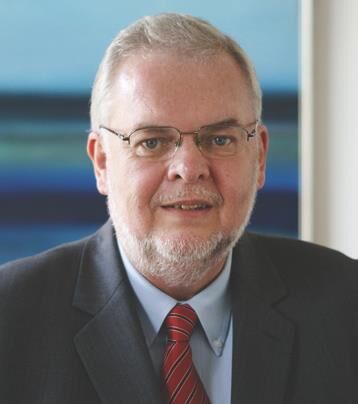 Professor Andrzej Rychard is a Polish sociologist and academic and director of the Institute of Philosophy and Sociology of the Polish Academy of Sciences (IFiS PAN), a Warsaw-based research institute.