



A knife at the throat of policy-makers
12:49
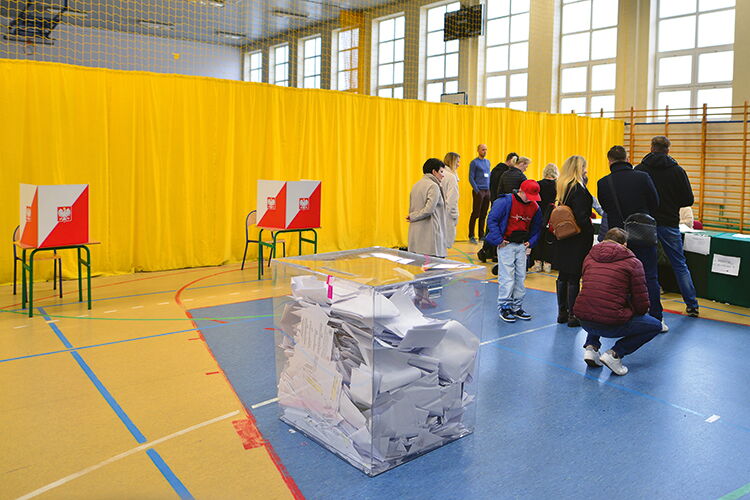
by Sergiusz Prokurat
We can all agree on the importance of voting, as a foundation of democracy. Despite Karl Popper's principle that there can be no tolerance for enemies of democracy within a democracy, groups with populist and authoritarian tendencies have become a permanent part of Polish political life. In October 2023, Poles decided it was time for a change. Law and Justice (PiS) won 35.38% of the vote, Civic Coalition (KO) secured 30.7%, Third Way (Trzecia Droga) obtained 14.4%, Left (Lewica) received 8.61%, and Confederation (Konfederacja) got 7.16%. It's surprising that the largest increase in the percentage of voters, compared to previous elections, was observed not in large cities—the birthplace of the previous opposition—but in rural areas, where PiS holds influence.
The 2023 elections saw PiS emerge as the victor, but it proved to be a Pyrrhic victory. In reality, PiS faced a setback as it lacked a viable alliance to secure lasting support and failed to garner a strong enough mandate for independent rule. Consequently, it won't command a majority in the Parliament. On the other hand, the opposition, led by KO, will do so. A broad coalition of left-wing and centrist parties (Left, PO, Third Way) is set to form the government.
The election fight
Poland has been a battleground for internal conflict over the past 8 years, with ideological clashes taking different forms: social Poland vs liberal Poland, or Poland B (rural east) vs Poland A (cities and the west), highlighting deep-seated social divisions. However, a new game is about to unfold. The political landscape is set for change, ushering the once-ruling populist-autocratic party PiS to the sidelines and bringing its direct opposition to the forefront. The primary goal of the new government is to rebuild liberal democracy. Interestingly, PiS employed questionable tactics during the pre-election period and suffered defeat. The list of tricks is extensive, ranging from the involvement of public institutions and state-owned companies in the PiS campaign to its financing from the budget (such as picnics advertising the 500 plus program and a meaningless referendum). Despite these tactics and a significant imbalance in access to public funds and television airtime, curiously PiS barely managed to maintain support at a level similar to previous elections. This outcome is a significant blow and a seismic shift for individuals associated with the previous government in state institutions, business, and administrative structures.
Two narratives emerge regarding the state of public finances in Poland. On one side, there's the official account from the outgoing government, where everything is great. On the other hand, there is the expert perspective which offers a less favorable outlook. Cumulative consumer inflation between 2019-2023 is expected to surpass 45%, with public debt projected to reach 60% by 2026. The structural deficit is forecasted to be four times higher than the value recommended by the European Commission for stable public finances. While the budget situation may appear positive, it comes at the expense of societal impoverishment, driven by the inflation tax and a spiraling price-wage dynamic. This transition of power occurs against the backdrop of an economy experiencing its lowest investment rate since 1989, at 17% of GDP, following chaotic tax reforms introduced with the 'Polish Deal' in 2022.
More promises – tough questions
The new government is confronted with challenging financial decisions, particularly concerning electricity and gas prices. In 2023, state representatives and politicians control these prices. A decision has been made to freeze electricity prices for most households up to a consumption of 3 MWh, and the same applies to gas prices. Releasing these price controls would result in a significant increase in bills for the average citizen, leading to a swift loss of political support. Despite the economic benefits, transitioning to market forces is challenging due to the looming threat of a return to power by populists. It is likely that the freezing of electricity prices will be extended for six months, and gas prices will remain frozen throughout 2024, with potential liberalization occurring thereafter. Another pressing issue is the VAT tax on food. Currently, most goods enjoy a temporary zero rate under the "food shield" implemented in February 2022, covering approximately 80% of purchases in a Pole’s average basket. The current budget does not allocate funds to maintain the zero VAT rate, and there are calls from the public to extend this measure, given the challenging outlook for 2024.
The financial situation in Poland is average –not good and not fatal – just average. GDP growth is projected to hover around 0% this year. Despite election promises, ambitious wage increases, including those for the budget sector (20%) and teachers (30%), are likely to be funded through credit. The winning parties, despite pledging to distance themselves from post-election handouts, may find themselves compelled to continue the populist policies of their predecessors. Debates are ongoing about whether substantial expenditures on military growth and the construction of a new mega airport, CPK in Baranów, should be continued. The promises made during the October 2023 elections, such as offering 1500 PLN per month for mothers returning to work until the child is three years old and 0% interest mortgages, contribute to budgetary challenges for 2024 and potentially 2025.
While economic changes may not be swift under the opposition, shifts in foreign policy and judicial institutions are anticipated. Poland is likely to mend relations with the European Union. Notably, there has been a significant shift in the behavior patterns of young people in Poland, aligning more closely with European values. They aspire to a more socially-oriented economy but with a tolerant, European, and non-authoritarian face.


