



A revolution in which ownership ceases to matter: Is subscription a bright future for businesses?
16:26
According to data collected by ITportal.com, companies operating in accordance with the subscription economy can boast a five-times faster increase in revenues than the S&P 500 (and it is 18.2% compared to 3.6%!). The importance of subscriptions in global markets is constantly growing and their development is getting into gear. Even the market crash caused by the Covid-19 pandemic has not stopped the growth of companies using subscriptions to distribute their services and products. While many companies struggled to stay on the market and survive the plight, software company ZUORA's research found that as many as 51% of subscription businesses did not see any pandemic impact on subscriber acquisition and 18% of them even noticed a significant performance improvement.
“The pandemic-driven crisis has put enormous pressure on private companies as well as public institutions. The companies that can maintain or improve the quality of provided services while maintaining or reducing their own costs emerged victorious,” says Mariusz Szałagan, CEO of WeSub, a company that is a pioneer in the field of subscription solutions on the Polish market.
Q: So, it's fair to say that the subscriptions have gone through a hard test and have passed it?
Companies are switching to subscription models because their customers expect them to do so. According to ZUORA, more than 78% of adults worldwide are already subscribing. The perception of consumerism is changing, we are moving away from the need to own an object. Everyone wants to have a product or service available immediately, whenever they feel the need. And this need is primarily to use good and efficient equipment, access to streaming services or even accounting. There is no need to be bounded by long-term contracts or spend large amounts of cash at once.
“Modern consumers greatly appreciate the flexibility of subscriptions. In uncertain times, especially for young people, no one is sure whether they will have a job in a month or two, let alone a year,” adds Szałagan. They do not want to make long-term commitments. What matters is here and now. Poles struggle with many factors affecting their budgets. Rising inflation and rising interest rates, such as the reference rate, which has increased since the beginning of January from 2.25% to 6.50% per annum. We have been recording monthly increases since October 2021. All this means that there is less and less money left in our wallets, which we can spend on "additional" goods.
Making decisions that involve large amounts of money will not be easy. As many as 26% of Poles don’t have any savings at all and 33% aren’t saving any money right now, according to the results of the research commissioned by Millennium Bank. In the latter group, only every fifth person declared that they have savings but can’t afford to keep saving. This means that only 41% of us save money regularly. The current crisis forces people to reach for the capital set aside — since the beginning of the year overall 40% of the respondents had to reach for their savings.
Q: So, what are the real benefits from the perspective of the entrepreneur and the customer?
First, it allows you to offer your products or services on a larger scale. The entrepreneur is able to reach customers who are not eager to invest or who find it difficult to make decisions with long-term effects. Additionally, it works great in building long-term relationships. According to WeSub's statistics, there is an average of 2.5 items per subscriber and as many as 85% of customers extend it for a further period after the end of their first subscription contract. So, you can offer more items and maximize your sales potential. Device-related subscriptions have guaranteed service and insurance. This allows us to provide our clients with additional care and show them that their satisfaction is important to us.
In this way, the entrepreneur also gains full control over the life cycle of his product. He can observe how his item is used and take care of its technical condition. Therefore, one cannot forget about reducing the environmental cost. A properly used item, returned by a customer in very good technical condition, can be modernized and given to another user. With regular service, we can realistically extend the product life cycle by several years.
The great advantage of a subscription is its flexibility. The customer can constantly update the services he uses and choose the necessary accessories or extensions. The software industry uses this heavily, constantly improving its software as part of subscriptions.
From the customer's perspective, it is an additional alternative to a loan or leasing. A WeSub expert points out: “Lack of capital is one of the most frequently quoted reasons for stopping development or not starting your own business. Entrepreneurs do not realize that they can use subscriptions to finance any equipment necessary to run their businesses and even office furniture or software.”
A subscription involves practically no risk at all. A short contract allows you to check whether the equipment suits you or if it meets the expectations of your customers. Let's also consider how quickly newer and newer technologies appear. Often the effectiveness of our work depends on the quality of the equipment we work on. Therefore, a subscription allows us to replace it on a regular basis because we are not bounded in any way by the device. We don't stay with equipment that loses both efficiency and value every year. All of this is a part of a monthly subscription, related only to the possibility of using the devices, not their full values.
When we are facing important decisions from the company's strategic point of view, it is worth looking at the new opportunities the market offers us and choosing the one that will fit best into our business in the long-term perspective.

Mariusz Szałagan is WeSub CEO. An expert in business consulting and innovative product development, he has been working in finance since 1995 and has worked with leading institutions like PKO Leasing to develop new products and sales channels.
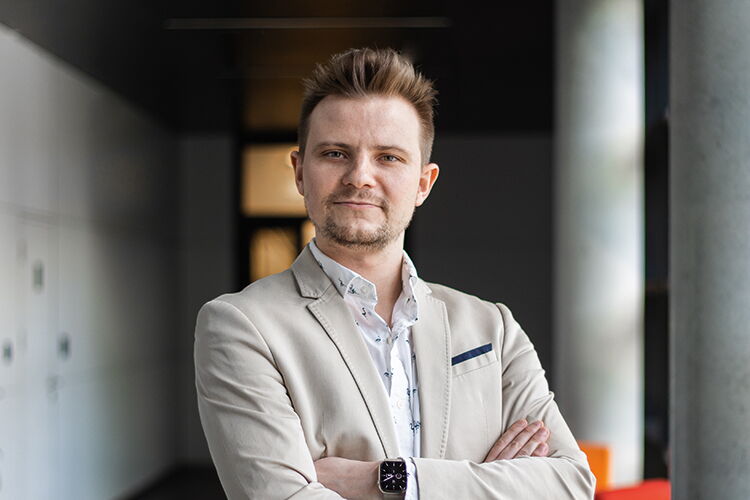
Jakub Wnęk is controlling director at WeSub and specializes in business analysis, especially in the finance field. Wnęk has a master’s degree in law and also knows about Big Data analytics.


