



’ALLO ’ALLO!
11:00
WBJ: As we all well know, this year, most conferences and industry meetups have been moved to the virtual space. What was your biggest fear initially when you decided that Infoshare will be hosted online?
Grzegorz Borowski: Well, before that decision was made, we spent a few weeks observing how the pandemic situation unfolded and therefore what would be its further impact on the event industry. So, we knew that going online was one and only option to run Infoshare this year and be sure that the event will be full of great speakers (who otherwise wouldn’t be able to come), partners and attendees (who also wanted to feel safe). So, after making a decision I felt great satisfaction that the uncertainty of what to do is over, but on the flip side, I feared how we would manage to make such a complex, innovative and demanding project live. But right now, looking at our agenda with over a hundred global speakers from the biggest tech giants (like Microsoft, Google, Twitter, Stripe, Spotify, Tinder and more), the unique system we’ve built, and having an experience of running smaller events (series of Tech3Camp meetups) online, I’m much more relaxed knowing that we’ll deliver very good quality.
There are already some accounts from conference organizers saying that one of the biggest challenges is keeping attendees’ attention span, which is even shorter online than in a physical setting. They say that when a presentation at a virtual conference is not much different from a YouTube video. How do you think this will play out at Infoshare? Will presentations be shorter than they used to be?
Yes. They will be shorter, and going even further, they will be followed by obligatory Q&A sessions with speakers. We’ll be gathering questions during a presentation via a chat tool, and after the presentation, the speaker will answer them in the interactive mode (discussion with the session host). We know that this opportunity will be much more engaging than just pure presentation and will allow each attendee to ask questions to global experts like Neil Patel (top 10 global digital marketers according to Forbes), John Romero (legendary creator of Doom and Quake video games) or Brad Feld (US investor, co-founder of Techstars, widely known from many books about the startup ecosystem and entrepreneurship) and many more. There are over 130 speakers on our agenda.
How can a trade fair, with hundreds of stands be transferred into a virtual conference? After all, one of the biggest selling points for a company taking part in a trade fair is a chance to showcase their company and get together with potential investors. What is the feedback you’re getting from your exhibitors? Are they going to have virtual booths? How will attendees get to see them?
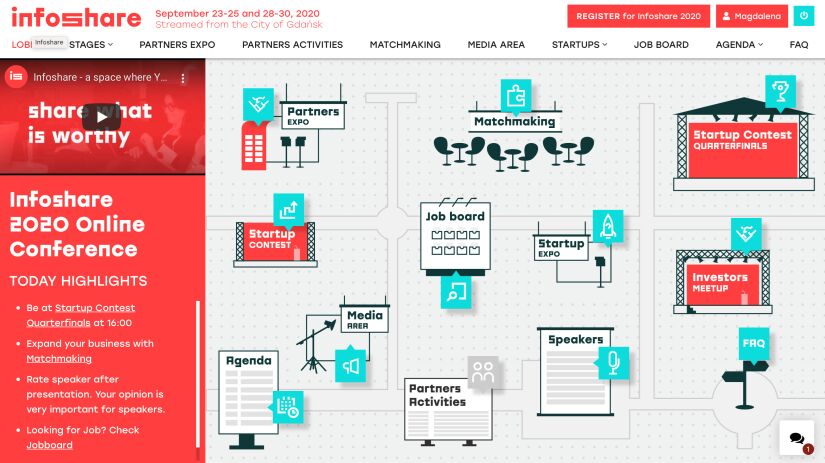
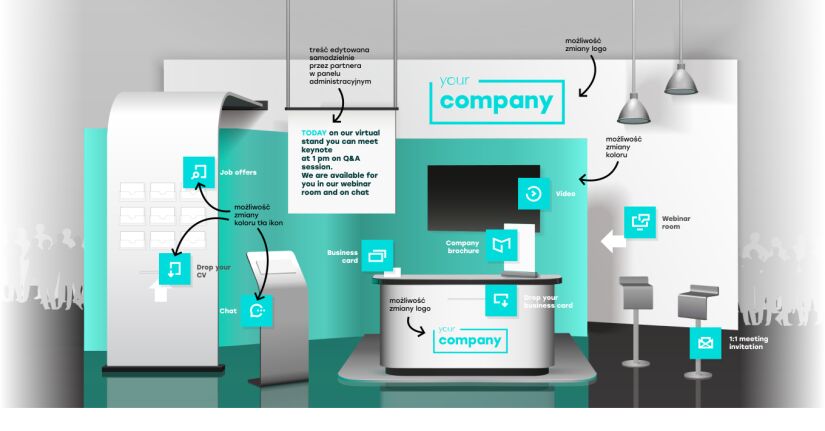
We’ve decided to create a virtual partner, media and startup expos, where each attendee can meet a company or a media representative, get to know their offer and ask for contact. We put a lot of effort to be sure that virtual booths will bring our partners the value they’re looking for. Our virtual expo utilizes numerous tools that enable us to, e.g. gather attendee data or even CVs for those companies that come to us for employer branding reasons. Moreover, our partners can arrange their own webinars, workshops and quizzes. All these activities will be visible on a dedicated agenda track and website section to attract even more interest. Our partners are asking us a lot of questions about that. It’s fully understandable because it’s a new approach they’re not familiar with. But after our explanations, they are very interested in unleashing the potential hidden behind that.
Many conference-goers say that the highlight of any conference is the informal meetings: afterparties, cocktail hour, etc. where people can just talk casually, share their stories and find likeminded individuals. How can this be simulated in a virtual space?
Actually, it’s the biggest difference between in-person and virtual events. It’s difficult to map it because people participating in virtual ones are in a completely different context, spanning their attention between different online activities, not being fully immersed in the event and people around them. So, we’ve decided to build the value here on expanding our matchmaking tool. You can look for people of the same interests, or potential customers, or investors, and invite them to meet one-on-one virtually. Besides that, we’re preparing a few surprise activities to make people feel more comfortable in this environment. So, if you like surprises, you’re welcome.
We are all still learning when it comes to working and meeting online. Do you think that when the dust settles and we’ve grown accustomed to attending virtual conferences, more industry events will be moved online, even after the pandemic?
No. I’ve talked to many event organizers, partners and participants, and from what I’ve heard, they really miss these casual talks, surprise meetings, afterparties, and even traveling. As humans, we’ve got a lot of social needs that cannot be fully replaced by virtual contact. However, on the flip side, the development of many useful online tools increasing the value of an event also won’t be wasted after the pandemic. Thus, I think we’ll be arranging hybrid events with in-person presence enhanced by many online tools developed right now.
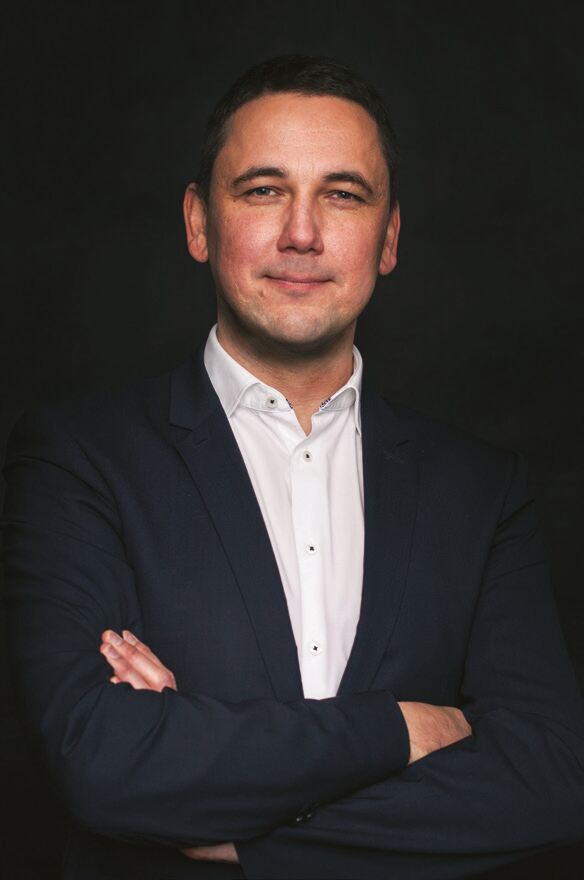
GRZEGORZ BOROWSKI is the co-founder and CEO of Infoshare – a cyclical annual tech and startups conference – the biggest event of its kind in the Central Eastern European (CEE) region. The one held in May 2018 was attended by 6,000 participants.
Infoshare 2020 Online - A Virtual Festival Powered by Technology!
The latest technological trends, startups, innovations, business challenges in times of a pandemic. All this during Infoshare 2020. The biggest online tech conference in Central and Eastern Europe, broadcasted worldwide from Gdańsk, will last 6 days and will be held on 23-25 and 28-30 September. 9 thematic scenes with live lectures and unprecedented networking opportunities await participants.


