American poetry worth Nobel Prize in 2020
23:05
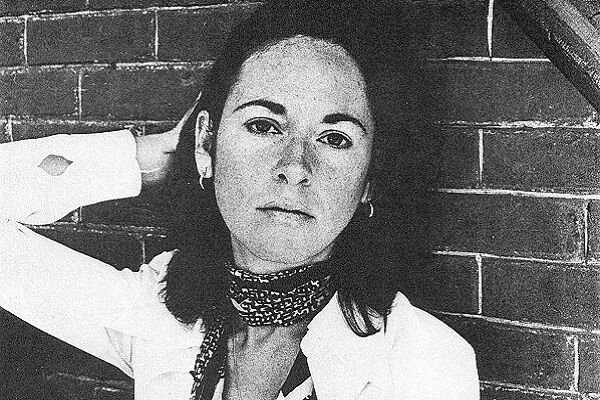
The Nobel Prize in Literature for 2020 was awarded to the American poet Louise Glück. The Swedish Academy awarded her “for her unmistakable poetic voice that with austere beauty makes individual existence universal”.
Before this year's Nobel Prize for Literature was announced, bookmakers were betting that the Swedish Academy would honor a woman this year. Among the names typed were the Canadian novelist Margaret Atwood (author of The Handmaid's Tale), the Guadeloupe writer Maryse Condé, and the Canadian poet Anne Carson.
However, it was also pointed out that it could be one of the African writers, because one of the main themes this year was racial issues in the US and the colonial past of Western Europe. In this context, there was talk of the Kenyan writer Ngugi wa Thiong'o, who has been a favorite of bookmakers for many years. The names of the annual iron candidates were also mentioned, i.e. the Pole Adam Zagajewski or the Japanese Haruki Murakami.
Louise Glück was born in 1943 in New York. Her paternal grandparents were Hungarian Jews who immigrated to the USA. The poet's father - Daniel Glück - was the first family member to be born in the United States. Although he was fascinated by literature in his youth, he nevertheless became a businessman. Together with his brother-in-law, a Polish Jew born in Suwałki and the inventor Sundel Doniger, he promoted the famous X-Acto knife developed in 1930, i.e. the first tool of this type with an exchangeable blade, and thus the progenitor of today's wallpaper and cardboard knives with broken blades.
So the future Nobel Prize winner grew up in a well-to-do family in Long Island, but in her teenage years she struggled with anorexia, which she often talks about. That difficult time left its mark on her later work. She made her poetic debut in 1968, and among the topics she often touches on are trauma, but also with unfulfilled desires. Often, it also uses references to nature.