



Are the World Cup or Euro really worth it?
14:57
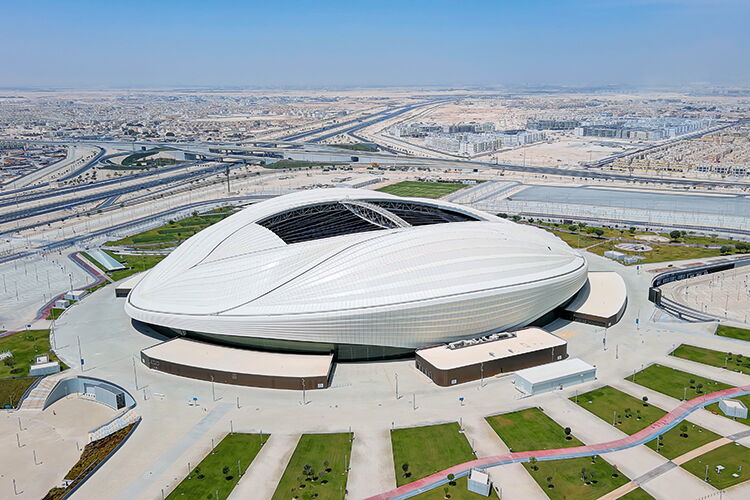
The 2022 World Cup is the most controversial in history. It is also the most expensive. Qatar spent $240 billion to host the World Cup to bring some attention to the country, which possesses the world’s third-largest natural gas and oil reserves. Seemingly the World Cup can fulfill the ambitions of sheiks who would like to show that they can do almost anything. But is it truly economically viable to host this type of event?
A positive frenzy broke out when Poland announced that it would host UEFA’s Euro 2012 football championship. It wasn’t just football fans who were celebrating. Analyses appeared in the media, which claimed that the event would contribute to the growth of Poland’s GDP. State institutions commissioned expert opinions which addressed the direct and indirect effects of Euro 2012 on the Polish economy, i.e. investments in transport infrastructure and the corresponding increase in productivity, plus the inflow of foreign direct investments. As a result, Euro 2012 was called a “positive external shock,” the effect of which was expected to be a permanent increase in Poland’s productivity and GDP. According to economic experts, GDP growth was expected to range from 1.4 to 2.7% (depending on the scenario), compared to its value in 2008, with momentum propelling further increases up until 2020. At a press conference, representatives of the Ministry of Sport and Tourism and the PL.2012 company, which was established to handle the event during the championships, announced, “The positive impact of Euro 2012 on Poland’s GDP in 2008-2020 may amount to PLN 21.3 billion.”
Politicians and bureaucrats (and the economists paid to provide expertise) are quick to tout the profits of massive events such as the World Cup. Despite the obvious claims of job creation and increasing spending, the final costs of hosting events like this are often difficult to see and usually much more significant than anticipated. What’s worse is that often the supposed benefits never come to fruition. TV rights for the previous World Cup were sold to broadcasters for more than $1 billion, as were the ticket sales and marketing rights (also $1 billion), but all of the profit was kept by FIFA. Most countries hosting a World Cup spend tens of billions on preparations, developing infrastructure, building hotels, etc. Much of that is often not recouped, at least not in terms of cash. In the book “The Economics of Sports,” Michael Leeds summarizes that the outcome of “mega-events” such as the World Cup is clear. All projections of revenue and job gains are consistently overly optimistic.
Poland spent a total of PLN 100 billion on Euro 2012 – almost two annual budgets of the National Health Fund in those years. Of that PLN 100 billion, only 4% was spent building stadiums. During Euro 2012, fans from abroad spent barely PLN 1 billion in Poland. It is estimated that the average foreigner spent around PLN 1,541 during their entire stay, and their daily expenses amounted to PLN 243. When other costs such as – booking accommodation, transport, and insurance related to the championships but incurred before coming to Poland were counted, a foreign tourist would have spent PLN 2,654 on average.
On the other hand, the positive effect of Euro 2012 for Poland was the acceleration of investments in transport infrastructure – officials had the incentive to build faster to avoid a flop. In 2008, the government announced that Euro 2012 would include building 900 km of motorways and 2,100 km of expressways.
Even if not all the roads were built, engagement in building them was evident. Other benefits included the acceleration of foreign direct investment (FDI). Euro 2012 also had a positive impact on social and image benefits, e.g. increasing the recognition of Polish cities abroad. Their mention in the media helped to build Poland’s brand. Euro 2012 was a profitable project for the private sector too. Industries that benefited from the event included: transport, trade, gastronomy, hoteliers and brewers, as well as owners of accommodation centers where national teams were hosted.
But, for a host country, is it financially worth it? The answer is "no". Most countries hosting a World Cup spend tens of billions on arrangements and developing infrastructure. However, much of that is often never recouped. People tend not to think retrospectively. An approach to past events with painful statistics is a red flag, especially for politicians. If the organization of such events was profitable, each country should be keen to win the chance to host as many events as possible and poorer countries would go out of their way to get their chance. Indeed, it is easier to organize this type of event when you already have stadiums, infrastructure, and facilities.
Nonetheless, the gain is still debatable. And that is why in 2022, Great Britain and Ireland withdrew their applications for the World Cup 2030. In their statement, they announced that the resignation was made for economic reasons. The organization of the UEFA Euro offers a similar return on investment, even with the cost of hosting a European tournament being much lower and with benefits that can be realized much sooner.
However, even if it doesn’t make financial sense to host a football World Cup or Euro, some things are bigger than money. Hosting a World Cup is an exercise in projecting soft power that appeals to certain countries: Qatar, Russia, China, and the USA. It gives the world a glimpse into the country, shows the benefits of investment, and, most importantly, wins some political clout.


