



Banking on Precision: How Risk Models Drive Innovation and Sustainability
11:27
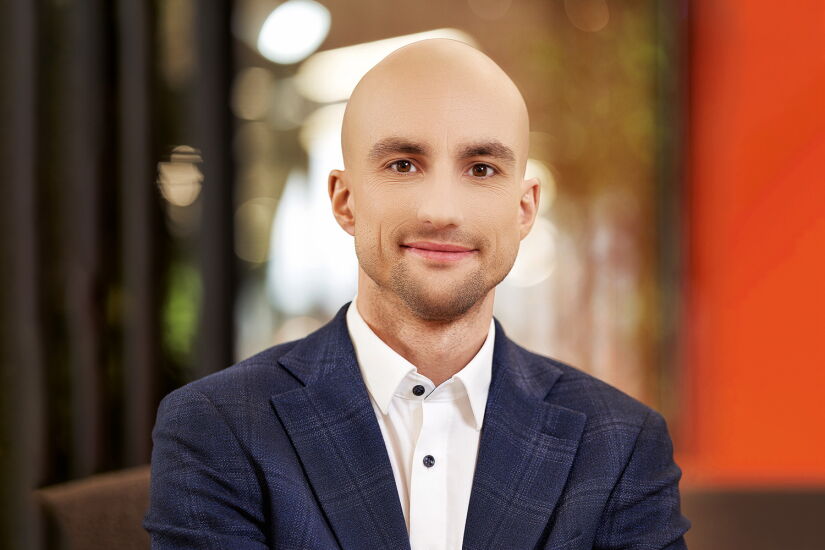
In banking, risk models streamline decision-making and risk management. They enhance precision, enable process automation, and ensure regulatory compliance. Staying ahead involves leveraging internal expertise, external partnerships, and academic collaborations.
Can you please describe what you understand by a model, and the role of risk models in the banking industry?
In banking, a model streamlines decision-making by using assumptions, scientific methods, and data. For clients, getting a loan seems straightforward, but for ING, it involves complex processes. Risk models help us decide, for example, on loan approvals or determine necessary capital for exposures. Models automate decision-making on a large scale, allowing banks to process numerous clients efficiently and allocate assets optimally. This benefits both the bank and clients, ensuring loans are granted only when sustainable. This automation represents a new industrial revolution. Models also remove biases inherent in human decision-making, leading to more objective and honest business decisions.
Models enhance precision in comprehensive tasks like pricing complex instruments, relying on data and statistical techniques. They also offer transparency, enabling result reproduction and compliance. Additionaly, models ensure appropriate capital levels that are crucial for sector's financial stability.
Your colleague mentioned ESG modeling, can you describe your ESG model in detail and its purpose?
Our ESG strategy focuses on environmental, social, and governance-related risks. The ESG model we developed covers specifically climate risk. It materializes through severe weather events, and transition risks arise from clients shifting away from fossil fuels due to regulations, consumer preferences, investor expectations, or social pressures. These transitions can be costly, creating risk.
Together with our colleagues from ING Bank Śląski, we developed a transition risk model for ING Bank Śląski’s business banking portfolio, including SMEs and sole proprietorships. This data-driven model offers a precise risk assessment, replacing heat maps that broadly assigned risk levels by sector. Now, we can better differentiate between high and low-risk clients.
The model generates a numerical score that can be incorporated into the decision-making process, helping ING manage its transition risk exposure. This development positions us as a front-runner in transition risk management using advanced modeling.
We utilize Polish market data, including emissions data from the National Centre of Emissions Management, and information from the Polish Statistical Office. Combining and analyzing this data was challenging, but the experience gained will be shared with other ING units globally to support their efforts.
ING has a key role to play in the transition of our clients to more sustainable business. We are taking the steps to fund more and more sustainable deals but still the majority of the portfolio is not yet sustainable enough.
What ideal profiles do you seek for your team, and how do you find this talent both in Poland and internationally?
The ideal candidate holds a PhD in statistics or a quantitative field like mathematics, physics, or econometrics. They should understand regulations and banking products, aiding in data analysis and model building. This ensures models meet regulatory criteria and accurately capture risks.
Finding talented people is challenging. We build a community outside ING to stay connected with domain experts and are open global hiring, diversifying our team.
Internally, we are investing in university talent. We offer tailored courses for young professionals to prepare them for modeling challenges. Experienced team members train and mentor less experienced colleagues.
Additionally, we need good managers with banking sector experience, risk management background, and understanding of model lifecycle management. These leaders combine content expertise with management skills to inspire and facilitate knowledge sharing within teams.
How do you stay ahead with knowledge of new developments and innovations?
We leverage both internal and external sources of knowledge. Internally, ING's vast pool of expertise is crucial. We facilitate knowledge flow between departments. We interact with various units within ING, including the head office in Amsterdam and other locations.
We gain insights from our independent model validation function, which offers fresh perspectives. New joiners contribute new ideas, enhancing our knowledge base. Feedback from regulators like the ECB and KNF provides precise, often critical, input, deepening our understanding. Externally, we collaborate with consulting firms on regulatory changes, new technologies, and methods. For example, we've partnered with a quantum computing firm to explore this technology and with a consulting company to integrate geospatial data into our credit risk models.
We maintain strong ties with universities like the Warsaw School of Economics and the University of Warsaw, where our experts lecture and exchange ideas. We also organize events like the Risk Modeling Congress to discuss the latest developments in risk management, including ESG and AI impacts.
Lastly, our culture of openness and feedback ensures we continuously improve and develop new ideas by following the “Radical Candor” approach, which encourages open challenge and collaboration.
For More Interviews with the Team from The Risk Hub at ING Hubs Poland:


