



Beyond borders: FDIs drive Poland’s growth & transition
12:43
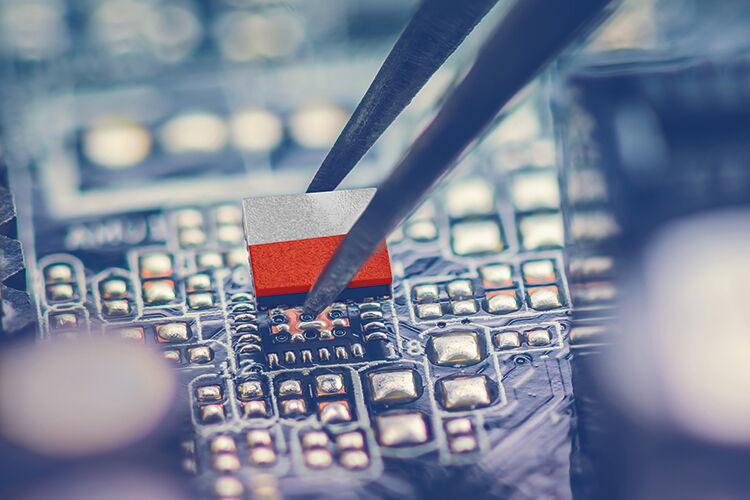
Poland’s future promises continued growth driven by the twin transitions of energy and digital transformation. Yet, as Polish Investment Zones (PSI) are added to the special economic zones (SEZ) spreading over the entire state of Poland, what are the long-term ramifications for an economy injected with large amounts of foreign capital?
By Sean Reynaud
In 2023, Poland saw the largest Foreign Direct Investment (FDI) project announced in its history: Intel’s commitment to constructing a Semiconductor Integration and Testing Facility in Miękinia, Lower Silesia, amounting to €4.2 billion. According to Intel, “This facility will help meet critical demand for assembly and test capacity that Intel anticipates by 2027.”
This development emphasized the substantial growth of Poland's high-tech sector. The Polish Investment and Trade Agency (PAIH) estimated that Poland witnessed an investment of nearly €7 billion in 2023, doubling the figures from the previous year.
“Thanks to Intel, Poland is entering a new sector of the economy. With this investment, Poland becomes a key player in the semiconductor market, aiming for a 20% share in global semiconductor production by 2030. The impact extends beyond Poland to the entire European Union, making Central Europe a new driving force,” said Marcin Graczyk, press officer, Polish Investment & Trade Agency (PAIH), the organization credited with making Intel’s investment possible.
Other significant projects, like Umicore and Volkswagen’s PowerCo investing nearly €1.7 billion in Nysa, showcase Poland’s potential in electromobility.
“Electronic conglomerates and companies associated with the automotive industry, including those producing components for electric cars and batteries, are transferring production to Poland. Recently, investments from machinery and building materials sector companies are also being observed,” said Radosław Sowiński, an expert in strategic relations at BGK, Poland’s development bank.
Robert Bosch, a German company, will invest €400 million for two projects, including the construction of a heat pump factory near Wrocław. Mercedes has also announced its plan to build the world’s first purely electric plant, an electric van factory, in Jawor, Poland, with a value of €1.3 billion. Combustion engines have been in production in Jawor for Mercedes since 2019, and its battery systems have been in production since 2021.
American companies UMA Investments and Footprint Poland have invested PLN 456.7 million and PLN 411.2 million, adding 660 new jobs to the Łódź Special Economic Zone. One of the benefits of this investment is the cargo railway network that connects Łódź to Chengdu, China. Footprint, a packaging company that uses plant-based fiber alternatives to plastic, has announced the construction of a paper packaging factory for $86 million.
Assuming a stable trend in growth in the coming years, FDI may amount to as much as PLN 208 billion by the end of 2024, according to a recent PwC report. But what accounts for these investments? Where are they investing?
Globalization is adapting
The uptick in recent investments reflects the changing nature of globalization, the climate crisis, Poland’s membership in the EU, and the education of its workforce.
“Disruptions in supply chains, driven by events like the COVID-19 pandemic and the war in Ukraine, prompt businesses to explore new, safer collaborations. Nearshoring gains popularity, benefiting stable economies in Central and Eastern Europe, particularly Poland,” said Graczyk.
“The country's appeal grows for innovative industries, with e-mobility, BSS-IT, and R&D projects thriving. Poland's safety and strategic location make it a hub for global companies like Visa, contributing to economic development and knowledge exchange,” he added.
Reshoring manufacturing operations closer to customers proves economically sound and aligns with environmental goals by curbing carbon emissions associated with overseas shipping. Still, the materials for production remain far removed from industrial areas.
What has changed is the flow of data and know-how. Olivia White, director of the McKinsey Global Institute, stated in a recent podcast, “In general, regions that are manufacturing regions depend very strongly on the rest of the world for resources: food to some degree, but really energy and minerals.”
Poland’s investment attractiveness goes beyond infrastructure, with its well-developed roadways and underutilized modern industrial and warehousing stock. It's mainly about the people. “Professional services and IP are growing fast,” White added.
Professional services, like engineering, are experiencing a 6% annual growth, outpacing slower growth in resource-related flows. Intellectual property (IP), including movies and music, is growing even faster – but accounting for digital IP is challenging.
What does this mean for Poland?
Poland’s highly educated workforce could easily manage data flows and IP at a time when they are sorely needed, and it is far cheaper than in countries like the United States. Furthermore, three of the four categories Oliva White identifies as evolving throughout the global supply (semiconductors, electronics, pharmaceuticals, and the mining of critical minerals) are those areas that require a well-educated workforce, like that of Poland.
“Poland emerges as a top global market for IT outsourcing, driven by a shift in perception from offering cheap labor to providing highly skilled professionals. The country actively welcomes know-how from established market players and contributes innovative technologies. The growing pool of highly qualified talent, especially in engineering and R&D, positions Poland as a key player supporting the development of tech giants like Microsoft and Google,” PAIH’s Graczyk explained.
It’s been a long time coming
The success of Polish FDI attractiveness didn’t come overnight. Following the Act of 1994, Special Economics Zones (SEZs) were established mainly in post-industrial, economically excluded areas with high unemployment. This resulted in a total coverage of about 0.08% of Polish territory. Despite offering investors multiple incentives within designated Special Economic Zones, what really accelerated FDI growth was creating a nationwide Polish Investment Zone (Polska Strefa Inwestycji or PSI) in 2018.
“The Polish economy is in a completely different place today than it was five years ago when the Polish Investment Zone was established. Today, the entire country is one large investment zone, and Poland has become a good place to do business,” said Minister of Development and Technology Waldemar Buda.
Incentives abound
The old SEZs still exist, and permits to do business in these areas are valid until 2026. The amendment of 31 July 2019 allows government support for those willing to extract undeveloped mineral deposits. But by 2023, PSIs were added to include nearly the entire nation, with the establishment of 14 zones. Almost 70% of PSI investments are now located outside former SEZ regions.
According to Poland’s Ministry of Development and Technology, the Polish Investment Zone has garnered PLN 109.5 billion of declared investment value from September 2018 to the end of August 2023. Over 45,000 new jobs resulted after the enactment of a law in May 2018 that aimed to establish a much larger area for PSI. Only in Jan-Aug 2023, By the end of August of this year, 288 support decisions were issued, with an investment value of PLN 10.8 billion and the creation of an estimated 4,700 new jobs.
Entrepreneurs within the PSI benefit from tax relief and public aid in the form of income tax exemptions (CIT or PIT) of up to 70% of the value of the investment. Of course, the amount of relief depends on the region and its socio-economic situation.
Greenfield and brownfield
The process of foreign direct investments is complicated. Brownfield investments (purchasing shares entitling up to 10% of the votes on a board, allowing an investor to quickly enter a market by benefiting from existing facilities or infrastructure) and greenfield investments (building an entirely new entity and/or facilities) both allow for quick integration into the Polish market. Poland accounted for 25% of greenfield investments in the CEE region in 2022.
FDIs positively impact productivity in the host country and allow for an increase in the host’s export income. FDIs often introduce technology transfers and standards related to work organization and production, which benefits the host country.
The influx of foreign capital leads to an increase in labor productivity, with increases in the competencies of the local workforce over time. Foreign investments usually translate into more than proportional growth in the overall value of investments in the host country. There is a complementary relationship between foreign and local investments, especially with the help of economic zones.
What are the downsides for Poland?
However, there are associated risks with FDIs that should be highlighted, and these risks can be quite substantial. Dependency on multinational corporations entails relying heavily on foreign companies, causing Poland to become excessively dependent on the operations and decisions of these multinational corporations. Consequently, this heightened dependency makes Poland susceptible to global economic fluctuations, which can impact the performance of foreign-owned businesses and, consequently, the overall economic stability of the host nation.
Poland has gone out of its way to give tax breaks to incoming FDIs, but does it balance out? The repatriation of profits by foreign-owned businesses may drain financial resources from the host country, limiting funds for local development projects. Additionally, FDIs may contribute to income inequality, as the benefits, such as job opportunities and higher wages, might be unevenly distributed, resulting in a widening wealth gap.
Environmental concerns arise when foreign companies do not adhere to the same environmental standards as domestic businesses, leading to degradation and sustainability issues. For some companies, like Intel, business deals come with a twist on the environmental front, as outlined by Glenn Barklie, chief economist at Investment Monitor, “With Poland still largely reliant on coal for its energy, it will be interesting to see how quickly the country can make the switch to renewables given Intel’s commitments to use 100% renewable energy by 2030. On this front, we have seen strong, recent growth in inbound renewables FDI in Poland, particularly onshore wind and solar power.”
Moreover, foreign investors, particularly large corporations, can wield significant political influence, potentially compromising the sovereignty and decision-making autonomy of the host government.
While it feels like we should be excited about FDIs in Poland, perhaps some caution is warranted. Incentives were extended to Intel and other companies to stimulate economic growth in Poland and potentially evade the middle-income trap common in rapidly developing economies. However, with the World Bank reporting a GDP per capita of $18,321 for Poland, it appears that the country has successfully overcome the challenges associated with the middle-income trap.
Expert view
What will 2024 bring?
It seems that the prospects for 2024 are promising for Poland. Despite the global economic slowdown observed in recent years and ongoing market uncertainty, international companies will continue to invest in the Vistula region. This is influenced by the so-called twin transition process, involving simultaneous energy transition (aimed at increasing the share of renewable energy sources in the energy mix) and digital transformation.
Shortening and securing supply chains are critical trends related to the influx of foreign direct investments. Companies operating in the international marketplace are moving factories closer to consumer markets and investing in technologies that make supply chains more autonomous. These trends are further supported by growing environmental challenges, prompting entrepreneurs to optimize flows within the supply chain and operate more extensively in local markets. Locating factories closer to consumer markets also reduces the manufactured product's carbon footprint.
The trend of nearshoring and relocating production closer to target markets, which we observed this year, will continue to play a role. Some companies opted for nearshoring after disruptions in supply chains during the pandemic and due to increased geopolitical risk after the outbreak of the war in Ukraine.
International corporations prefer investing in countries with a large and thriving domestic market, as it facilitates finding buyers. Poland’s main advantages as an investment-receiving country, including its attractive geographical location, developed infrastructure, educated expert workforce, and low labor costs, should continue to attract foreign investors. Not surprisingly, Poland, Turkey, and Morocco are countries identified by analysts as potential primary beneficiaries of ongoing changes.
- Radosław Sowiński, Expert in Strategic Relations at BGK


