



bit by bit
01:40

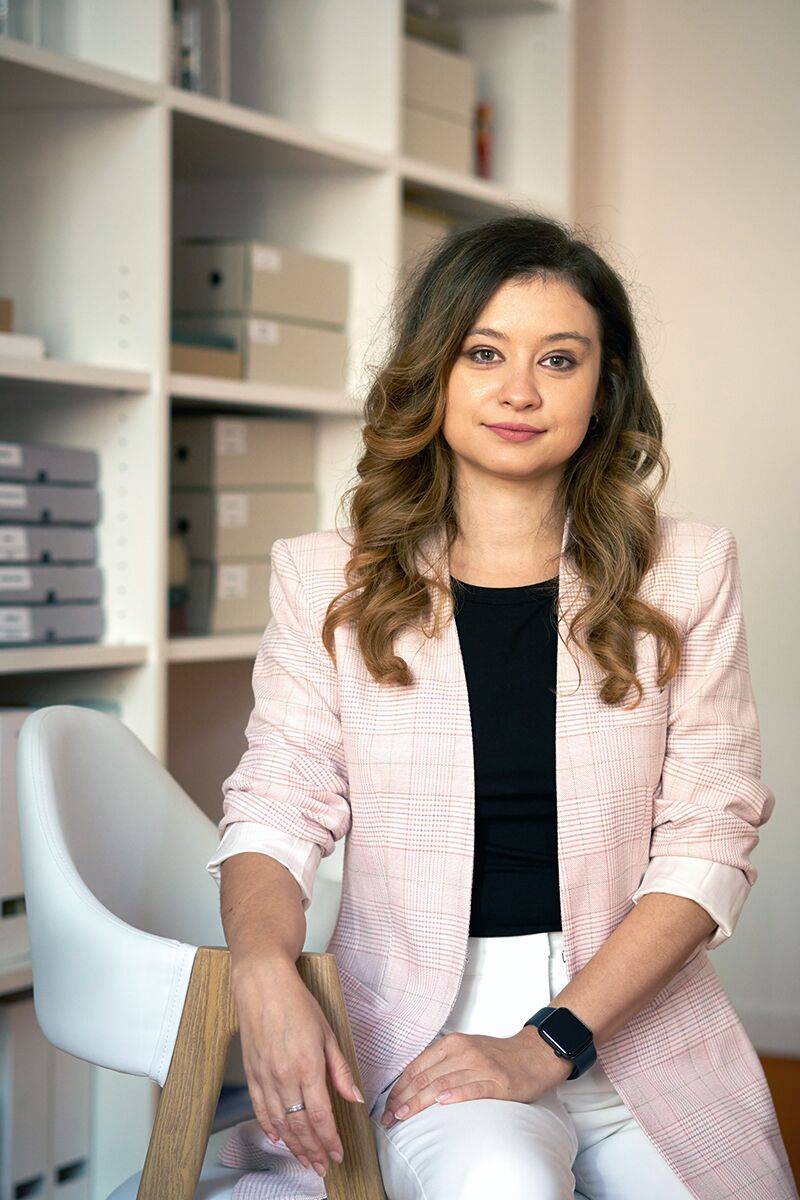 WBJ: How popular are cryptocurrencies in Poland? How big is the cryptocurrency market in Poland? What role, if any, do they play in the Polish economy?
Katarzyna Wabik: We see growing interest in crypto among Poles. According to the latest Revolut report, in the first quarter of 2021, Poles spent nearly four times more for this purpose than in the fourth quarter of 2020. Binance cardholders can pay with cryptocurrencies for purchases in traditional stores. There are more and more bitomats, i.e. machines dedicated to the purchase or sale of crypto assets. Cryptocurrencies are increasingly entering the everyday life of the inhabitants of our country. It does not mean that the process is frictionless.
However, we are still very far from mass adoption. The industry is growing and we see a lot of entry barriers — regulation is not crystal clear, the level of education about cryptocurrencies is also quite low. At Binance, we put a lot of effort into this — we work with regulators around the world. We want to be 100% compliant. Also, we educate our users. We have Binance Academy: an educational platform with a very useful content base.
Is the cryptocurrency market regulated in any way in Poland? Is the government aiming to do so?
Cryptocurrencies as an asset are not regulated in our country. However, as of October 31 this year, new rules concerning the activity of entities providing services for the purchase, sale and exchange of crypto assets are set to apply throughout the EU. All such organizations must make an entry in a special register, update internal procedures and train their employees.
When speaking about regulations, one cannot fail to mention the EU Markets in Crypto-assets Regulation (MiCA). Through the act, lawmakers bring about the harmonization of cryptocurrency regulations throughout the EU. The new regulation is to introduce a legal classification of cryptocurrencies, a single European license for suppliers and separate emission rules.
As Binance, we have been sealing KYC and AML procedures for a long time on regulatory requirements adaptation purposes. For all European countries, we will soon launch a new KYC program that will adhere to the strictest EU standard requirements. This program is aimed to have all the customers registering from European countries to be fully verified at the onboarding stage. Binance will start to cooperate with several external partners to secure the best of AML and KYC mechanisms.
We believe regulations are very important for the crypto industry. Binance is ready to assist regulators from around the world and together find the optimal way to set a fair playing field — consumer protection. We are completely open to dialogue. We want to create a sustainable ecosystem around blockchain technology together.
In light of climate change, how sustainable are cryptocurrencies, given recent estimates suggesting bitcoin's annual energy consumption is similar to that of entire Poland? (Of course, there are thousands of other cryptocurrencies and not only BTC, so others might be better or worse in terms of energy consumption.)
There are a number of environmental concerns around bitcoin. Some of which are overstated but as an industry, there is work to do to improve. Of course, it should not be forgotten that there are factors influencing climate change much more than bitcoin mining. The Climate Accountability Institute report clearly indicates that one hundred companies accounted for 71% of greenhouse gas emissions in the last 30 years. Companies that operate within a defined political and social framework and are legally regulated. However as I mentioned before, the industry has some work to do to minimize its impact on the environment.
This problem can be solved by disseminating a different consensus mechanism. Proof of Stake, which is a contrary mechanism to widely applied Proof of Work, does not need high computing power to achieve consensus and therefore is much less energy-consuming. It is worth mentioning that our proprietary coin BNB, which is based on Binance Smart Chain, uses the PoS consensus.
Another solution can be using the surplus energy generated by nuclear power plants to power up cryptocurrency excavators. This scenario is seriously considered, for example, by the Ukrainian Ministry of Energy.
Cryptocurrencies have only gained traction after 2008. What will they look like decades from now, especially in Poland/the EU?
Despite exchange rate fluctuations and periodic drops in value, cryptocurrencies have shown an upward trend since their inception. This is best illustrated by the case of Laszlo Hanyecz, who in 2010 bought two pizzas for 10,000 bitcoins. If he made the same purchase today — we could then talk about the two most expensive pizzas in the history of mankind, worth over $600 million, according to the current BTC exchange rate.
I think the world is on the right track to adopt cryptocurrencies into the global economic system. The best proof of this is the recent debut of an ETF-based on bitcoin contracts on the New York Stock Exchange. We are witnessing a contact between the world of traditional finance and the world of cryptocurrencies. This is also a kind of validation of crypto assets in the US regulatory environment.
Certainly, the wider adoption of cryptocurrencies can be accelerated by relevant authorities introducing market regulations. At Binance, we are open to cooperating and ready to share our knowledge and experience with them.
El Salvador became the first country in the world in September to officially declare bitcoin as legal tender. However, the vast majority of people across the world know little to nothing about cryptocurrencies, several recent surveys have revealed. How viable a future do cryptocurrencies have in Poland/the EU?
The regulatory changes, which mentioned earlier (MiCA) will surely help establish a framework that crypto industry players can adhere to. It will also inspire confidence in mainstream users, which might incinerate a widespread cryptocurrency adoption.
How big a concern is it that cryptocurrency has become the “currency of the alt-right,” white supremacists, hate groups (according to an Associated Press investigation)?
First of all, it is worth noting that cryptocurrencies from the beginning of their existence are an asset intended for everyone. There is no distinguishing between gender, sexual orientation, skin color or religion.
The activities of nationalist and far-right groups are radically at odds with ideas that are fundamental to the cryptocurrency ecosystem.
The source says that American alt-rightists acquired about 112 bitcoins as of January 2017. Chainalysis managed to report 12 far-right organizations in the US and Europe that collected a total of 213 bitcoins.
When colliding with data such as the daily mining of bitcoin, reaching about 900 tokens and a total of 18.6 million BTC in circulation, calling bitcoin the alt-right currency is very harmful. Apart from the title, focusing on the content contained in the article, of course, we do not deny the existence of the phenomenon of hate groups using cryptocurrencies to finance their activity. This problem can be solved by sealing KYC and AML mechanisms, which are supposed to work not only against money laundering but also terrorist financing. As Binance, we are active in this field, as I mentioned earlier.
Considering reports that cryptocurrency crimes have increased 312% per year on average since 2016, according to Crypto Head, a cryptocurrency news outlet, how safe is it to invest in cryptocurrencies?
The cryptocurrency market's total value of $7 billion in 2016 has reached the limit of $2 trillion this year. Crypto activity is growing dynamically from year to year. The increase in the percentage of cryptocurrency crimes is not that drastic, given the contrast of the overall growth of the industry.
However, this problem does exist. As the world’s leading cryptocurrency company, each day we are exponentially strengthening our processes and policies to ensure that Binance’s ecosystem remains the most secure in the industry and that we continue to be a good partner to regulators across the globe. Binance partners with law enforcement agencies across the globe on a near-daily basis to work together to stamp out illicit activities in the crypto ecosystem.
We take user and platform security very seriously and strongly believe that we have the most sophisticated processes and technology in place to identify and thwart bad actors in the industry. Our investigations discovered accounts that were believed to be engaging in illicit activity in June. We took immediate corrective action by blocking and offboarding all related accounts and transactions, which we attributed to Suex [the first crypto firm sanctioned by the US].
This is just the latest example of our organization working collaboratively with law enforcement and regulators to address illicit activity in the industry. Binance has helped take down major cybercriminal groups laundering ransomware funds including the FANCYCAT operation and Bulletproof Exchanger Project which include these “bulletproof exchangers,” such as suex.io and buy-bitcoin.io.
It’s imperative that we as an industry continue to find pathways to partner with regulators and law enforcement in pursuit of our mutual goal of creating a more secure ecosystem for users.


