



Building Success in a Changing Landscape
15:32
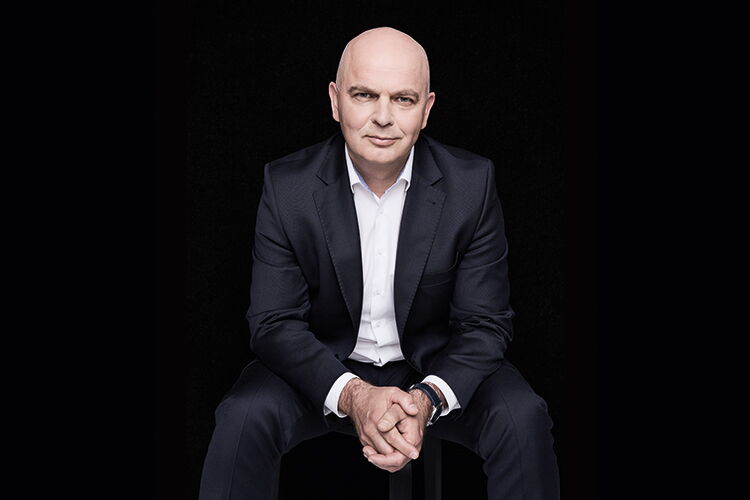
Let us begin the interview by getting to know Torus a little better. Last year, you celebrated the twentieth anniversary of the company’s existence – tell us how the company has developed over the past two decades.
Sławomir Gajewski: Initially, Torus was not intended to be a large player in the construction development industry. It was established as a small entity primarily to support the operations of Gdańskie Wydawnictwo Oświatowe, in which Torus participates in the ownership structure. Consequently, our initial focus on real estate investments was modest, aimed at diversifying our business and effectively managing the surplus capital generated by the publishing office.
At first, we embarked on the construction of our new head office alongside the construction of an accompanying warehouse. However, the breakthrough came with the commencement of the construction of the Arkońska Business Park project, the first office park in Gdańsk. It was at this juncture that Torus embarked on its current trajectory, positioning itself as a developer that provides modern office spaces, and space for the developments for both local and global companies.
The decision to venture into this investment was a deliberate one, informed by various considerations and observations. We identified a significant gap in the market supply and closely monitored the development of the Warsaw market, which was already at a more advanced stage. It proved to have been a sound decision as we gained invaluable expertise. The buildings quickly attracted tenants, and we subsequently sold the investment in multiple tranches to various investment funds.
Another pivotal moment for us was the acquisition of Chemia, a company that propelled us further forward. Next, after acquiring post-industrial areas in Gdańsk Oliwa, we developed a multifunctional complex called Alchemia, which became our flagship investment and helped establish our position among the top commercial developers in Poland.
You invest primarily in the Tricity, whilst enjoying the position of being an undisputed leader in the office segment – are you going to remain solely in this area, or do you have plans for a broader geographical expansion?
We are committed to maintaining our leading position in the Tricity office market, though we are also expanding into other markets. Apart from our existing investments in the Tricity, we are actively involved in the hotel industry. In collaboration with a partner, we have successfully completed the Altus Palace project in Wrocław, and we are currently preparing another hotel project on Pankiewicza Street in Warsaw. Additionally, we have ventured into the logistics sector with a warehousing investment in Gdynia, marking our second project in this segment.
Furthermore, we are laying the conceptual groundwork for PRS (Private Rented Sector) projects and have exciting plans for a multifunctional concept in Gdańsk. We remain attentive to the ever-changing landscape and challenges of the office market, conducting thorough market analyses. Moreover, we are open to exploring new segments within the property sector, constantly seeking opportunities for growth and innovation.
You have vast experience in the office space segment which is now undergoing post-pandemic changes, calling for new adaptations from developers/investors – how do you adjust to the new market requirements?
We carefully listen to the evolving needs of tenants who are facing increasing difficulty in defining their expectations precisely. As a result, we strive to act as advisors throughout the entire process, facilitating discussions and emphasizing the crucial aspects that matter to each tenant and their employees. These aspects include comprehensive safety measures, convenient locations well-served by public transportation, a healthy work environment, flexible and adaptable spaces, and energy-efficient buildings.
Undeniably, coworking areas are gaining tremendous significance. To meet the growing demand for flexibility, we have collaborated with market experts to establish Collab, which caters to these needs. However, we acknowledge that large office complexes will continue to be essential for companies that employ thousands of individuals and rely on office-based work due to their business models. Furthermore, the generational shift necessitates a widespread adjustment in the approach to creating office spaces. Work-life balance is increasingly important, particularly for younger individuals. Our future objective is to construct a city that fosters a friendly environment, where places of work, residence, everyday errands, or opportunities to benefit from various forms of activity and relaxation, are not far from each other. It is crucial to consider the location of the investment, urban area locations, and well-chosen amenities, taking advantage of the strengths and specifics of the surroundings.
I firmly believe that the significance of the mixed-use segment will continue to grow, not only for large office complexes but also for smaller-scale investments. Such well-planned multi-functional projects, harmoniously blending into their surroundings and benefiting from excellent public transportation options, have already achieved tremendous success throughout Poland.
You have sold many of your office buildings to investment funds – do you plan to continue this process, and as is the case in other areas of the property market, do you feel any signs of a slowdown? Is it more difficult to acquire financing?
Our branch is feeling the slowdown, and we are confronted with numerous challenges. Acquiring financing has become difficult due to high interest rates and uncertainties in the financial markets. The ongoing war in Ukraine also has an impact on the situation. As a result, investment funds are exercising caution when it comes to purchasing real estate. Despite these challenges, I remain optimistic that this trend is temporary, and we will be able to sustain our operations in this model and achieve further successes.
You have strengthened the management board recently – is it a signal that promises your further ambitious investment plans?
Absolutely. Our investment and development plans, combined with the significant challenges in the current market, have necessitated the strengthening of our management team. The appointment of Przemysław Ryś to the board is part of a carefully planned long-term process of business succession, conducted in agreement with the company's owners, which is expected to last for a period of two to three years. Furthermore, Przemek has assumed the role of Chief of Operations, enabling us to effectively share the responsibilities of day-to-day management. As a result, we can operate more efficiently while actively pursuing new opportunities in the market.
Is the difficult market situation changing or suspending your investment plans?
We are among the few active office developers in the Tricity region. Currently, we are in the process of constructing Punkt in Gdańsk Wrzeszcz, and we are also preparing for the launch of another project, DOKI Office, located in the post-shipyard areas, right in the heart of Gdańsk. However, we believe it is crucial to exercise caution during these challenging times in the commercial market, leading us to slightly decelerate our actions.
On the other hand, we are intensifying our efforts in other segments to address the evolving challenges and needs of the market, clients, and the community. One example is our focus on mixed-use projects, one of which is currently underway on the site acquired from Zakłady Przemysłu Cukierniczego ‘Bałtyk’ in Gdańsk. This project aims to deliver a total area of twenty thousand square meters of multi-functional space over several phases, while also considering an original concept of a theatre hall. We have concrete plans in place and strive to stay one step ahead, anticipating future demands and opportunities.


