Different reality
22:47
WBJ: The post-Covid world of work will never be the same. What talents/specialties are employers in Poland looking for when hiring new employees?
Piotr Nowosielski: The world after Covid is really different from the one we knew before the pandemic. But for the IT industry itself, paradoxically, not much has changed. We just work more from home. That’s the truth.
It was a real shock for many companies. A few have adapted. Many benefited from this situation. At Just Join IT, we were prepared for such a scenario. Just like many other companies, before the pandemic, we used the hybrid work model and some even worked fully remotely. However, this was not the case everywhere. I can imagine the uproar that this change has caused in daily duties in other workplaces. Although we have been sitting at home for so many months and managed to standardize certain processes, the post-Covid world of work emphasized the need to invest in the so-far underestimated soft skill — time management.
In times when we face communication difficulties (because it is not enough just to turn around in the chair to ask a question to a colleague or colleagues) and a huge number of distractions disturbing us, many people find it difficult to concentrate on their tasks and organize their time in such a way as to complete all the tasks. Therefore, these days, the most desirable employee is the one who is independent and can ensure that everything is delivered on time. If she or he can do it remotely, that person will be even more effective in the office.
How can Polish businesses retain their workers and in turn reduce employee turnover? More/better employee wellness perks and benefits?
As I mentioned, times have changed and we have to adapt to them, whether we like it or not. Many studies and reports indicate that the ability to work remotely is an absolute must-have for any modern organization. We all sat down and that stayed with us. For me, this is rather unfortunate, because I love integrating with my team in the office, but 88% of people demand flexible employment. If, thanks to this, people work more effectively and feel more confident in their roles, it is our duty to provide them with comfort at work.
This is a fundamental benefit that will allow employers to adapt the working environment to modern requirements. But it is more than just that. We cooperate with a great company — AskHenry — which offers the support of its personal assistants. Such an assistant may be entrusted with basic duties that you normally don't have time for, such as buying an important item in a store across town or sending a package. Not only me, but many people from Just Join IT. They saved their lives!
Millennials have been entering the nation’s workforce for several years and will continue to make up a larger percentage of the staff at most companies. How can HR departments keep up with younger workers’ different sets of ideas and priorities for their professional careers?
Millennials, but not only them. After all, for several years now we have been talking about generation X, Y, or even Z. With such a distribution, I am probably a boomer! Young people navigate the labor market more and more boldly and leave more and more visible traces on it. Just look at how the larger companies and businesses are starting to communicate — entering TikTok is just the tip of the iceberg. We see the teen language not only there, but also on social media, as well as in offline campaigns. The nerve of young adults is really impressive, but why should we be surprised? After all, they are the most agile in the modern world. How can HR departments keep up with them? It is enough for them to follow them — follow the trends, be up to date. We will never be on the same level of thinking. But it will make it easier for us to understand each other. However, we have to be careful and not do it blindly. I myself always choose humility, which millennials often lack. I must admit that I am demanding not only for myself but also for my employees. I bet on doers — the people who, instead of complaining, will just get up after the fall and start doing their thing with even greater ferocity. And such an approach must be expected from young people.
Remote work is going to stay. While some employers have welcomed permanent WFH and the hybrid model, some others expect their workers back in offices across the country. Why such differences? Where do the differences lie?
Indeed, many companies have attempted to persuade their employees to return to the office and, certainly, some of them will not only decide to do so but also had been hoping this whole time that it would finally happen. In our opinion, it is a mistake to fully ban remote work, even for one day a week. You have to take into account that not everyone is favored by being in an office full of distractions and — which is characteristic nowadays — people. Often, our professional duties require a strong focus and for some, although they are great at their job, a moment of distraction is enough to lose it.
On the other hand, we have extroverts who do not work alone at all. Such people live off integration with others. You cannot think in terms of zero-one in this regard.
Poland has recorded the second-largest increase in employment during the pandemic among all EU countries, the latest Eurostat figures reveal. Yet many corporations complain about the lack of skilled labor. How grim is the situation in reality?
It is difficult to answer this question unequivocally. Many organizations are ahead of their time and organize internship programs during which they teach a profession and select the most committed candidates. Instead of complaining about the lack of skilled workers, they have developed programs where they teach anyone who is interested and in some cases, also pay for the participation, at each stage of the internship program.
But, indeed, as our data shows, there are more juniors on the market than the offers (for the juniors) and on the other hand, there are more offers for the seniors than the seniors themselves. This leads to the tragedy of anti-commons in the marketplace: everyone wants to have qualified people, but, in order to have qualified people on your team, at some point you have to take a step back, train and expand the base and then take two steps forward.
Many organizations across the world responded to the pandemic's economic impact by reducing their workforce and/or workers’ wages. The situation has improved for some, though. How optimistic does the future look for employees especially in Poland?
It cannot be denied that no one expected a black swan event in the form of a global pandemic, which took us all by surprise. The thermal shock caused by jumping in at the deep end also affected us and, like many entrepreneurs, we had to take action. Fortunately, like with any other shock — it was short-lived. The situation quickly began to stabilize and, after a few months, we observed a return to normalcy in terms of looking for the employees on the market, but also a sharp increase in the demand for the professionals. New situations and reality require businesses to adapt, which is why a good specialist is so desired by everyone today.
Today, the time of uncertainty is slowly fading away and companies have been getting back on track full steam ahead for several months. Paradoxically, harsh as it may sound, we all needed this to realize how important the valuable employees are. We entered a dark tunnel, and although the exit seemed to be really far away, it was actually much closer than everyone had thought. I am not saying that everything has returned to normal but I am optimistic about the upcoming months.
Although some organizations have recognized the humanitarian crisis of the pandemic and prioritized the well-being of employees as people over employees as workers, others have pushed employees to work in conditions that are high risk with little support — treating them as workers first and people second. What should companies do to treat their people more humanely (not just employer branding)?
The answer seems simple in theory and, in a way, you have answered this question yourselves already: companies generally should treat employees like people, not just the employees. However, it is often the case that what can be included in one sentence actually involves many factors and is not so easy to implement. It is best to say that the example should come from the top. Every CEO, director, the manager should feel like a leader who not only sits behind the desk and throws everyone else in the basket but puts on team play and pulls the team forward. This approach allows a person to gain a completely different perspective and above all, empathy. Everything else comes with it.
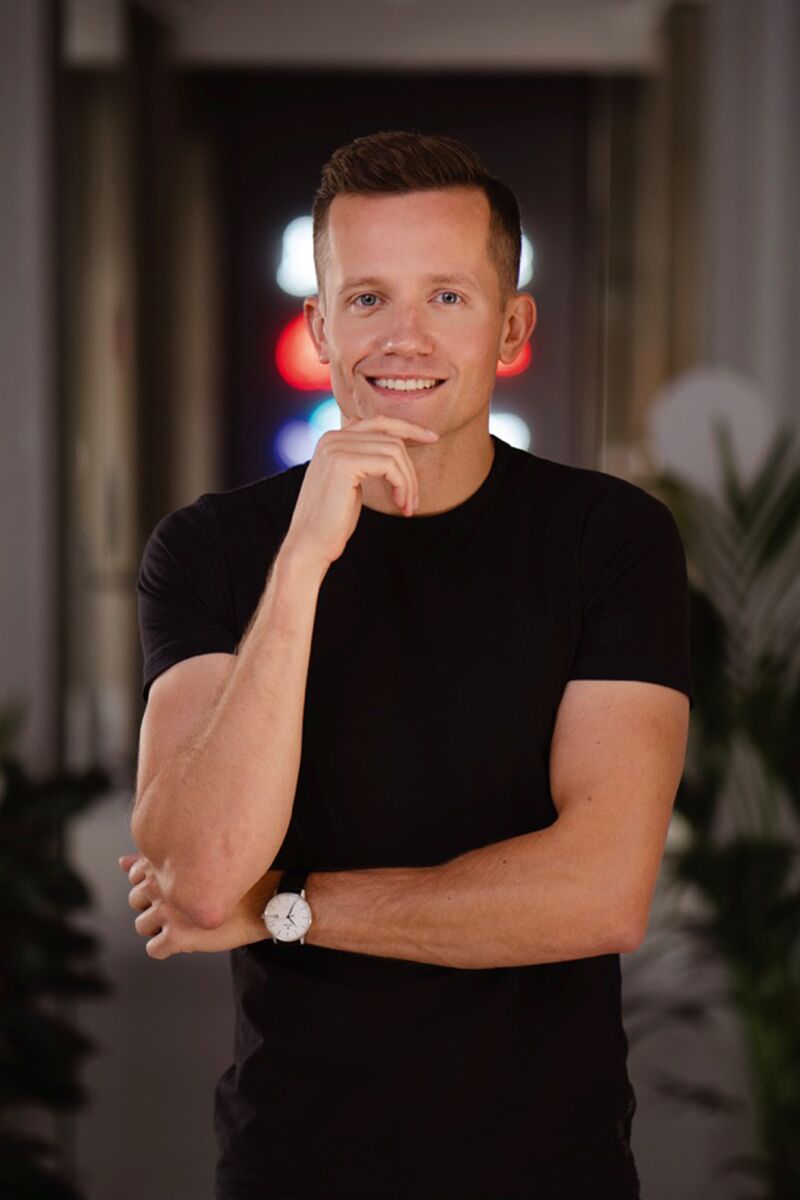
Just Join IT is a Polish startup that is currently one of the fastest-growing job boards for the Polish IT industry. Piotr Nowosielski is its CEO.