Divided we stand
09:00
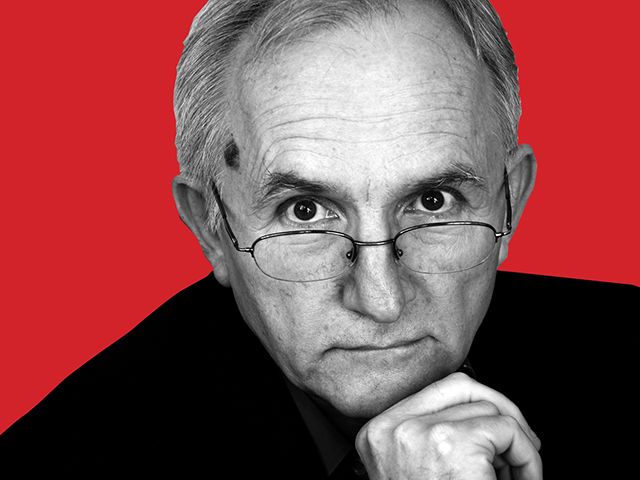
WBJ: You’re the author of the “Social Diagnosis” report. What does it tell us?
Janusz Czapiński: The “Social Diagnosis” project analyzed the quality of life of Poles from 2000-2015. According to the results published in 2015, as many as 81 percent of Poles said they were happy. They were content with their families and work. However, they attributed their achievements to their efforts and not politicians’. The results also showed that Poles did not trust each other. Their identities were deep-rooted in Catholicism. They were largely conservative and not interested in fortifying the Polish civic society. They thought about making money all the time. So you could argue that the Polish soul was corrupted to a certain degree. Our happiness was materialistic.
Poles were religious …
Well, some people did give credit to God for the improved situation. And if they were not satisfied, they would blame the government. It seemed Poles equated happiness with money, and having faith in the church and traditional families. Other matters, such as the rule of law, democracy and honesty in the public sphere, did not seem important. Their values appeared to be built on pride, religion, and Polish history, culture and tradition.
What else did the results show?
Many Poles during this period had loans. The majority of the households had cable TVs and as many as 71 percent had access to the internet. The report showed that more and more people had higher education and could be considered cultured. You could say that there was a development on a personal level. However, there was still a huge wealth disparity. There were many poor people in Poland. After joining the European Union Poles moved to other countries in the bloc in droves. Their lifestyle choices were influenced by the cultures of their adopted countries. They earned more money compared to their fellow citizens back home. The European funds helped develop Polish villages, cities and businesses, in addition to enlarging our export portfolio. As a result, most of the Poles [according to the report] were pro-EU.
The project was interpreted differently by political parties?
Various political parties held power during the time the research was conducted. So the reactions depended upon the political attitudes and differed. The findings were based on facts and not politics. I stress that the social scientists who conducted the [“Social Diagnosis”] study, based their conclusions on answers from people who participated in the project and not on political perception.
“ I hope that the reins of power in Poland will be held by those who build bridges of understanding, not those who build barriers instead
Can you, as a Polish citizen and not as a social psychologist, tell us why are so many Poles concerned about the current political situation in the country?
The majority of Poles these days demonstrate an active approach to the political situation in the country. They are divided into two groups that do not like each other. I call them two tribes. The dominant group is the one that is deeply Catholic. They think that [the ruling Law and Justice party] PiS are the only party that can improve their economic situation, uphold the sovereignty of the nation and promote Catholicism.
On the opposite spectrum is a group of people that rejects PiS’ policies – their violation of the rule of law and Poland’s democracy. This other half of the electorate doesn’t support any one particular party per se but they call out PiS’ demagoguery – appalling treatment of people of color, different religions, different sexuality or ideology. PiS have their own version of Polish history. Should something not fit their narrative, they reject it. They are trying to control all public institutions, budget policies, tax policies. Using the garb of grand words, they cover the brazen behavior of their top officials. As you can imagine, the confrontation between the two tribes is extremely hostile. And the language used in the argument is brutal. So one could claim that in Poland there is a kind of domestic war.
After the last parliamentary elections [October 2019], PiS won the majority in the lower house.The opposition took control of the upper house. A new chapter in Polish politics?
Yes, it is, largely because the Polish society is still evolving. In my opinion, the last general election was ideologized the most since 1989. [Poland held democratic elections for the first time since the fall of Communism in June 1989. For the first time since, after the fall 2019 elections, the ruling party took control of the lower house of Polish parliament while the opposition took charge of the upper house.] Showcasing various views and lifestyles, many Poles voted for a host of parties other than the two main ones. The 2019 elections showed that the benefits doled out by the ruling [PiS] party are important but not the most important.
Not only the Civic Platform (PO) party – the biggest opposition party – but also, although unpredictably, The Left alliance and far-right caucus Confederation Liberty and Independence, had their members voted into parliament. It clearly translates as an inconvenience for PiS in its second term as the governing party. It also means the end of an era of two-sided conflict between PiS and PO. Now, we have to factor in the reactions of PiS to the stance of the third biggest opposition party – The Left – especially in issues related to ethics.
There’s also infighting within the United Right alliance of which PiS is a part? How will it affect governance?
I do not think so. The parties – United Poland led by Zbigniew Ziobro and Agreement headed by Jarosław Gowin – that have formed a political alliance with PiS are entirely dependent on PiS and follow their policy. Only economists’ predictions of a weaker economy pose a problem for PiS. The economic predictions for the EU aren’t positive either. A large part of Polish society is worried. These Poles are critical of the generous promises of Prime Minister Mateusz Morawiecki. His words that Poles will live in a rich country are beautiful but unrealistic. [Following PiS’s re-election in 2019, in a speech in parliament in November, Morawiecki gave a speech setting out the goals of the government in the forthcoming terms.] If the government cuts spending, the benefits will also get scrapped. If that happens, I think the government won’t finish its term in office and will have to call an early election.
Are there any political issues that shock you as a Polish citizen?
The list is long. But I become especially indignant when ruling caucus members are aggressive or use vulgar language against any kind of opposition. In November, PiS forced through three of their candidates as judges of the country’s constitutional court including two former MPs – Krystyna Pawłowicz and Stanisław Piotrowicz – with controversial pasts. [Established in the early 1980s, Poland’s Constitutional Tribunal is a legal body supervising the compliance of statutory law with the nation’s constitution.]
As a state prosecutor in communist times, Piotrowicz was known for prosecuting an opposition activist in the 1980s and for halting a case of sexual harassment of a minor by a priest. I hope that the reins of power in Poland will be held by those who build bridges of understanding, not those, such as PiS, who build barriers instead.