



First-timers
20:55
In mid-2019 we celebrated 30 years of the free economy. Since 1989, the Polish GDP has increased by 125 percent. It has been growing continuously since 1992 – the best result among all post-communist countries. Salaries grew at a similar pace. Even the global crisis in 2008 didn’t change the trend. And then, 2020 began. We were promised further economic development and a balanced budget. At the end of 2020, the deficit was €20 billion. The economy, for the first time in almost 30 years, shrank. That means, 40-50-year-old business owners are experiencing crisis first-hand for the first time. It is a shock and has deep consequences.
Bankruptcy is nothing bad in a healthy economy. We’ve never celebrated those who failed in business. A fresh start was always possible for them. Now, however, because of series of lockdowns, not only business is devastated, but also the financial reserves of entrepreneurs. The entire year they were fighting for business maintenance by engaging private funds at a level unknown so far. This means that in 2021 there is a very high risk of bankruptcy, which will additionally affect the lives of entire families. Business people in 2020 were forced to act against common sense and laws of the economy – on the verge of the crisis, with lasting lockdowns they got into debt while maintaining non-operating enterprises with their private capital.
PANDEMIC REALITY
The pandemic accelerated market processes in e-commerce, computerization of companies, and changes in employee-employer relations. First of all, the e-commerce boom showed that an online shop is a must-have for every company. Also, the sale model had to be changed. In the last decade, we witnessed the dynamic development of malls, which took over a large part of the local trade. Due to the pandemic lockdowns, this sales channel disappeared. Even large companies with stores in every major mall officially talk about creating their own sales network with independent facilities. Moreover, they are investing in new technologies. Additionally, the phenomenon of the merger of small trades in the FMCG sector accelerated. In a few years, there will be almost no room for small independent grocery stores.
As consumers, we bought more food and far fewer services. We equipped our apartments with coffeemakers, dishwashers and dryers. On the other hand, the need to arrange a home office did not translate into an increase in furniture sales. Even the real estate market that continues to grow rapidly, did not change this trend. The services related to the old work model collapsed.
Meanwhile, public transport has suffered enormous losses, car-sharing companies are going bankrupt due to a lack of customers. The catering sector is on the brink of collapse, as takeaways in Poland don’t account for even a quarter of the sales volume. Beauty, tourism and leisure (including sport and recreation and arts and entertainment) industries have been deeply affected by lockdown. Less obvious are the problems of supply chains – food processing for restaurants, office supplies, sports equipment maintenance and transport. We are spending less money and the basic needs are different than a year ago.
Remote work brought companies short-term savings. However, it caused a lot of social problems. Our apartments turned out to be too small for work and distance learning in the “2+1” or “2+2” family models. More and more employees have suffered from psychological disorders. The adult world has a very big problem with being offline – working from home has dominated our entire life. Paradoxically, we work more but the sense of belonging to a company or a team is weakening. Young people have even bigger problems because of distance learning. After a year, we can see shortages in social competencies and more and more depressive behaviors. The economic and social model adopted during the pandemic could only work for a moment. There is no idea or desire to improve it. We stacked in temporary solutions. There’s a lack of social and political forces to initiate changes.
WHAT GOVT DID?
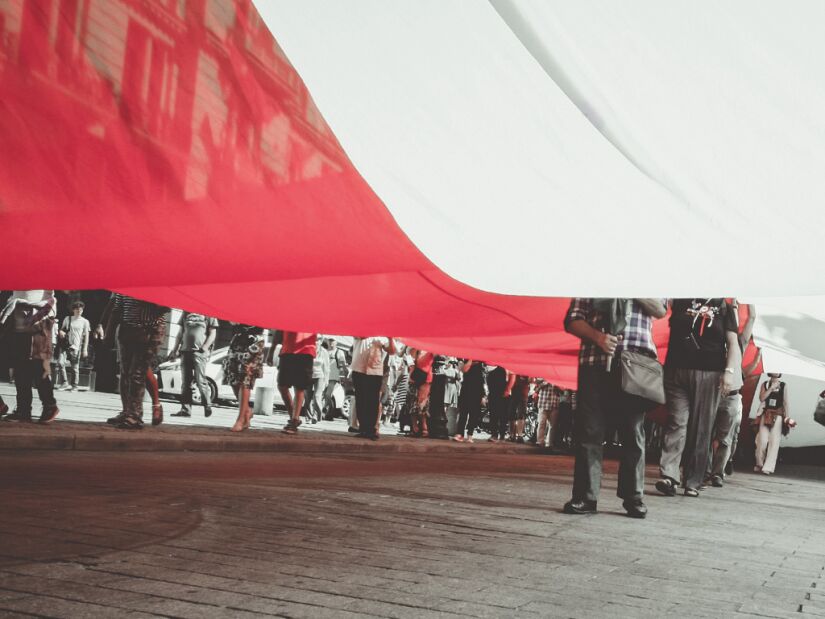
Anti-Covid legislation took a long time to develop and two-thirds of it was directed at officials and not business owners. The first financial shield kept jobs and entrepreneurs’ optimism afloat. Unfortunately, the government’s spring offensive was the only positive step. Each subsequent action resulted in a decrease in social trust. All urgent reforms have been abandoned. Public spending is still subordinated to the election and not the fight against the pandemic. Funds for the 13th and 14th pensions are available but there is no funding for the social housing construction program, reform of the health service, education, or decarbonization. Business owners learned about the next lockdowns from the prime minister’s Twitter account, the regulations were published just before midnight and came into force a few minutes later. The government’s priority was to impose the obligation to wear a mask in the forest, fight against the EU regarding the rule of law, ban abortion and strengthen the public media financially, which has been the government’s propaganda mouthpiece for several years. The lack of logic in the lockdowns was evident at every step. The government, when asked what it would be based on, referred to a 2020 article published in Nature, a scientific journal, describing the development of the pandemic in major American cities. This, combined with the social conflicts to which the government has contributed, sparked a wave of civil disobedience and mass street protests.
All this is overshadowed by a year-long discussion that all restrictions imposed by the government on entrepreneurs and citizens are most likely illegal due to the lack of a declaration of a state emergency. The fight against the pandemic is organized with the help of ministerial ordinances with a questionable legal basis.
‘A NEW WORLD’
“It's a new world I see, A new world for me,” sang iconic Hollywood star Judy Garland in the early 1950s in the second of four official adaptations of “A Star Is Born.” And there will be a new world. And not only in Poland. The EU is building a new Bauhaus, US post-Trump America, Asia sees the opportunity to be the leader of world trade. Who will adapt first to the new reality will be the global winner. But to win we need to have a strong economic basis and high social capital. 2021 will be the year of mass bankruptcies in industries that have not been able to adapt. Instead, new leaders will emerge. In Poland, this will also mean a change in the social model. We are facing a number of challenges in the field of education, health care and environmental protection. We must learn to function efficiently in the new reality. This change will most likely be comparable to the political transformation of 1989.


