Follow your gut or your head?
14:07
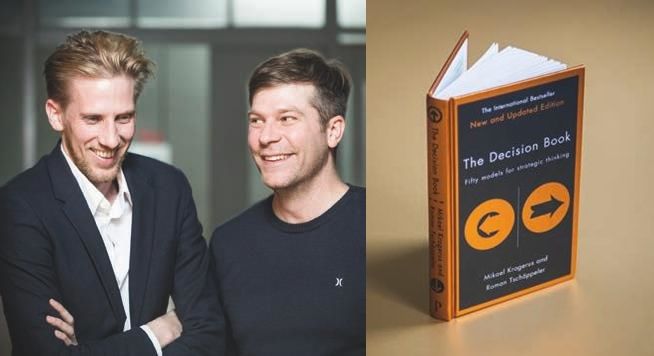
A Finn, a Swiss and a Dane meet in the fashionable lobby barof the Raffles hotel in Warsaw where they speak in Danish about decision-making. Mikael is a Finnish-born fast thinker and reporter based in Switzerland who works for the renowned weekly Das Magazin. Roman is a Swiss visual thinker producing documentaries and cultural projects in his studio dubbed guzo, based in Biel, Switzerland. They have written four books together, the first of which – titled The Decision Book – is a compilation of the 50 best models used to make decision-making easier with the help of structured designs and diagrams.
WBJ: Is this your first visit to Warsaw?
Mikael: Yes, it’s our first time in Warsaw. Unfortunately, we have not had a chance to see the city outside this lovely hotel.
Any impressions from your visit and the ULI conference?
Mikael: It struck me that the mentality of the people we met is evolving; it’s a very positive and encouraging perspective on how we constantly make progress and we believe we can (and will!) improve Warsaw and Poland.
What was also very exciting about the crowd we spoke to is that real estate developers, architects and investors make their decisions on a long-term basis and must be very imaginative as they build and re-build cities that need to last and make a difference for decades.
How did you come up with the idea for the Decision Book?
Mikael: We started wondering why it is so difficult to make decisions. As we went deeper into the subject, our curiosity started to grow, so – having been trained in visualizing complex theories – we decided to publish a small book mostly for ourselves, creating diagrams (visuals) and explaining just how to make decisions. Most people lack decision-making skills. But it is actually something you can learn and there are tools that can help you. We investigated cultural, gender and age influences, and found that all humans usually have the same struggle while making decisions – they have to choose between going with their head or their gut.
In general, it is worth remembering that decision-making is subjective, which means that the right decision for you may not be the best choice for me. So, we say there is not an objective right choice for everyone, we say there are hard choices, because the decision is often between similar values, but certain issues differ and influences subjectively affect the decision-maker. If you find the “right” woman to marry, you are sure she is the right one at that moment but it might not be the right decision as years go by.
The nature of decision-making is imagining or guessing, and most people are not good at making decisions; they feel uncomfortable about it. You probably know that feeling when you postpone a decision because you want to have more details and information. It’s nothing unique, most people struggle with it too.
But there are many tools (SWOT, the Buyer’s Decision model – to name just two) that can help you practice and simplify your way of making decisions. That is what the book delivers; 50 well researched methods (visually described) that can help you answer simple daily questions about what to buy, as well as more difficult questions about how to manage your team.
You have already had four books published, do you have plans for more?
Roman: We write a weekly column in Das Magazin about smart working – i.e. about how you can take notes, how you can plan your day or week. Maybe the research and a compilation of those articles will be the foundation for an “effective at work” book.
What message would you like to send out to my readers?
Roman: The Decision Book hasn’t been translated into Polish yet. Believing in the value and guidance it can bring to people, we hope that one day it will also be published here.
The Decision Book is available at online bookstores. It was first published in 2009 in German. Following its success, it was translated and made available in English in 2010. Today the book is available in 20 languages.