



Food-Waste fighters
00:21
WBJ: How does the app work? What makes a typical app user? And how do you reach new users?
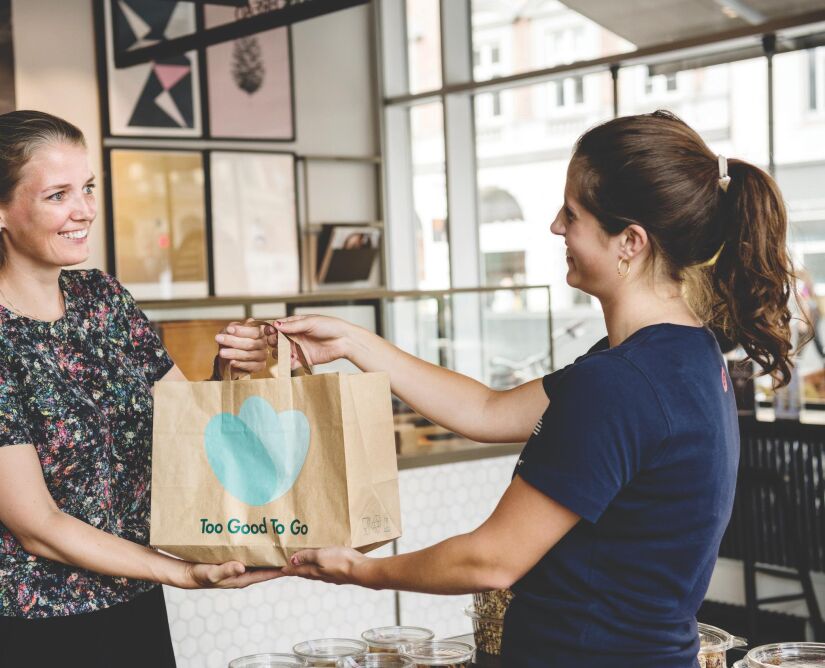
Anna Kurnatowska: It takes a few minutes to join Too Good To Go as a business partner. Our dedicated team members remain at disposal for technical and financial matters. We help set prices of the unsold food and only a fraction of that cost stays with us. A business owner needs to provide a daily assessment of the number of meals that will be available and the collection time. A user then makes their selection, pays for the meal and collects it from their selected store.
A typical user is someone who’s aware of the environmental impact of unconsumed food. It is also someone who feels the urge to contribute to the reduction of waste and makes quick orders. The vast majority of our partners’ products sell like hotcakes. New users are reached either by word of mouth or social media: regular users are quick to share their experience with Too Good To Go these days. Additionally, expansion of our network of partners and partnering cities draws media attention and this is how locals hear about us. We are simply too good to go unnoticed. We are proud to rank at the top in the food and drink app category for the number of downloads in the App Store.
How many app users are there in Poland?
There are at least 267,000 users in Poland alone. However, the number is growing rapidly. We’re in Warsaw, Kraków, Tricity, Poznań and Szczecin already. We have recently introduced Łódź into our family of partnering cities. Wrocław is coming up next. Our priority is to be wherever food is wasted. We want to be both in a small town and in a big city in Poland and abroad. Worldwide there are more than 24 million users. We are already active in 14 European countries and are currently entering the US market.
Do business circumstances differ from one country to another? Do Poles waste food differently compared to people in other countries?
Absolutely! There are countries where chain stores and restaurants constitute the majority of our partners. In Italy though, it’s the small local restaurants and cafes that use Too Good To Go much more often. In the Netherlands, quite on the contrary, we primarily work with grocery stores. Regretfully Poland is one of the leaders in terms of the amount of food wasted – we take fifth place in the EU and annually waste nearly 250 kilograms of food per person. Unclear food labeling is to be blamed to an extent. Most people can’t tell the difference between a use-by date and the best-before date. And so they end up throwing away products that may still be safe to consume. Fortunately, on the other hand, we all share the dislike of food being wasted whether in Poland or elsewhere. That’s why we are here to help make the change.
Bulk-buying was commonplace in the wake of the Covid-19 outbreak. How did it contribute to food waste numbers? Did the lockdown impact your business?
Hard to tell but surely people tended to buy more than they needed or were able to consume. Bulk-buying is instinctive behavior: the fear of the unknown pushes some of us to panic. I remember seeing empty shelves of pasta and rice in grocery stores. The owners couldn’t keep up with such high and sudden demand. I am pretty sure that a stack of food ended up in the trash. The lockdown did affect our business. It came along just before I joined Too Good To Go but I know we did all we could to maintain our relationship with the partners during such a challenging time. A few months ago we launched #WeCare which was a temporary in-app feature allowing people to order food online at a regular price and with no extra charges. The aim was to show our support to the businesses and help them sell during the lock-down. Even though the lockdown has been lifted, some places still struggle with managing an irregular or unpredictable interest from customers. People continue to be wary of the coronavirus lurking in shared public places and avoid eating out. Unfortunately, we lost a few of our partners who didn’t make it through.
How about addressing the culprit of surplus food production?
We do try to reduce food waste at possibly all stages of the process. In France, we work with producers to improve food labeling in order to avoid unnecessary waste caused by misleading consumption instructions. What we can’t do is tell our partners to scale down since customers expect to get fresh products even right before the place closes for the day. It is virtually impossible to predict precisely how much food will be sold or when will the last customer clear out the shelves.
Poland introduced a new law that obliges stores to donate unsold food products to charity organizations. Doesn’t it solve the issue?
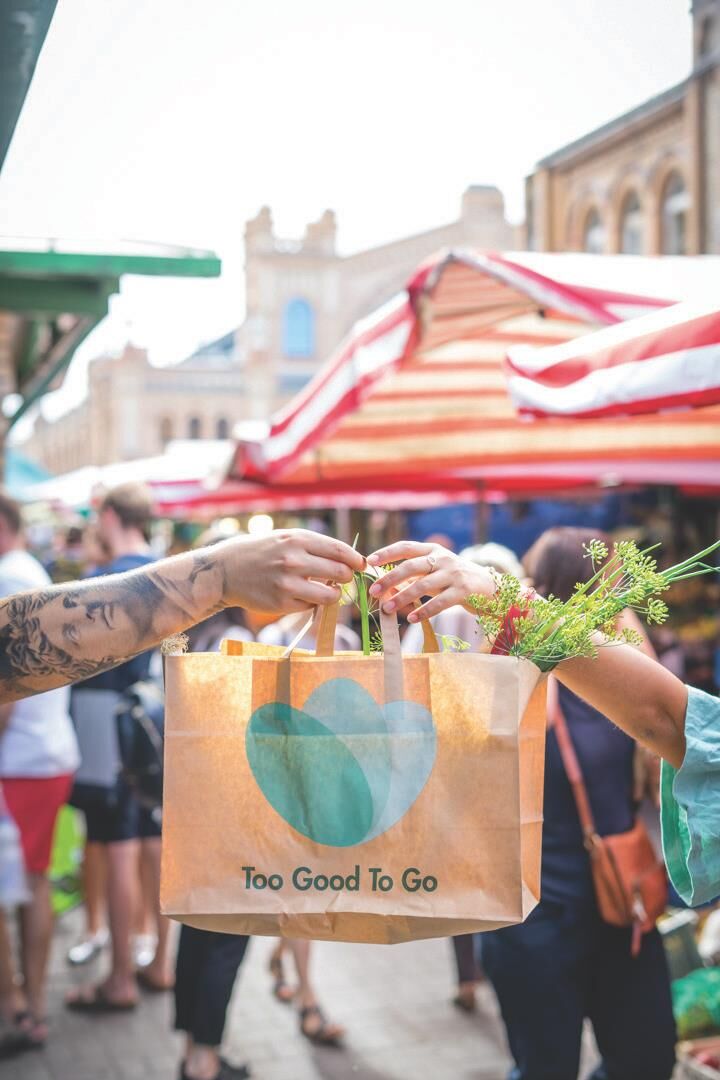
The law applies just to stores larger than 250 sqm. It doesn’t reach all the places, unfortunately. What about smaller stores or restaurants then? We fill the gaps by reaching out to anyone who’s willing to become our partner – no matter how big or small.
Do you plan to introduce body, animal or household care products in your war on waste? And do you have competitors?
At the moment we want to focus on reducing food waste. There is still a lot to do in this sector. Having said that, we realize that all FMCG waste is harmful to our planet.
Yes, we do have competitors. It’s called a trash bin and you can find it in every store and restaurant. More seriously, we can only be happy to hear about initiatives that resonate with our mission. After all, we all want the same thing: to reduce food waste and increase awareness of its impact on the environment.
What are the main challenges you face as a business? What is the issue with wasting food?
I’d say it is business owners’ willingness to admit that their unsold food becomes waste. Waste at the current scale is a huge problem. It’s about understanding that our individual efforts can change it. Again those challenges apply to Poles and probably every other nation.
The issues [with wasting food] are, firstly, we squander natural resources, soil and water used for breeding or cultivation, secondly, it is the carbon footprint during production and transportation, and thirdly, it’s the money that we burn. Talking of scale, one-third of all produced food goes to waste. Imagine leaving a grocery store with three full bags of food and dumping one of them on the way home.
All that while, statistically, every ninth person on this planet starves or suffers from hunger. How many meals have you managed to save in Poland? And what are your plans for the rest of 2020?
So far we’ve saved 232,833 meals in Poland. It equals the carbon footprint produced by flying from Warsaw to London 1,681 times.
In 2020, we will mark our presence in other towns and cities, expand our network of partners and work with supermarkets. Stay tuned for more information! I am excited about all that we do and look forward to the future!


