Future’s future
20:27
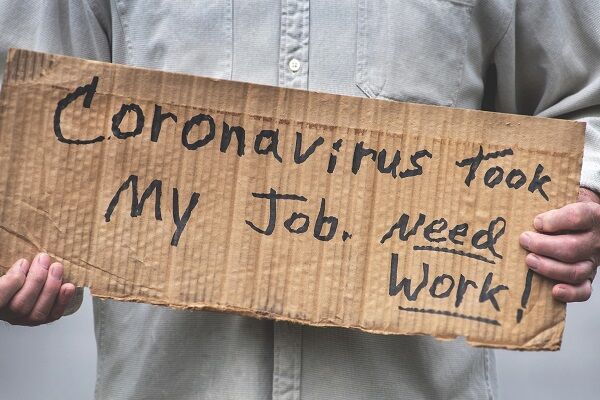
When the Covid-19 pandemic broke out, many governments, including Poland’s, decided to launch special programs to prevent layoffs of employees working under employment contracts. The so-called “anti-crisis shields” (in Polish: tarcze antykryzysowe) in Poland guaranteed that companies that received help from the government will say “thank you” to their full-time employees and the employment of all working staff will be secured. Unfortunately, this isn’t how economics works. In such situations, some jobs are kept alive but at the same time, they are already “dead” – almost like zombies – just waiting for the money drip flowing from the government to be disconnected. That’s why they’re called “zombie jobs.” In Europe, such jobs might constitute as many as 6 percent of the total employment (9 million jobs – data based on an Allianz study). It is difficult to assess how many “zombie jobs” exist in Poland, as the state of the labor market is perceived mainly through the prism of registered unemployment. The decrease in employment is not visible in unemployment statistics because employees in companies that are using governmental “anti-crisis shields” are covered by a protection period included in their employment contracts (e.g. 1-3 months). When it ends, unemployment will grow faster than before. Besides, the demand for labor will also decrease due to the reduced economic activity in the world.

BIGGEST VICTIMS
The Polish economy, as we know from figures, will shrink by 5.4 percent this year and unemployment will rise sharply by the end of the year. The crisis in the labor market will not affect all the people equally, though. It is noticeable that because of restrictions on economic activity, people working on the basis of various forms of employment have been hit by the crisis in different ways. Those employed under civil law contracts were significantly more affected by the crisis than those who are employed full-time (and regulated by the Polish labor law). Similarly, young people up to 25 years of age, taking their first steps on the labor market, and people up to 29 years of age, who often work under civil law contracts, were disproportionately more affected by the crisis in the labor market. They are, in fact, the biggest victims.
Covid-19 pandemic is having a devastating impact on youth employment worldwide. According to a report by the International Labor Organization (ILO) entitled “Covid-19 and the world of work” the pandemic has provoked a sharp rise in youth unemployment. It particularly affects young women. One in six young people was forced to stop working early in the times of pandemic. Also, more than four out of ten young workers were employed in the tourism, gastronomy, wholesale and retail sectors – the sectors most affected by the crisis. In Poland, almost 400,000 people enter the labor market each year. At the moment under 25s face hardships not only because of the education process – in schools and universities, remote learning is associated with, among others, the challenges of checking knowledge, presence and activity – but because of the blow the training and education industry has dealt with due to the coronavirus. Also, a smaller pool of funds for training is available to employers. Young people might feel intangible barriers to entering the labor market during the epidemic: virtually no one wants to hire young people right away to work remotely.
‘CORONIALS’
There are many concerns that the economic shock caused by the pandemic would have a profound effect on the whole generation of young people (born between 1995-2000). Those who are starting their professional careers now are frequently named “lockdown generation,” “Covidials,” “Coronials,” “Quarantines” (terms referring to the virus), or “Zoom generation” (from the videocall-making app). It is a fact that, among others, this year’s university graduates lost the opportunity to build their position in the labor market, something that previous generations had. Statistically, on the basis of surveys of people starting their professional careers during the 2008-2009 crisis, we can say that people entering the labor market in 2020 will do lower-paid jobs for a longer period of time than their peers from the generations in the recent past and it will take them more time to get a promotion. Moreover, as compared to pre-Covid times, they will take a loan to buy a flat later and decide to have children later.
Due to the specific structure of the social security system and social privileges of people working full-time, government programs for maintaining employment in companies in the time of Covid-19 are a ball and chain for young people who are looking for jobs. In this way, the pandemic and government actions aggravate intergenerational inequalities. The report “Covid-19 and social mobility,” published by the Center for Economic Performance, a research institute at the storied London School of Economics, indicates that before the crisis, younger generations were already struggling with falling wages and lower employability in the labor market or undertaking work illegally. What is worse, according to the OECD report “Youth and Covid-19,” the forecasts for the next two years in terms of improving the situation of young people on the labor market are disastrous. Employers may prefer hiring new employees for short contracts, civil law contracts and internships, and understandably, they will be reluctant to offer full-time employment contracts.
The state paid a lot to educate Poland’s youth but so far it could only offer them low-grade work. In reality, before the pandemic started, they were happy to emigrate. Unfortunately, this is not an option currently, as most countries in the world have imposed partial or complete border closures. There are travel restrictions. The youth face a situation without work for them. We should be careful. Leaving young people outside the labor market for a long period reduces their chances of finding a better job in the future. It seems that it is a really bad time to be young.