



Going full circle
12:07
The idea of an economy that uses all available resources in a rational way seems simple. Yet, decades of reckless consumption have left the world with piles of waste, water shortages and high greenhouse gas (GHG) emissions, summing up to what we now call the climate crisis. Apart from pledges to cut emissions, countries and institutions have been increasingly interested in a circular economy. How is Poland doing in that aspect?
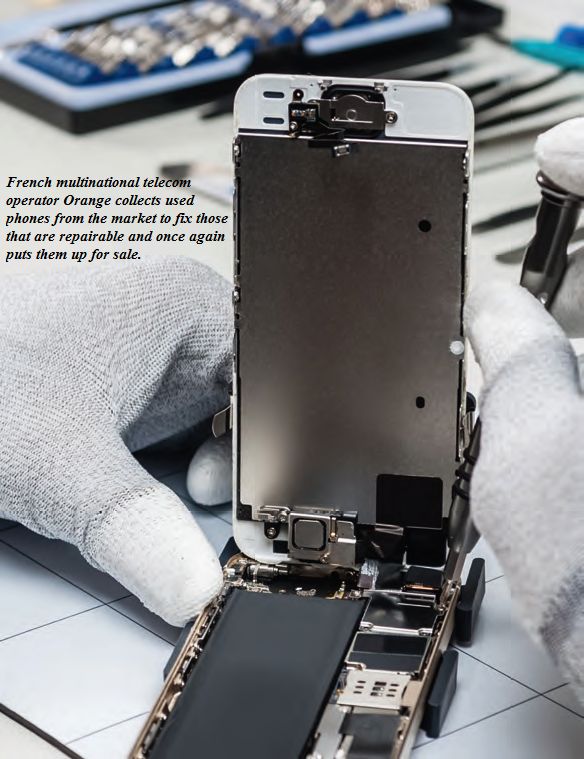
PROFESSOR BOLESŁAW ROK from the Kozminski University, who specializes in sustainability management, believes that the advantages of a circular economy for companies are obvious. “Once you see how much you are paying for excessive purchases, and later, for waste disposal, then again for new raw materials, it is easy to see that by increasing resource efficiency – or how much we use in relation to production volumes – you are able to save a lot,” he said. In his opinion, many Polish companies take measures to increase their resource efficiency. “Very often these are obvious changes: returning things previously regarded as waste into the production cycle. For example, when Orange [a French multinational telecom operator] collects used phones from the market to fix those that are repairable and once again puts them up for sale, this generates additional revenue,” he explained. Examples of actual circular economy initiatives are easy to find, though not as common as they should be. The Kozminski University itself is the only Polish business school that has made it to the Positive Impact Rating, thanks to activities that also encompass circular economy. The university encourages its students to scrap single-use plastic. It has also enabled electric vehicle charging.
COMMON THREAD
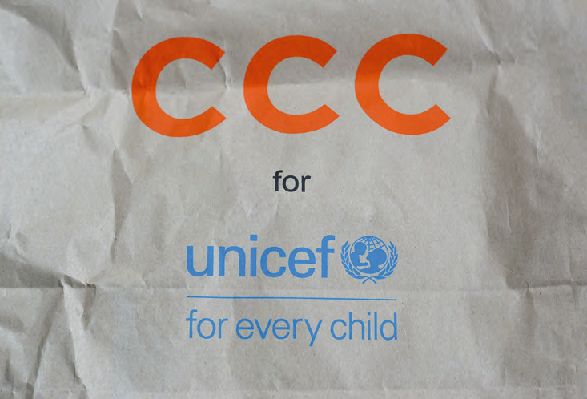
Beverage giant Coca-Cola HBC’s Polish unit focuses on waste management and recycling in its approach to the subject. It is co-financing a campaign to collect plastic waste in areas covering 40 percent of the country’s territory, as well as funding selected-waste-collection bins and educating consumers. Last year it helped install 10 “recyclomats” in Warsaw, which in turn helped collect some 70,000 plastic bottles, 16,000 glass bottles and almost 27,000 cans, Katarzyna Borucka from Coca-Cola HBC Polska stated. Poland-based shoe retailer CCC has carried out a complex analysis of the resources it uses and is constantly monitoring its own progress. It has taken steps to reduce packaging, as well as packaging waste, by reducing repacking processes, reusing warehouse packaging and recycling more than 90 percent of its waste. In a more visible move, the company has stopped using plastic bags in retail and introduced UNICEF-branded paper bags that are made from recycled material, its press office explained. Carrefour Polska has partnered with Catholic charity Caritas Polska to ensure less food is wasted. Cosmetic giant L’Oréal’s Warsaw plant has been recently equipped with a water recycling unit. The country’s largest energy firm PGE has taken steps to collect solid remains of coal-burning and sell them to construction material producers. And last but not least, Syntoil – a Polish company – was specifically established to transform contaminated soot from industrial processes into carbon black, a material used in manufacturing rubber products.
STILL A LOT TO DO
In a report issued in December 2018 to accompany the COP24 climate summit held in Katowice in southern Poland, Deloitte, a multinational professional services behemoth, stressed that Poland’s economy has the third highest use of materials in the EU and a material efficiency rate 3.5 times higher than the EU average. The country’s energy mix is also highly dependent on fossil fuels, it’s economy maintains an energy usage level higher than the EU average and a low share of renewable energy consumption. To add to this, Poland’s waste management is not efficient enough. “In the longer term, reducing the use of materials and energy by 1 percent in all sectors could generate a total added value of PLN 19.5 billion,” the document adds. The experts also suggest that Poland could reduce energy and material use by more than 1 percent, especially in the bioeconomy, construction and transportation sectors. An analysis showed that by cutting 20 percent of the costs in these sectors and investing that sum, the GDP could gain as much as PLN 167 billion. The report’s authors believe that a state intervention, preferably based on behavioral economics, is necessary to fully carry out circular economy measures.
GUIDELINES
Just like Deloitte, Professor Rok remarked that the resource efficiency of Poland’s economy remains much lower than the EU average. “This means our economy still squanders a lot, though less and less over time,” he said. He stressed that instead of laying people off as a means of cost-cutting, companies should consider how much money is lost in purchasing various materials or in infrastructure depletion, on electricity, natural gas and other utilities. “We can observe a reduction in the use of some utilities but this stems from a sharp rise in their prices. This has not really been the case with resources so far but it is inevitable in the future and it will result in higher efficiency, sooner or later,” he added. “Every sector has difficulties in implementing higher efficiency. To give a simple example – waste management in construction may generate a material that could be used to build new roads. It turns out, however, that regulations on construction materials do not allow for the use of such a resource. A large number of legal restrictions influence contractors’ decisions to buy new materials, even if they are more expensive. The construction sector generates about one-third of all waste in Poland. I do not say that the role of the law is not to constrain companies but attention should be paid to making it easier for companies to use recycled materials,” he emphasized.
In September 2019, Poland’s government adopted a document named the “Circular Economy Road Map”, which outlines Poland’s priorities as implementing innovative solutions in the economy, creating a European market for secondary raw materials, ensuring high quality secondary raw materials that result from sustainable production and consumption, and development of the service sector. According to the road map, government institutions are to engage in a mixture of activities ranging from analyses to legislative proposals and information campaigns. Timelines extend to 2023.
However in Professor Rok’s opinion, the “Road Map” is primarily a document that the government needed to file with the European Commission. “The problem is that its recommendations have not become elements of various economic policies and legislative measures have not become official drafts,” he said.
POINTS TO PONDER
According to the European Commission’s latest “Circular Economy Action Plan”, published on March 11, applying ambitious circular economy measures in the EU could increase the bloc’s GDP by 0.5 percent by 2030, while creating around 700,000 new jobs. The plan presents measures to:
- make sustainable products the norm in the EU
- empower consumers
- focus on the sectors that use the most resources and where the potential for circularity is high, especially electronics and ICT, batteries and vehicles, packaging, plastics, textiles, construction and buildings, as well as food
- ensure less waste
CRUNCHING NUMBERS:
48 percent – Polish consumers that wish shops offered product repair, not just purchases. [Source: Responsible Business Forum (FOB), 2019]
Nearly PLN 19.5bn – the estimated added value to Poland’s economy that would result from reducing energy and raw material cost by just 1 percent. [Source: Deloitte, 2018]


