



GOOD OUTLOOK
18:43

The speed of development of the Polish e-mobility market seems to have found another confirmation, as the key components of the funding for the EV charging infrastructure support program launched on January 7 have already been consumed. The program entitled “Support for EV charging infrastructure and hydrogen refueling infrastructure” was launched by the Polish National Environment Protection and Water Management Fund (NFOŚiGW) to drive the development of public charging infrastructure. The dedicated funding amounts to PLN 800 million. It was split into four tiers:
• Private EV chargers below 22kW — PLN 70 million
• Public EV charging points between 50-150kW — PLN 315 million
• Public EV charging points above 150kW — PLN 315 million
• Hydrogen refueling stations — PLN 100 million
The requests filed for installations above 150kW depleted to allocated funds by January 21, in two weeks since the program was launched. This quick reaction of the market seems to prove that the e-mobility industry waited for this program and received it well, which means it was prepared with full awareness of the market expectations. Presently, EV drivers only have 50 stations with more than 150kW power at their disposal in Poland. This combined with the extensive formal obstacles for rapid development (like grid connection times and technical approval are at least 18 months) and a still-low number of EVs makes the demand for charging infrastructure low, and hence, investment is still below the profitability which would attract new operators and investors. The reasons make programs such as the new NFOŚiGW subsidy essential to drive the market further. During the last three months in Poland, 280 public charging stations were installed in Poland, which is three times as much as during the same period on the verge of 2020 and 2021. Many charging point operators (CPOs) also undertook activities aimed at increasing the power of existing charging stations and adding charging points in already existing locations. This bodes well and seems to be perfectly timed with the subsidy program described above. At the end of January 2022, there were a total of 1,992 public charging stations in Poland (3,893 points). Just in the first month of this year, 109 new stations were added. Overall, 11% of the existing charging infrastructure is installed as part of the TEN-T network.
Much still has to be done in light of the still low EV car park in Poland. The data shows optimistic trends as there were three times more EV registrations in Poland in January 2022, year-to-year. Data shows that there were 39,328 passenger EVs and 1,738 utility vehicles. This means an 88% rise and a 145% rise for the two segments respectively against the same time last year. Poland also continues to lead in terms of e-bus fleets within the European Union with 655 units. It must be stressed, however, that apart from passenger vehicles, delivery vehicles and buses, the road transport sector will soon also have to address the issue of heavy-duty vehicles (HDVs). Last year in Poland, there were over 30,000 registrations of vehicles above 16 tonnes, with only four being electric. This is an issue of vehicles but also an important topic regarding high-power charging infrastructure at more than 500kW. Moreover, charging hubs will have to be developed in cooperation between logistic operators, public administration and market stakeholders in order to ascertain that this zero-emission heave transport network works efficiently.
So once again, there are still challenges ahead for the Polish EV sec-tor, but the situation is much alike in the entire CEE region. As the work on the Fit for 55 legislation package passes into the European Parliament and the local administrations, such as the Polish NFOŚiGW, appear to understand the needs of the market, numbers related to the development of e-mobility may rise much quicker in the coming months. PSPA predictions show 43,000 public charging stations and nearly 300,000 passengers and delivery EVs by 2025, so the outlook is good, though burdened by the work-load ahead.
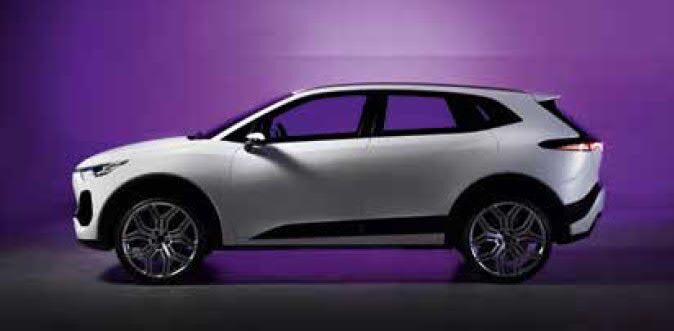
POLISH E-CAR RUBBER TO HIT THE ROAD SOON?
ElectroMobility is gaining momentum in its preparation of the Izera — the first Polish EV for the mass market. Recently, the company presented its main objective in the lower house (Sejm) of the Polish parliament, showcasing the designs for the plant which is planned to be developed in Jaworzno.
The company is still in the process of selecting partners and suppliers for the platform and powertrain technology. Despite some skeptical voices, ElectroMobility secured its first phase of financing from its shareholders and is planning to secure the next steps as well, once the technology suppliers are confirmed. It is still unknown which battery supplier will be selected for the vehicle. Market experts point out that the Polish brand intends to offer vehicles in popular segments, which must stand out in terms of quality, accessories and above all a rational and attractive price. The competition in these areas is already very intense and it will be incomparably larger in 2023 and later years.
EV models have been introduced by practically all significant automotive producers that boast a superior technological base and brand recognition amongst potential consumers. Selling the vehicle is not the end, however, post-sales servicing and repairs are also an important element of the value chain, which is also an unknown in regard to Izera’s plans. Hence, the project is ambitious but may prove to be successful if and when external factors are favorable and the business strategy presented thus far is implemented in full.

The Polish Alternative Fuels Association (PSPA) states that it is the largest, fully representative industry organization, which promotes zero- and low-emission technologies in transport in Poland. Aleksander Rajch is the director for external relations and board member at PSPA.


