Healthcare in Poland
18:12
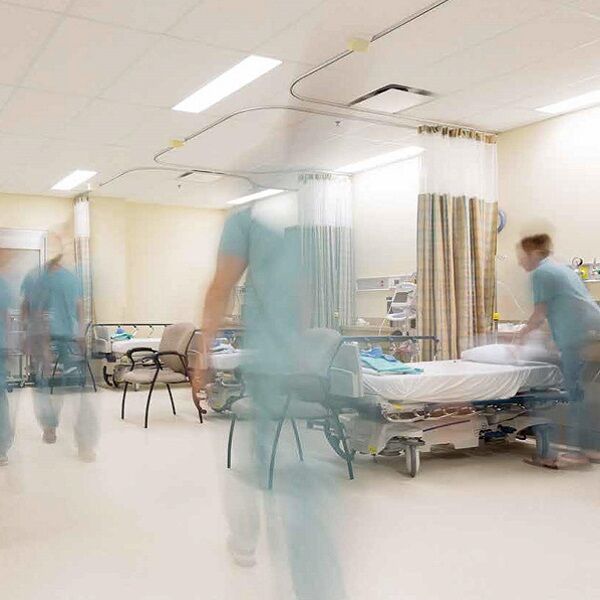
Healthcare in Poland has been facing the problem of insufficient funding for many years. Many governments tried to change this state of affairs. At the same time, there were ad hoc measures forced more by workers' protests than by a deliberate strategy.
The last major reform took place in 1999 and health insurance (HI) was established (in Polish: Kasa Chorych). They took over the financing of practically all medical services. There was a marketization of health services. Formally, settlements with medical institutions for services rendered for a specific patient started. In theory, each insured person was required to pay an HI premium. HI announced tenders for the provision of medical services and signed contracts with those entities that offered the best quality services at competitive prices.
The system was in operation from 1999 to 2003. 16 regional HIs (one per province) and one HI for uniformed services were established. In 2003, the HIs were merged into the National Health Fund (NFZ) — a state-controlled entity dealing with contracting medical services. This model is still valid today.
HEALTH EXPENDITURE
Expenditures on the public health service increased gradually: from PLN 20 billion annually to PLN 120 billion in 2020. The main source of financing the system are contributions to universal health insurance — about 60-70%. Currently, it amounts to 9% of one’s salary.
In recent years, the government has successively charged other forms of work contracts with this contribution. Originally, it was paid on the remuneration earned from the employment contract and sole proprietorship, and later also on civil law contracts. The next step is to cover the earnings of management board members as well.
From 2022, a radical change will take place — the HI contribution will no longer be deducted from the personal tax. The original concept assumed the deduction of the full amount paid. Then about 80%. From 2022, regardless of the amount paid or the form of earning, the contribution paid will not reduce the income tax. Formally, the tax burden on the average person will increase by 9%. The government put compensation mechanisms by increasing the tax-exempt amount and tax thresholds.
At the same time, Poles' spending on private healthcare is growing. On the one hand, these are medical subscriptions paid by employers (often co-financed by employees), on the other hand, they are individual expenses. In 2020, it was PLN 44.2 billion. Estimates for 2023 are PLN 70 billion. There has been a 10% increase in private health policies during the pandemic. The National Health Account published by Statistics Poland (GUS) shows that Poles' private expenditure (including the purchase of drugs) is almost 29% of all medical expenses. This is a greater percentage than in neighboring countries such as Germany or the Czech Republic. At the same time, research shows that more than half of Poles use the services of private health care.
STAFFING ISSUES
The OECD data (for 2017) shows that Poland has about 90,000 doctors (2.4 per 1,000 inhabitants — the worst result in the EU). According to the data of the Supreme Medical Chamber (in Polish: Naczelna Izba Lekarska), we have over 140,000 of them (not counting dentists). This means about 3.7 doctors per 1,000 inhabitants (this is the EU average). Such a significant difference in data results from the sources used by these organizations. National accounts are closer to reality.
Almost 25% of qualified doctors are of retirement age. In 2017, it was 19%. In the case of some specializations, such as pathology — crucial in cancer diagnosis — 42% of physicians are over 60 years of age.
In the case of nurses, we have about 260,000, and the average age is 52. In 2030, it will be 60 years despite the fact that the system is supplied by graduates. Overall, 36% of nurses are 51-60 years old, 27% are over 61. That means they have acquired the right to retirement benefits and may leave the profession at any time. The greatest staff shortages are visible in large cities — there are many medical facilities there and the demand for employees is very high.
Thanks to the significant increase in salaries in the last years, there is a great interest in the nursing profession. In 2019, the right to practice the profession was granted to over 6,000 professionals, of which almost all graduates of nursing faculties decided to work in the profession. In previous years, this percentage was 60-70%. Estimates show that if we maintain a large number of people entering the profession, we will be able to restore our staff numbers in about 10 years.
Looking at the work of medical personnel, it can be seen that countries that have fewer doctors have more nurses at the same time (Scandinavian countries). Where there are fewer nurses, more doctors work (Italy and Hungary). In Poland, we have a relatively small number of doctors and nurses per 1,000 inhabitants.
It is estimated that in Poland, the doctor devotes an average of 10 minutes to the patient, while the medical staff is burdened with a significant amount of formal duties, so the interview and examination itself are much shorter. Estimation shows that the examination takes two minutes and fill out the documents eight minutes.
DIGITALIZATION
Currently, both sick leaves and prescriptions are issued only in electronic form. The issued sick leave document is automatically sent to the employer and an e-prescription allows you to buy the drug at any pharmacy in the country (there is even a dedicated application for patients based on QR codes).
Currently, a very large project is the so-called P1 platform (electronic platform for collection, analysis and sharing of digital resources on medical events). It is a database that allows the physician to familiarize himself with the entire diagnostic process and the course of treatment, regardless of where the patient has performed tests and has been treated so far. The system covers both private and public institutions.
RESOURCES
The organization of the hospital network causes the demand and supply for medical services to be unbalanced. The occupancy rate for beds, which is profitable for a hospital, is around 85%. Meanwhile, the average occupancy rate in Poland is at the level of 60%, and in district (in Polish: powiat, the second level of local government) hospitals even less. This is due to the fact that each local government wants to have a hospital on its premises. Neighboring regions compete with each other for doctors and nurses and bear the inflated costs of maintaining the facilities. Local politics destroy the healthcare system.
At the same time, relatively low wages force staff to work in several places. It is not uncommon for a doctor to work 400 hours a month (a 30-day month has 720 hours). According to the regulations, the doctor can see patients non-stop for 24 hours. There is no systemic control if they do not start working in another facility after the end of the 24-hour shift.
In a public facility, a resident doctor (during the specialization) earns about PLN 4,000 per month, a general surgeon earns an average of PLN 7,650, family doctors with six years of experience earn about PLN 11,010. All gross amounts. As a result, an earning that is commensurate with their education requires working in several places, well over 40 hours a week.
PUBLIC OR PRIVATE?
The status of public healthcare is problematic. On the one hand, the institutions are subordinate to local government administration (remember, they are public). On the other hand, most of the processes have been privatized. Often, hospital laboratories are run by private companies, as are catering, laundry and cleaning services. Also, a large part of the medical staff cooperates on a contractual basis. Formally, public money is used to finance the maintenance of the building, equipment and administrative staff. The rest of the business has largely been commercialized. Hospitals order these services in bid contests and put a lot of pressure on the lowest possible prices of services. In some cases, multi-year service contracts are signed at the cost of profitability.
For now, medical workers work in many facilities — often in both public and private ones. Rising salaries in the health care system mean that they decide on additional contracts less and less often. This equates to very large staff shortages on the market. This is particularly felt by private healthcare, which is most often not the first choice as a workplace, but rather a supplement to low wages in the public sector. On the other hand, in public health, the wage pressure is enormous because hospitals cannot afford to lack doctors.

Established in 1990, the Polish Chamber of Commerce (KIG) states that it is “the largest independent business organization in Poland.” In KIG, Przemysław Ruchlicki takes part in consultations on draft laws and regulations regarding commercial and tax law.