16:26 21 July 2026
INEA highlights the role of well-being in campaign against hate speech
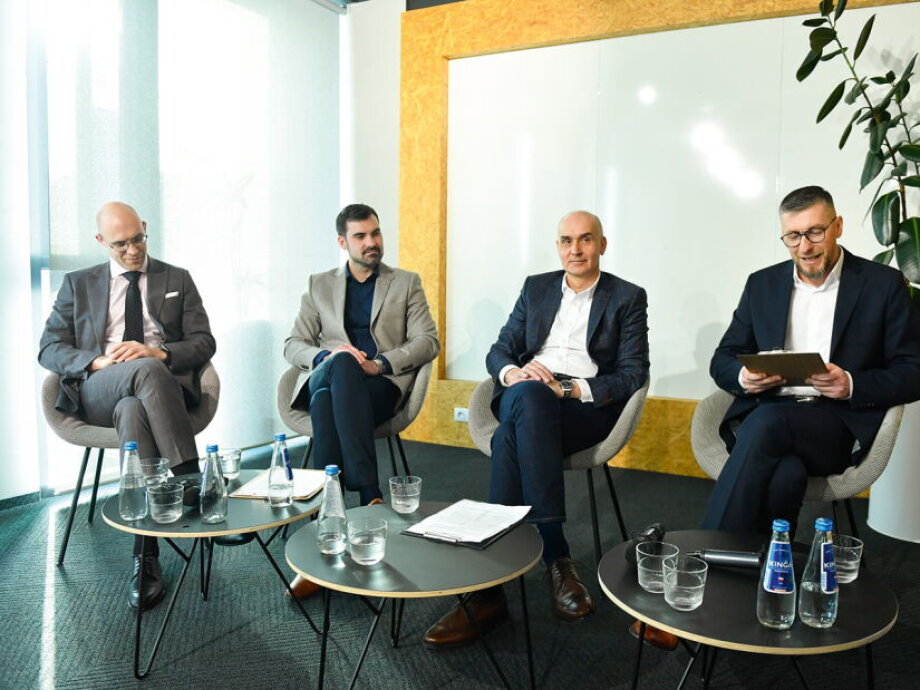












INEA, one of Poland’s largest fiber-optic operators, decided to say enough is enough and stand behind its people in a way that goes far beyond company procedures.
At the beginning of the year, Warsaw’s Varso Place hosted the conference inaugurating the “I Don’t Accept Hate” social campaign, initiated by INEA and Discidius in cooperation with the Polish Marketing Association SMB. This was not an ordinary PR event. It was a public declaration of values, a clear signal to the entire industry that the time has come to end the silent acceptance of aggression in remote communication.
The campaign focuses on protecting employees on the so-called first line of customer support, consultants handling chats, phone calls and social media. As the first point of contact, they are the ones most often exposed to frustration, verbal aggression and rude behavior from customers. The organizers emphasized that a consultant’s professionalism must not be treated as permission for a lack of basic courtesy from the caller.
During the conference, Marcin Wolski, Head of Operations at INEA, noted that hate speech has become one of the most common, yet also one of the most underestimated problems in modern communication. Too often, it is treated as a side effect of using the internet, although it has real consequences for employees’ mental health, social relationships and sense of self-worth.
For Marta Stasiak, Head of Human Capital at INEA, the company’s involvement in the campaign was entirely natural and deeply consistent with what she has been building within the organization for years.
“When I heard about the idea for the ‘I Don’t Accept Hate’ campaign, I immediately knew this was something we had to be part of. Taking care of our employees’ well-being is not a slogan in a corporate presentation, it is a daily practice, specific decisions and real responsibility. The verbal aggression experienced by people working in customer service is one of the more serious, although often invisible, factors damaging mental health at work,” says Marta Stasiak, Head of Human Capital.
At INEA, caring for employees is not treated as an addition to the compensation package. It is part of the company’s sustainable development strategy, which INEA consistently implements and describes in its annual “We Care” report. The latest, fifth edition of the report, titled “We Care about… Tomorrow’s Light” and summarizing 2025, introduced an important change: for the first time, the report was prepared in a full ESG format, in line with the European Sustainability Reporting Standards. This does not mark a change in values, but rather another stage in their consistent implementation. ESG reporting makes it possible to look at responsibility in a more systematic way, showing the links between the environment, society and corporate governance, as well as their real impact on the functioning of the organization.
INEA CEO Maciej Piechociński emphasizes that the company has long treated environmental, social and corporate responsibility as an integral part of its business strategy, just as important as operational and financial goals. It approaches employees, partners and stakeholders with care and respect.
“It is important to me that, as a company, we understand that employee well-being is an investment, not a cost. Every person who feels safe, respected and supported by their employer works better, is more engaged and, crucially from the perspective of customer service, is able to speak with greater patience and empathy to the person on the other side. This is a direct connection that I see every day,” says Marta Stasiak.
The new ESG report formally structures INEA’s activities for the first time across three perspectives: the joint activities of Fiberhost and INEA. This structure makes it possible to better capture both the synergy between the two organizations and their individual contribution to the implementation of ESG goals. In the “S” area, society and employees, the report includes chapters devoted to safety, well-being and social engagement.
In 2025, INEA and Fiberhost also achieved a score of 98% in the international GRESB audit, a system for assessing management of environmental, social and governance issues, which evaluates the extent to which organizations implement management processes in these areas and integrate them with their operations. This is the Group’s best result in recent years.
“For me, results like this confirm that we are moving in the right direction. But more important than audit points are specific conversations with employees, whether they feel they have space to express their needs, whether they know we stand behind them. That is the barometer I check every day,” stresses Marta Stasiak.
The “I Don’t Accept Hate” campaign was created to support remote customer service employees in their daily work, promote conscious, constructive and professional communication across every industry and increase public awareness of the negative effects of verbal aggression. Activities are being carried out through digital channels, OOH advertising and meetings with company employees.
The organizers encouraged companies and institutions to actively join efforts aimed at raising awareness of hate speech and verbal aggression, which customer service employees face every day. This is an important signal showing that building a culture of mutual respect in communication requires the joint involvement of the entire market and action that goes beyond the boundaries of individual organizations.
“I am pleased that more and more organizations are choosing to speak openly about this problem. Hate speech in customer service is not an internal matter for one company, it is a systemic phenomenon that requires a systemic response. INEA wants to be an active participant in this change, not just a passive observer,” Marta Stasiak points out.
The idea of “We Care” has accompanied INEA for years and has naturally evolved alongside the development of the organization, the scale of its operations and the growing expectations of stakeholders. The move to a full ESG format is a sign of the maturity of this philosophy, and a signal that the company treats its social responsibility as an obligation, not an image-building accessory.
For Marta Stasiak, these words have a very concrete meaning in everyday HR work.
“When employees know that their employer not only talks about values, but also defends them, publicly, courageously and consistently, something invaluable is built: trust. And trust is the foundation of every good workplace. For me, the ‘I Don’t Accept Hate’ campaign is precisely such a gesture of trust, towards our teams, towards the entire industry and towards customers who care about communication based on respect from both sides. At INEA, we believe that ‘tomorrow’s light’ begins with the decisions we make today, and this campaign is one of them,” concludes the Head of Human Capital.
A conversation should begin with respect. INEA takes this principle seriously and is making it something more than a slogan.