Inflation
14:23
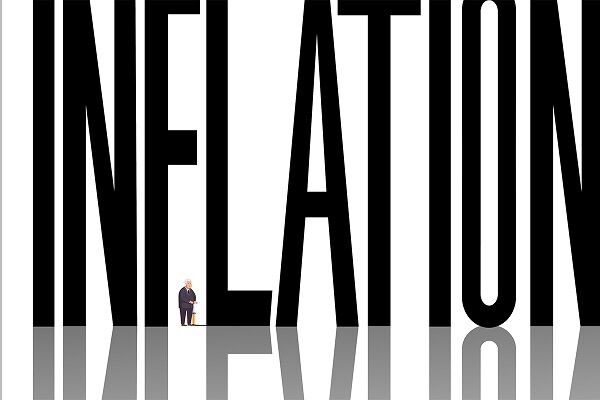
We are witnessing an unprecedented phenomenon. Governments around the world pretend not to know that they themselves contributed to not letting sleeping dogs lie. Inflation, in this sense, is a dog that devours the results of our work. It is actually a form of property and income tax. It diminishes the purchasing value of savings and earnings. It disrupts economic activities, leads to disinformation in terms of prices, and destroys the labor market by demotivating employees. Inflation is as violent as a mugger, as frightening as an armed robber, and as deadly as a hitman.
The only beneficiary of inflation is the government because, after the price increase, budget revenues are higher. “By a continuing process of inflation, the government can confiscate, secretly and unobserved, an important part of the wealth of their citizens," claimed John Maynard Keynes in his essay entitled “Inflation,” first published in 1919. But it only happens for a certain period of time because when it turns out that, as a result of inflation defects, enterprises lose on inflation, the government will stop benefiting from it as well. Poor, developing countries often maintain high inflation deliberately because they want to rob their citizens secretly. How did it happen that nowadays, many rich countries are affected too? This group includes Poland, which is experiencing double-digit inflation after more than 20 years of stable, predictable economic growth. In Poland, in April 2022, inflation was as high as 12.3% year-on-year, and this is the highest reading since 1998, despite the increase in interest rates. Again, this is not only Poland’s case. Governments all over the world are waging a mock struggle against inflation. There is a tool that economists can use to fight inflation – interest rates set by central banks. Lower interest rates, cheaper money – everyone is borrowing money, and the economy is booming, while the opposite generates better conditions for saving and protects society against inflation. In many developed regions, like in the USA or the EU, interest rates are symbolic or even negative. Signs of inflation should trigger the rise of interest rates, but central bankers and politicians are afraid of recession and what to say to mortgagers as their monthly installments will spike. Even successive interest rate hikes do not stop inflation for two reasons in Poland. First, the real interest rate is still negative, and the situation worsens month by month. This is because the acceleration of inflation after the pandemic is observed almost everywhere in the world. It is simply a direct result of the “printing of money” by central banks during the crisis. Someone must pay for the shield programs launched in the fight against Covid-19. It is naive to believe that it will be possible to finance it without reaching into citizens’ pockets in the years to come. Inflation is a hidden tax but is still visible in economic analyses. For example, from February 2021 to February 2022, the portfolio of Poland’s central bank NBP bills held by commercial banks increased from approx. PLN 90 billion to approx. PLN 200 billion.
On the other hand, bank funds deposited in NBP accounts rose from approx. PLN 60 billion to approx. PLN 100 billion. Enabling the “printing of money“ for the government’s needs through massive purchases of NBP bills by banks had to end this way.
The second cause of the rising inflation is the Polish government’s policies. First, concerning the promises of the 2019 election campaign – the extension of the 500+ benefit program for every child, the 13th and 14th pensions and the rapid rise of the minimum wage. Then the actions of the government during the pandemic: anti-crisis shields, and now the actions which are fueling the inflation, including the anti-inflation shield, which can be compared to adding fuel to inflationary fires. For the government, it is an attempt to calm social moods. The government’s ad hoc attempts to mitigate the effects of price increases through wage allowances, reductions in VAT and excise duties on fuels, energy and some goods led to a reduction in inflation in just one month, in February. In the following months, these actions turned out to be pro-inflationary, which many economists had warned against.
All this will now be combined with the necessary expenses related to the influx of refugees or arms. The end result will be the same: more expenditure translating into higher prices. We can combine this with the fact that the NBP has for many years conducted a redistributive monetary policy that increases the supply of money used later by the government mainly for social purposes. First, redistribution was class-based – i.e., from the middle class to the poor. And now it is clear that activities are carried out at the expense of the savers.
The arguments of the people in power, which are repeated many times, are as follows: inflation is generated by external factors and the increase in food and fuel prices is transient. The NBP president, Adam Glapiński, dismissed the accusations that the cycle of rate hikes was delayed, which led to the strengthening of inflation in the economy. Glapiński now calls himself a ”hawk” (i.e., a supporter of monetary tightening), while renouncing his ”dovish” rhetoric from the previous few years. The government, whose representatives call the current inflation ”putination” maintains a very similar position. Even if this were partly true, the translation we are witnessing, the entire ”putination” narration caused by Russia’s invasion of Ukraine, is directed to the electorate. Seeking justifications for the rise in energy prices is an admission of failure to control the level of inflation at the level of the inflation target. This applies not only to Poland but to many other economically developed countries as well. The fact that pinning the entire blame on ”putination” is too simplistic is proven by at least two things.
The first is the level of core inflation. This is a measure that does not consider food and energy prices, indeed the most vulnerable ones. This measure began to grow, reaching 3.6% in March 2020. Since then, the core inflation index has steadily risen (6.9% in April 2022). The second is the history of Poland’s struggle with inflation in recent quarters, which began to increase at the end of 2019 – i.e., before the pandemic outbreak and the related crisis. In December 2019, the inflation rate (not the core inflation) reported by Statistics Poland (GUS) was 3.4%, so it reached the limit of the acceptable deviation from the NBP inflation target (the target is 2.5% with one percentage point positive or negative deviation possible). And now it’s two-digits and rising. People are feeling hurt by inflation from one side and rising mortgage rates from the other.
Now you’re looking for the secret – but you’re not really looking. You want to be fooled – this is how the book “Prestige” describes how magic is not meant to be seen. We live in the times of compulsory Covid-19 repayment. Nobody wants to communicate this and message that societies now need to limit their consumption needs and perhaps withdraw expensive social programs. In most developed countries, interest rates are well below the inflation rate. The European Central Bank still maintains a zero rate, although the average inflation in the eurozone is 7.5%. The ECB does not decide to tighten monetary policy because it will again lead to a financial crisis in the eurozone. The US Federal Reserve rate is 0.75%-1%, with inflation over 8%. The Bank of England raised the interest rate in March to 0.75%, forecasting that in April, inflation in the UK would reach 7.5%. In Central Europe, central banks started raising interest rates last year. In fact, it could be said that central bankers in Central and Eastern Europe at least display some understanding of the gravity of the situation. All this takes place in a situation where the average debt of the eurozone countries approaches 100% of GDP and, in several countries, significantly exceeds this level. According to current forecasts, inflation will increase even more in the coming months. It should peak around June or the third quarter of 2022.
Nothing happens by itself. The consequences of mistakes in the economic policy must be borne. In Poland, the pro-demand economic policy, presented wrongly as the pro-growth policy, resulted in the disappearance of incentives for investment and saving, which will now translate into declining dynamics of GDP growth. The visible consequences could be the impoverishment of the society, weakening of the Polish zloty (PLN) against other currencies, and even potentially stagflation, i.e., the possibility of high and long-term inflation and stagnation at the same time, i.e., low economic activity, with an increasing number of bankruptcies and rising unemployment. The consequences of a lack of this knowledge could even be a half-decade of stagnation: the next generation might be poorer than this one.
Meantime, there are not really brilliant ideas on the horizon. The implementation of the discussed government ideas, such as credit holidays and the freezing of the WIBOR index (a strong indicator for bank loan repayments), will mean that interest rates will have to be even higher to stop inflation. According to the Multiannual Financial Plan of the State for 2022-2025, this year, the general government deficit will amount to 4.3% of GDP and the structural deficit to 4.2%. The Stability and Growth Pact, a set of legal acts agreed by representatives of the EU Member States in 1997, obliges Poland to maintain a structural deficit of 1% of GDP. Meanwhile, the expenditures made by the Polish government, as it has turned out, are largely beyond budget control and public debt is becoming a fiction – it’s different on paper compared to the reality. No wonder papers and banknotes will ultimately cease to be worth anything.