



Innovation. Fuel for Development
18:27

Innovation, just like development, has many dimensions. More importantly, long-term development cannot be achieved without innovation. Steve Jobs used to say that innovation was the ability to see change as an opportunity — not a threat, and this is what makes innovation the fuel of development, leveraging companies and states to the next level. Poland has perfectly seized upon its opportunity, attracting the largest players representing KIBS.
FROM IMITATOR TO INNOVATOR
The ABSL Strategic Foresight 2021 study shows that Poland is no longer considered a low-cost location but rather a location with optimal costs per value generated. Soon, the key will be the ability to innovate, to continuously commercialize new and improved services and solutions introduced to the global market, where Polish centers already operate. Innovation will become the dominant method of operation.
It is worth emphasizing that the annual ABSL report — Business Services Sector in Poland 2021 — shows that the modern business services sector in Poland is already characterized by a high level of innovation. An impressive 72.9% of representatives of the sector declared the introduction of innovations in the last three years, compared to 26.1% noted by Statistics Poland (GUS) in the sector of enterprises. The innovations concerned changes in products, assortments, processes and company organization. The analysis shows that one of the main challenges now facing the business services sector is the transition from the role of the follower of global trends to that of the creator.
READINESS TO CHANGE
The aim of the modern business services sector in Poland is to move from the role of imitator to the role of innovator and trendsetter on a global scale. This requires a significant change of mentality in favor of greater creativity and innovation, as well as broadening the scope of decision-making skills. Innovations understood as the implementation of ideas resulting in the introduction of new services and processes, or gradual or radical improvements in the services and processes offered, are especially valuable when they lead to a change in the organization of the business model of the centers. This involves treating change as an opportunity and securing greater skills and more knowledge content.
WARSAW STRATEGY — ATTRACTING TALENT AND GENERATING INNOVATION
ABSL’s data proves that Warsaw is one of the three largest business service centers in Central and Eastern Europe (CEE). Warsaw also regularly ranks among the most attractive locations for investors. There are currently 321 service centers employing 70,800 people. To develop further will require more innovations and talent. As part of the Strategy #Warszawa2030 being introduced, one of the detailed objectives is “Invest in Warsaw,” the implementation of which is to significantly increase interest in the capital as a city worth investing capital in. Our main goal is to attract talent, generate innovation and support local entrepreneurship and the creative industry. We want Warsaw to become a hub for startups in CEE, says Karolina Zdrodowska, director and coordinator for entrepreneurship and social dialogue at the Warsaw City Council.
Association of Business Service Leaders (ABSL) is a Poland-based organization representing some 200 companies from the business services sector. Janusz Dziurzyński is the vice president of ABSL.
EXPERTS SPEAK
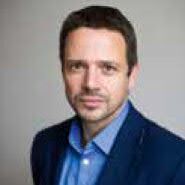 Rafał Trzaskowski, mayor of Warsaw
Since Poland's accession to the EU, the number of centers has increased sixfold. The largest number of centers in Warsaw was established in 2018-2019. With the outbreak of the Covid-19 pandemic, the number of new entrants has declined, but the sector is growing, nonetheless. More than a third of IT centers in Poland and approximately 30% of hybrid centers are located in Warsaw. The pandemic not only did not end the employee market but through the growing demand for specific skills, it has intensified the fight for talent. The analyses confirm that the business services sector will remain one of the five most promising areas of economic excellence in the Warsaw agglomeration until 2040.
 Iwona Dudzińska, managing director and head of AML operations for the EMEA region at Citi
The business services sector in Poland has an extensive portfolio and draws inspiration from many countries around the world. The vast experience of global brands, combined with the potential of our country and its talented employees, creates an ecosystem conducive to innovation. Poland has become a country worth investing in and is attracting higher expectations — and this is a challenge we have worked toward for a long time and to which we are open.
It comes thanks to the automation of services, efficiency in the use of data and an open approach to business transformation, which all means that we have a chance to stake our claim as an innovator on the business map of Europe. I am glad that Citibank Europe is part of the success of Warsaw, becoming one of the three largest centers of advanced business services in Central and Eastern Europe (CEE). Citibank Europe employs over 4,500 professionals in Warsaw and plans to further develop and strengthen its position in the local market. Taking into account the competitiveness of the market and the continued interest of global companies in locating their activities in Warsaw, we should jointly make an effort to create better and better conditions for the development of new generations of talents and strengthen the innovation of solutions as part of the provided business services.


