Left behind
21:42
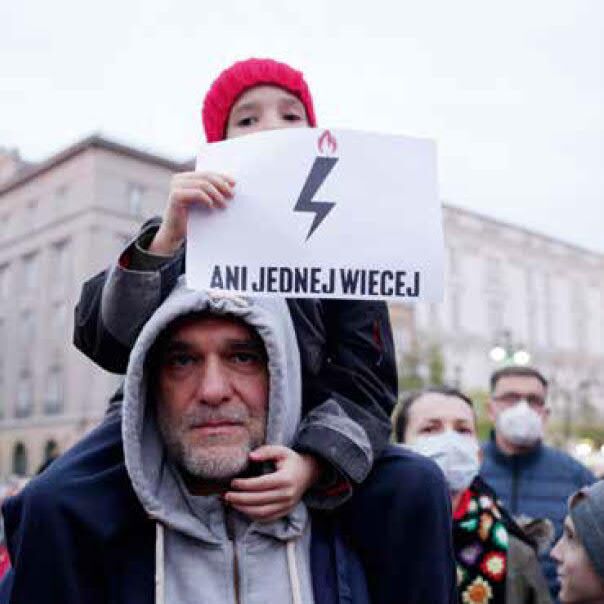
THAT SOUND YOU CAN HEAR is the combined clomp of hundreds of booted feet in the center of Warsaw. Thousands across Poland are braving the January cold to protest the death of someone identified only as Agnieszka T.
I don’t know her. I only read about her in the press. I’ve never met her. And I won’t. But I surely know that Agnieszka wasn’t born to die at 37 leaving her three children behind. But destiny intervened.
While you and I were preparing for the end-of-year festivities and looking eagerly toward 2022, Agnieszka was first admitted to the hospital with abdominal pain on December 21. When she arrived, she was in the first trimester of a twin pregnancy and in “good physical and mental shape,” and then her condition went downhill, according to her family. Two days later, one of the twins died and, Agnieszka’s family says, the doctors refused to remove it, citing Poland’s current abortion laws. They waited several days until the second fetus also died. A further two days passed before the pregnancy was terminated on December 31, according to the family.
After the termination, Agnieszka’s health continued to deteriorate further and before the end of January, she breathed her last sparking mass demonstrations across Poland. Her family suspects that she died of sepsis but the cause of death was not identified in a statement released by the hospital. Shortly after her death, a statement by her family accusing the hospital of neglect was published on Facebook, alongside a distressing video of Agnieszka’s last days.
Her death follows that of a 30-year-old woman known only as Izabela — yet another alleged victim of Poland’s seemingly internecine abortion legislation — who died in September after her waters broke in the 22nd week of her pregnancy. Her family states that she was denied medical intervention as the hospital quoted Poland’s abortion laws and refused to conduct an abortion or C-section. “Medical malpractice” led to Izabela’s death, claimed an investigation. The hospital was subsequently fined. If only investigations and fines could bring the dead back to life.
At least 34,000 women in Poland are known to have sought abortions illegally or abroad since the country introduced a near-total ban on terminations on January 27 last year. On October 22, 2020, Poland’s Constitutional Tribunal, consisting mainly of judges appointed by the governing party Law and Justice (PiS), declared the law authorizing abortions for malformed fetuses to be unconstitutional, effectively banning most of the small number of official abortions carried out in the country.
According to Abortion Without Borders (AWB) — an organization that helps women access safe abortion services — more than 1,000 Polish women have sought second-trimester abortions in foreign clinics since the country passed the draconian new laws. AWB said its figures are likely to just be a snapshot of the true number of Polish women seeking illegal or foreign abortions in the past year.
Meanwhile, Polish gynecology experts have said that Agnieszka’s pregnancy could not have been terminated sooner and that the doctors’ decisions were right adding that Poland’s near-ban on abortion has had a very stressful effect on women.
To my mind, the decision to birth or abort a malformed fetus rests entirely with the mother. It’s a personal choice no one should have the right to violate. Neither the unborn’s father nor the expectant mother’s family and definitely not lawmakers or religious leaders.
And although we’re yet to ascertain the cause of Agnieszka’s death, the fact remains that when she died, she wasn’t just another patient, another woman, another statistic or another alleged victim of the system. When she died, died the mother of the three children she left behind - SD