



Maintaining Pole Position
20:41
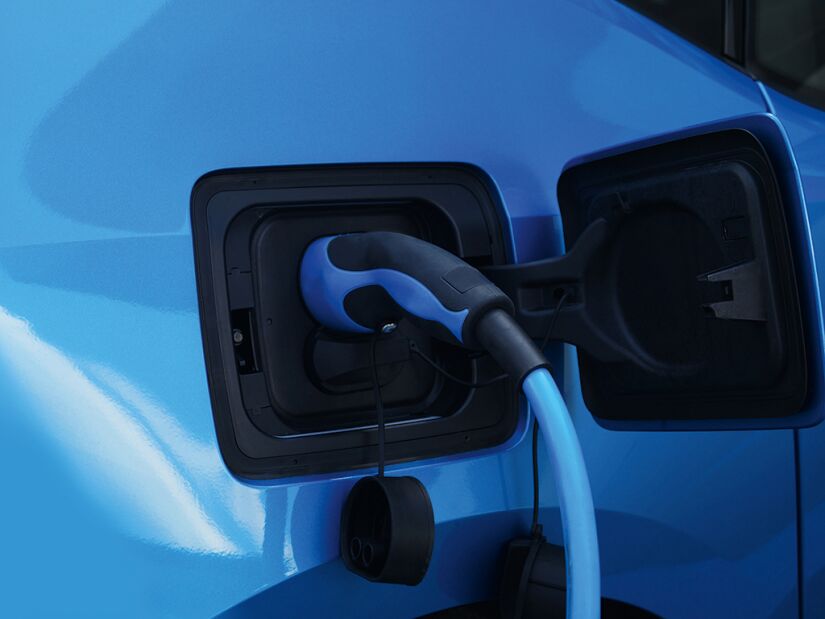
Electromobility in Poland is developing continuously. As Poland is in the process of shaping its National Recovery Plan – a milestone in acquiring the disbursed EU funds and strengthening the pandemic-ridden economy – the market for e-transport upholds its position as a priority and significant pillar for further growth.
BACKED BY NUMBERS
Data confirms that e-mobility is not just a political topic, but an actual megatrend. Numbers aggregated by the E-Mobility index operated by the Polish Alternative Fuels Association (PSPA) and the Polish Automotive Industry Association (PZPM) show, that at the beginning of 2021 there were 19,671 EVs registered in Poland. This means that throughout the year there were 10,294 more such vehicles registered, a rise of 33 percent year-on-year. As many as 52 percent of the registrations, were constituted by fully electric vehicles (the so-called BEVs), while the rest were plug-in EVs, or the so-called PHEVs. Most importantly though, electromobility is now becoming a trend for the utility and delivery vehicle sector. Data shows that in January 2021, there were 864 EVs of this type. Motorcycles and mopeds also join the trend with reaching 9,025 units at the beginning of the current year.
Poland is also leading the way in terms of public mass transport, as there are already 442 e-buses in Polish cities – which makes for a 1,100-percent rise in just one year. In January alone the fleet of these vehicles rose by 12 new zero-emission buses. In this regard, Warsaw marks a strong leadership with 162 electric buses. The only European cities boasting higher numbers are Moscow with 300 e-buses and London with 200.
GROWTH, GROWTH, GROWTH ...
Until recent months, Poland was slower than many developed economies in terms of EV charging infrastructure, but the country is now on a rising streak in this area. Only in January 2021, 31 new public charging stations were launched offering 70 charging points. The E-Mobility index shows that there are currently 1,395 available public charging stations, which include 2,711 charging points. Overall, 33 percent of these are DC-type chargers, while 67 percent are AC-type with a power of 22kW or lower.
This picture seems to be fully confirmed by the wider context of the EU. The entire automotive sector was severely slowed down in 2020 by the Covid-19 pandemic, a time during which it shrunk by 23.7 percent. Data from Q4 2020 shows that the electromobility part of the sector remained resilient to economic hurdles. In some nations, such as Slovenia, the e-mobility market grew by 1,331.8 percent which seems to be the European record. Comparable large-scale growth was discernible in Estonia, Greece and Czechia, while firm e-mobility markets such as Germany upheld their trend of growth. Poland registered an e-mobility market growth of 402 percent, which also puts it in the lead on the map of the Old Continent.
The strong peak in the acquisitions of EVs in December was followed by a slightly slower pace at the turn of the year. Poland is presently observing a rise in the sales of PHEVs which may be caused by two factors. On the one hand, the portfolio of such vehicles offered by manufacturers has been broadened and made increasingly more attractive for potential buyers. On the other hand, the market seems to be anticipating the much-expected program of incentives, which is to be launched by the National Fund for Environmental Protection and Water Management this year. Coupled with the ongoing trends and potential support of the National Recovery Plan, e-mobility in 2021 may once again prove to be one of the most resilient parts of the Polish and the European economy.


