



May i help you?
08:00
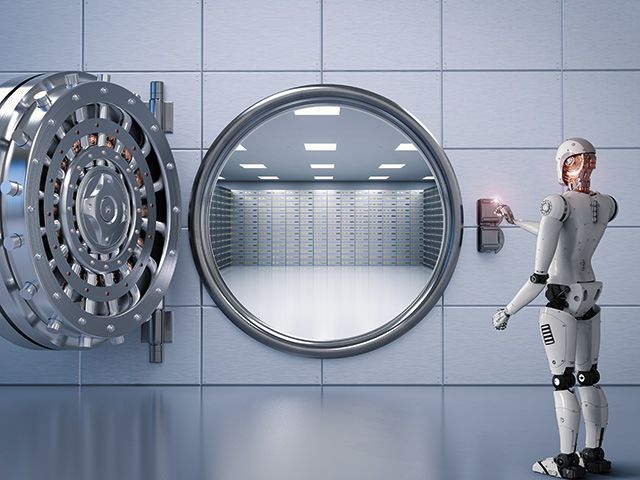
WBJ: Automation and robotics have transformed many industries. Finance seems to be at the forefront of change. Most of the innovation in automation comes from smaller fintech though, not from major institutions.
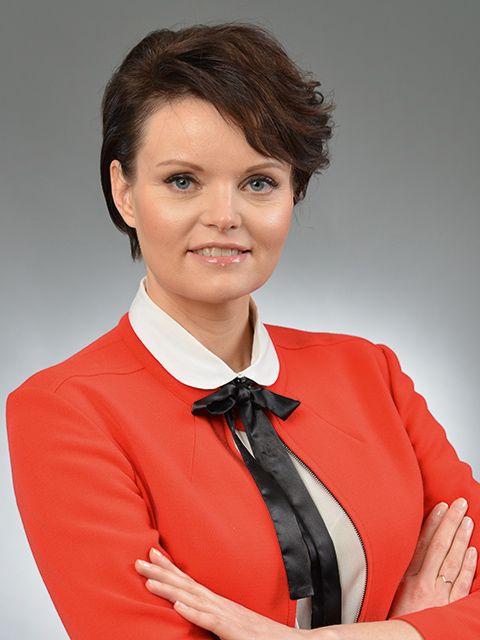 Joanna Izdebska: Indeed, automation and robotics are increasingly changing the finance industry and many new solutions come from start-ups and small fintechs. They “jump” at novelties because it’s easier for them to make such decisions. They don’t have to go through the lengthy process of taking into account many stakeholders. They are more open to change. Their scale of operations makes it possible.
Young and small organizations are better suited for implementing new solutions, while the same cannot be said for large, well-established institutions that have existed for decades in the finance industry. A large financial institution needs to analyze how millions of their customers will respond to change. That’s why startups are at an advantage here.
Are large financial corporations reluctant to adopt automation then?
They are facing a challenge. Their scale of operations is large, they have multiple processes and products. The systems they are using are not new and building one from scratch or a thorough overhaul is costly and takes time. These institutions see automation and robotics as a way to improve their current state or to “patch up” their old systems.
What processes do they routinely decide to automate?
Finance companies usually automate consumer service, as this is where large savings can be generated and where investment in technology can be easily justified. It also improves customer satisfaction, particularly for companies with multiple products. As is usually the case, large-scale laborintense processes are the first to see the benefits of robotics. These are mundane tasks of “clicking” through the systems, checking boxes, verifying data correctness, etc.
According to Capgemini, a French consulting firm, bank employees spend about 80 percent of their time on manual tasks that are prime candidates for automation. This means that the bulk of automation is still ahead of us. Employees will soon be able to devote their time to work that is more rewarding and less repetitive.
Which areas have yet to be automated?
According to research firm Gartner, the bulk of Robotized Process Automation (RPA) is made for financial, insurance and telecommunications companies. That is also true for Poland. Financial institutions adopted robotics fairly quickly but only in very specific areas. As mentioned before, their primary focus was on automating customer services. But there are more novel and complex solutions, such as NLP (Natural Language Processing),which are used in voice bots and speech recognition systems dedicated to mass service and large numbers of processes. Other areas that have yet to be automated are scoring and credit decisions. In these cases, there is always a human at the end of the decision process to make the final call. But sooner rather than later it will be a machine doing these tasks, and as more research shows, they can do it better than we can. Quite soon, technology will be very helpful in catching frauds and extortions too.
Your panel discussion at the FinTech & InsurTech Digital Congress event in November discussed women in finance. Both finance and technology are still relatively masculine industries. Is the share of women increasing?
It has been changing significantly over the past few years. There are more women in our industry, also in high positions. According to Oliver Wyman, a management consulting firm, women account for 25 percent of all managers in Polish financial firms. Women are making headway in the industry, also in the boardroom. IPF Digital puts a lot of emphasis in all its eight markets – Australia, Estonia, Finland, Spain, Lithuania, Latvia, Mexico and Poland – to make headhunters present also female candidates to any position. We want to have a choice. And this works.
In Mexico, at the beginning of our activity, we had almost 100 percent of male candidates in the recruitment process. This trend has been reversed and we see more women at the recruitment stage, as well as within the company. This naturally translates into more women at every level, both middle and top management. Only a few years ago only one country manager was a woman. Today, there are three. Most importantly, we have a rule of equal pay – salary is based on the position a person is recruited for, irrespective of their gender. From my own experience, I know that a woman at a top-level position is more involved and determined as she’s had to overcome much more to get there.
What was your own personal experience in the business?
For me, the decision to work in finance was easy. When I was 19, I decided to become a banker and I told myself I’d do anything to achieve that. There were no faculties teaching banking at state universities back then, so I chose a private school. Afterward, I studied in Germany, where I also did my internship at some of the largest financial corporations. I need what I want to do so I took the path and followed it through.
After so many years of working in finance, I have to admit that you need to have tough skin when you venture into a male-dominated industry. It’s not going to be easy. IPF Digital is my fifth start-up – a company where I’m building everything from scratch. When we started, our team was a few dozen people, now there are over 1,500. It’s very similar to the previous projects I carried out, ie launching Deutsche Bank and Vanquis Bank in Poland. I think I can say that this is what I’ve been doing my whole professional life – building and developing projects from the get-go and bringing them to maturity


