MOODY’S CEE OUTLOOK ‘STABLE’ FOR 2022
18:45

***DEMAND TO SUPPORT GROWTH
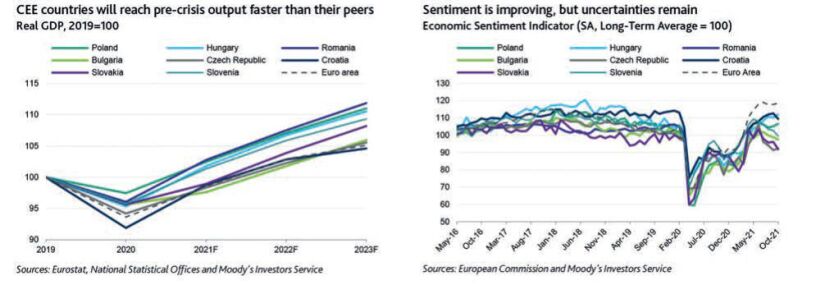
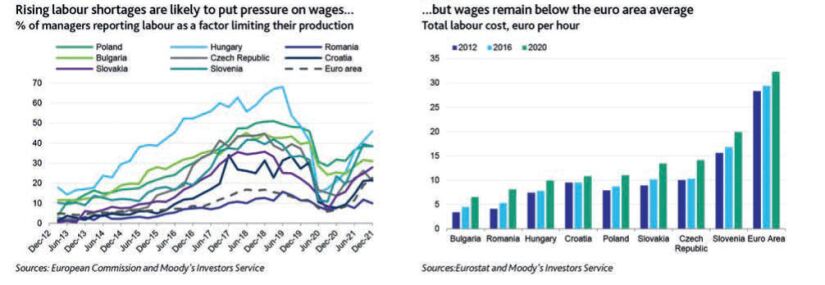
Consumer confidence is improving and firms are expanding investment to meet rising demand. Structural labor shortages and announced increases in the minimum wage (20% in Hungary, 10% in Romania, 7.5% in Poland) will also ensure sustained wage growth, driving consumption, though CEE salaries remain well below European averages.
***GREEN TRANSITION
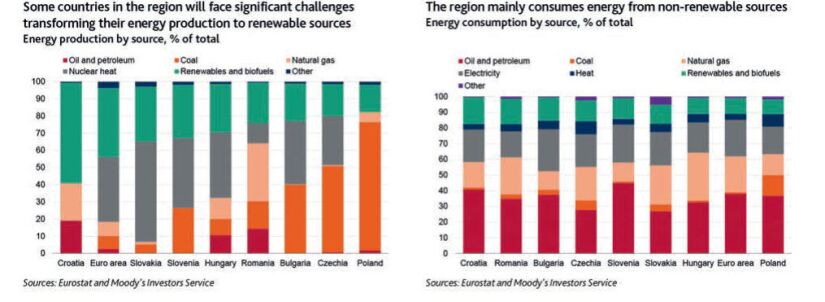
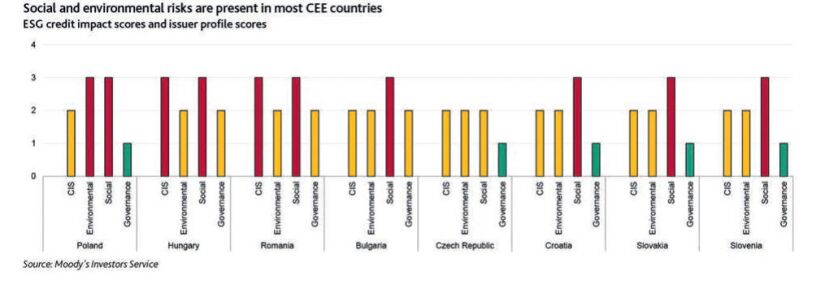
While currently less prominent than social considerations, environmental risks are also elevated in the region. Poland's high reliance on coal makes it particularly vulnerable to the carbon transition both from an industrial perspective but also from a human capital angle, as almost three-quarters of EU jobs in the coal sector are concentrated in the CEE region (half are in Poland). Poland hopes to gradually reduce its use of coal from 70% to 56% by 2030, increase its share of renewables to at least 23% and close its last coal mine in 2049.
***LIMITED RISKS FROM INFLATION
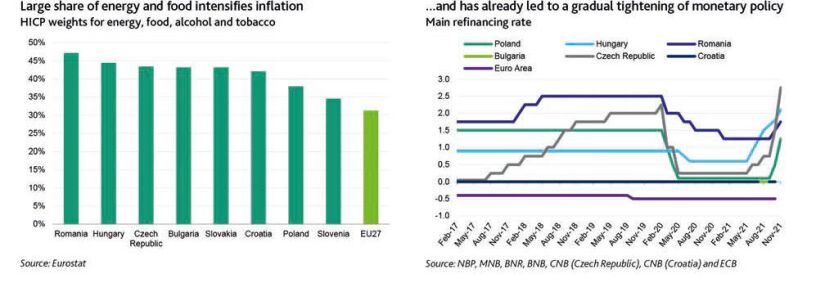
The high share of energy and food prices in the CEE's inflation index compared to the euro area intensifies the impact of rising energy prices. Poland’s central bank (NBP) is continuing to purchase securities, albeit at a much smaller scale than the Fed and ECB. Monetary institutions in the country have been the most active in buying government bonds since the pandemic started, which the IMF has highlighted as having mitigated financial market disruption triggered by the pandemic.
***ADVERSE DEMOGRAPHICS
Moody’s forecasts the median CEE deficit will fall to 4.5% of GDP in 2022, from 6.5% in 2021 and 7.2% in 2020 as the strong economic rebound lifts revenue and allows governments to unwind pandemic-related support measures. Structural deficits will narrow in almost all countries next year.
***FISCAL AND STRUCTURAL DEFICITS TO NARROW
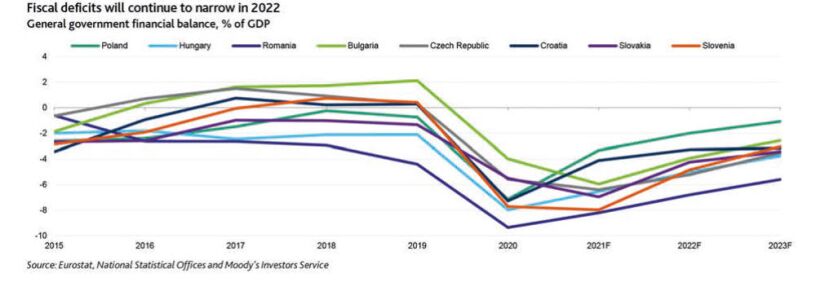
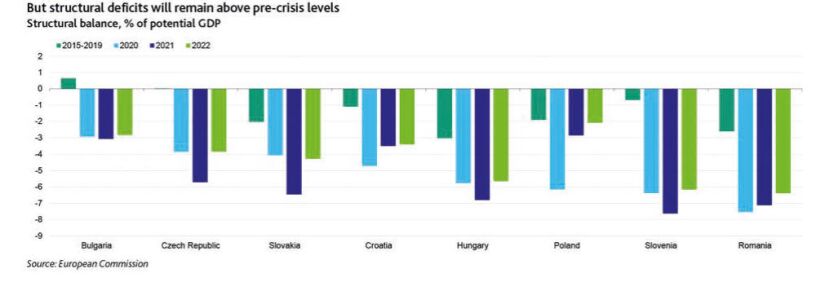
Moody’s forecasts the median CEE deficit will fall to 4.5% of GDP in 2022, from 6.5% in 2021 and 7.2% in 2020 as the strong economic rebound lifts revenue and allows governments to unwind pandemic-related support measures. Structural deficits will narrow in almost all countries next year.
***EUROPEAN UNION FUNDING
While, in Poland, the focus is on developing clean technologies and renewables, as well as the rollout of rapid broadband services, the country’s long-standing tensions with the EU authorities elevate risks in the member state. In particular, the recent ruling by the Polish constitutional court is likely to delay the endorsement of its plans by the European Commission and could trigger a mechanism allowing the EU to withhold funding for Poland from its regular budget for perceived rule-of-law breaches.