Overhaul badly needed
05:00

Large developers and asset managers have been at the forefront of adopting innovation. They realized early on that technology can make their assets more valuable on many levels: by improving the experience of tenants and other stakeholders, creating a better interface facilitating the work of property managers, through to lowering the building’s resource consumption and making it cheaper and greener.
“Some proptech solutions already exist such as sensors, beacons, data usage from WiFi infrastructure, applications that guide a user to particular people or places in a building as well as VR and AR. We can see the opportunities in AI-based solutions that drive process automation in the real estate sector, and in 3D printing that could transform real estate, especially on the Project & Development side,” says Tomasz Trzósło, managing director CEE of JLL, a real estate advisory.
Greener and cheaper
One of the key areas where technology is making a difference is optimizing power usage. Stakes are high, as commercial buildings and construction sites account for 39 percent of global energy consumption, according to a recent report prepared by Zonifero, Microsoft and PwC entitled “Smart Real Estate and Proptech 4.0”. State-of-theart energy-saving technology can save up to 50 percent of power. Considering that we spend nearly 90 percent of our lives inside buildings, making their energy consumption as efficient as possible is of vital importance.
For now, the gold standard for power consumption control is IoT sensors monitoring the occupancy of rooms and reducing electricity usage in empty ones. But there is more automation on the cards and in the future, buildings may become fully autonomous in evaluating and optimizing energy use.
“The intelligent building will itself become a customer of utility suppliers and autonomously settle its electricity bills. The potential extends to connecting electric cars and charging their batteries. It doesn’t stop there! A building will gain from occupancy analytics mechanisms in-place, equipped to optimize the use of spaces, positively impacting the well-being of its users,” according to. Alina Prawdzik, managing partner of CEE and head of “Smart & Connected Buildings” for innogy Innovation Hub, cited in the report.
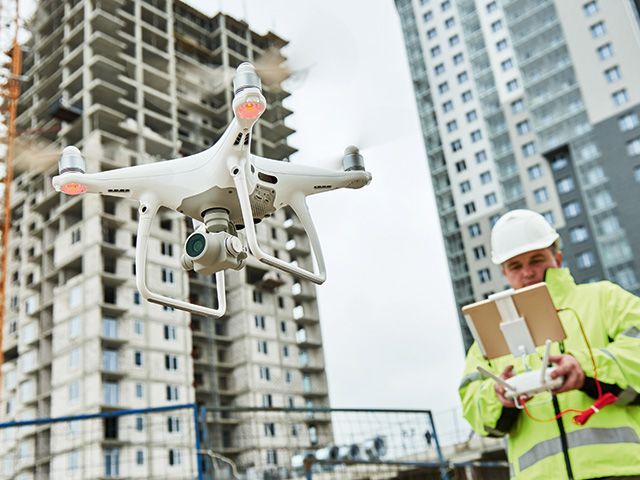 Make and break things
In order to go beyond what is already an accepted standard, property firms look to tech startups, as innovation drivers. Colliers International, a Canada-based global
real estate services giant, has recently launched the third edition of its “Colliers Proptech Accelerator”, whose aim is to find groundbreaking solutions that will change the property market. “Colliers Proptech Accelerator allows us to go beyond our own mindset, look at the real estate market from a different, larger perspective and from a distance. The startups we’ve invited have a fresh view of certain things. It’s a valuable experience for both sides,” states Monika Rajska-Wolińska, managing partner, Colliers
International in Poland. Cooperation can be valuable for both parties – the real estate company may well gain a first-mover advantage in a new niche, while startups benefit from a reality-check that could save them months of work following a deadend or focusing on the wrong thing. What they need most of all is the practical knowledge and access to data that is crucial for developing a new product. “As practice shows, every project we’ve worked on required making some changes – no startup has yet left in the same shape it came in,” Rajska-Wolińska adds.
While the first attempts of finding common ground with the startup scene are usually governed more by a trial-and-error approach, the cooperation between giants and tech startups now seems to be maturing. “In the first edition, we saw applications from startups in a variety of fields – property management, retail, big data, analytics, machine learning, AI, blockchain and others. These were broad solutions that were difficult to compare. That is why in the second edition we decided to focus only on solutions in big data and management data, as well as AI solutions,” she explains. The company offers a wide range of cooperation to the selected few: from purchasing a part of their shares and incorporating them into Colliers’ structure, through to contracting specific solutions.
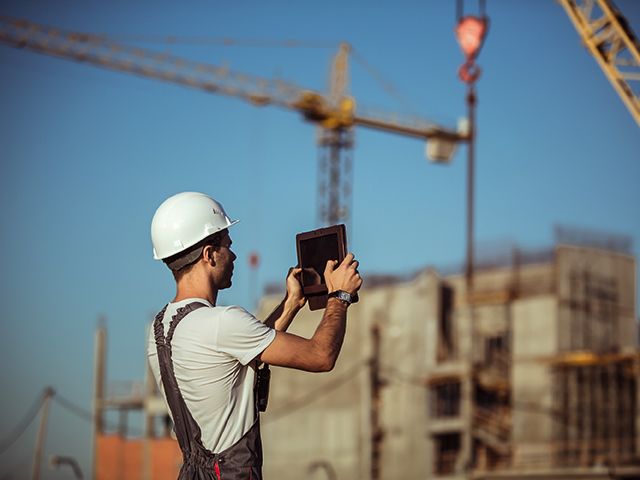 A low bar to clear
While the real estate management segment seems to be well aware of the benefits of proptech, the construction industry still has a long way to go. “Building Information Modelling”, a technology allowing to create virtual 3D models of a building that could be used at every stage of their lifecycle, has long been touted as a game-changer. However, few companies are actually ready to adopt it. High implementation costs seem to be the biggest barrier. That is why a number of processes that could be done automatically are still performed manually, which causes chaos and delays. Instead of using their expertise where it is needed, general contractors spend their days circulating documents and blueprints around the construction site and making sure their subcontractors aren’t making easily preventable mistakes by using outdated documentation.
A technological overhaul is desperately needed in the construction business and the bar is not set very high. When asked about the new technologies being developed today – including drones, VR, laser scanners, 3D printing, and BIM – most experts agree that the industry urgently needs three things: “quality control apps, document management apps and prefabricates. Two of these solutions we are introducing to the market right now,” says Paweł Smolarek, director of new technologies of BauApp, a Warsaw-based mobile app company for the construction industry.
Despite economic indicators being as high as they are now, construction firms are wary of an impending downturn. Their margins are now record-low and as many as 60 percent of them point to the labor market as a major barrier to further development. With constantly growing costs, they are increasingly aware that efficiency is the right way to make their business more competitive.
While competition has forced many companies in the West to invest in technology long ago, Central European ones have thus far relied on their conventional resources and practices. “What is considered standard in the US will only make its way to Central European construction industry in a few years because it is simply too complicated and expensive. That’s where the idea for BauApp came from: it’s an app that facilitates information flow and lowers costs,” claims Adam Dalnoki, CEO of BauApp. The app has already been tested on the Hungarian market for two years and in February 2020, it made its way into the Polish market.
What’s in store?
Experts agree that there is still a big market for more proptech solutions and that seeing real estate as a structure of just bricks and mortar will become a thing of the past. “The way modern office buildings have been changing can undoubtedly be put down to the technological revolution. Digital marketing, a growing application market and automation mean that the complexity of tech infrastructure in buildings will continue to grow,” Trzósło adds.
And while Poland may not be at the forefront of adapting expensive technologies such as BIM, local start-up scene will continue to deliver clever and oftentimes ground-breaking solutions for real estate that increase their value. “In Poland, we are seeing a growing number of diverse smart solutions that aim to enhance the building’s occupant experience and as a result, improve the project’s image and market position. There is no doubt that there is more to come for the sector from this technological revolution,” he concludes.