



POLAND FITS THE EUROPEAN ECOLOGICAL PATHWAY?
15:08
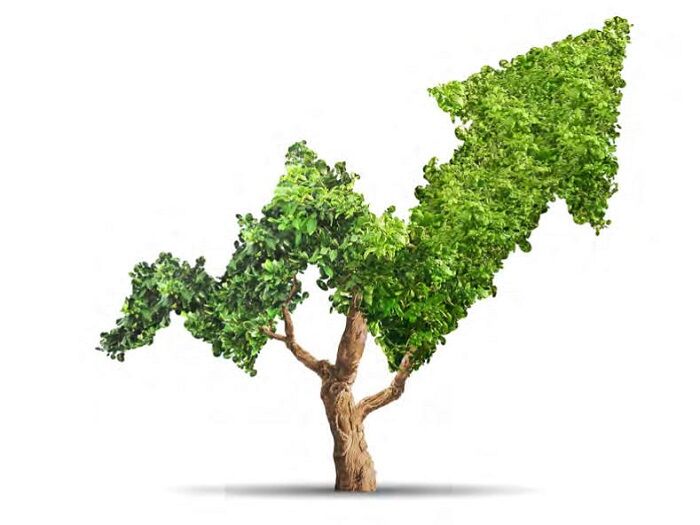
EU Commission proposes the transformation of the EU economy and society to meet climate ambitions. A leap forward from its post-WWII free-market coal and steel economy to a green and digital economy social model. What could possibly go wrong?
The EU Green Deal is the first such comprehensive strategy of the EU when it comes to environmental protection and counteracting climate change. The latest child of the strategy is a package of directives, called “Fit for 55” (FF55), which covers almost every branch of the economy. Thanks to it, the entire EU is to reduce greenhouse gas emissions by 55% by 2030 and become completely neutral to the climate by 2050. This is important because the climate is changing in every region of the Earth, and the related consequences are more and more severe. According to the supporters of the EU Green Deal: Earth does not belong to man, but man belongs to Earth. It is therefore essential to undertake urgent, unprecedented measures, and some of them — such as the continuous rise in sea levels — are practically irreversible within at least several centuries. The IPCC report “Climate Change 2021: the Physical Science Basis” emphasizes that the remedy consists of determined and ambitious actions aimed at the reduction of emissions of carbon dioxide and other greenhouse gases. In 2019, the concentration of CO2 in the atmosphere was higher than ever in at least 2 million years. The highest concentrations in 800,000 years for methane and nitrous oxide have been recorded. Man has warmed the climate at a rate unprecedented in at least the last 2,000 years, including the 1.1°C rise in recent years compared to the period of 1850-1900 — and over the last 40 years, each subsequent decade has been warmer than the previous one. Environmentalism proponents study the interdependencies between humans and nature and their impact on the quality of human life and the prospects of the human population’s survival, diagnosing that radical action is needed, otherwise, we will face a climatic Armageddon.
HARD FACTS
Environmentalism enthusiasts refuse to discuss with politicians, economists — showing the hard facts and claiming that the climate is simply something you do not discuss with, saying if you really think that the environment is less important than the economy, try holding your breath while you earn your money. Even if they are right, they show a holistic mindset that glorifies the tightening of regulations and business criteria. The program for climate fight has no alternatives, they say. The effects announced by its creators — in the name of the fight for the climate, everything must be more expensive — are, in their opinion, worth accepting, because it will save our future. Thus, the question about priorities arises. Should they be given to people and their needs, realized in the framework of a market economy? Or should the climate take precedence over the needs? These are questions that are also discussed in Poland. Traditionally, the leftwing is in favor of environmentalists’ plans, conservatives downplay and deny the problem, and liberalism believers wonder how much the proposed solutions will cost and whether the cost-benefit ratio is adequate.
In Poland, there are ongoing actions to “green” the economy. Among the interesting projects that already fit into the idea of the European Green Deal are public air quality monitoring and forecasting systems, mobile waste processing lines that help avoid human contact with hazardous substances, and modern electric urban vehicles. The government focuses on the 2021-2027 perspective, under which it declares support for greening the economy with new elements, including funds for researching green technologies and supporting environmental assessments, environmental footprint, and product life cycle. “Scale-up green” development programs for startups, also promoting EU Environmental Technology Verification, constitute an objective verification of the environmental impact of the developed technologies or strengthening the green competencies of enterprise staff, for example in the field of eco-design.
HIGH COSTS?
It turns out that the economic costs of switching to a green economy can be high. For European societies, FF55 assumes certain changes as well, including road, air, sea, and construction transport in the emissions trading system (ETS). Economics says when it’s free to pollute, you get more pollution. But when there’s a price to pay, the industry will have an incentive to find other, “greener” solutions. Even if the essence of the ETS system is that there is an additional burden, the purpose of which is to "punish" the user of the wrong technology for using it, an attempt to modify business behavior towards eco-and energy-saving is not financially neutral. It doesn’t have to be effective at all. For example, it is currently not possible to build an electric passenger plane. Therefore, the introduction of ETS to air transport will result in an increase in ticket prices and transport costs. Also, the thermal modernization of buildings will consume huge amounts of money. Burdening the road transport with ETS will mean an overall increase in prices as well as a decrease in wages of the purchasing power. Environmentalists will not be upset by the dramatic deterioration of the competitiveness of the economy, because they assume that many factors affect people’s standard of living, including the condition of the natural environment, public services, or increasing redistribution, not just economic growth. Kate Raworth, in her “Doughnut Economics: Seven Ways to Think Like a 21st-Century Economist,” ponders on how to bring about coexistence between two extremes: global environmental possibilities on the one hand and the living requirements of humanity on the other, determined by basic human rights, declaring that we should start to be satisfied with what we have and give up the fetishization of economic growth. Conclusion: cooling consumerism could save the climate.
Businesses don’t want that, though, nevertheless, it is evident that the leftist environmentalist movement has a monopoly in the debate on climate. This is not the only possibility. We do not have to pursue the degrowth vision — self-limitation, stopping the development. It is worth noting that capitalism can also deal with the problem of climate. It faced other human problems. Technologies, being the effects of capitalism, are tools that have transformed our planet’s resources to meet social needs. For example, 20th-century irrigation technologies were based on spraying water on a cultivated field, which of course consumed a lot of water per unit of food produced. Modern technologies irrigate more economically and more precisely. Perhaps, in the future, capitalism will be able to solve the problem of climate change or even reverse it? The question is whether, if we choose degrowth, it will help or hinder.
Climate change knows no borders. The EU can tighten its belt, but it is not alone on Earth. If countries on other continents do not take similar actions, the efforts of the EU societies will be useless. Hence, the results of pro-climate actions are uncertain, difficult to measure, and, without any doubt, greatly delayed in time. For now, the FF55 is a battle for ideas. When it comes to implementing them, it may turn out that not all of them are ideologists. When Poles learn how much more they might have to pay for electricity and heating, they will rebel against any political authority. Many individuals are doing what they can to provide for their families. Whereas, real success can only come if there is a change in our societies, politics, and technologies…


