15:33 13 October 2026
Polish companies go global: brands, technology and new markets
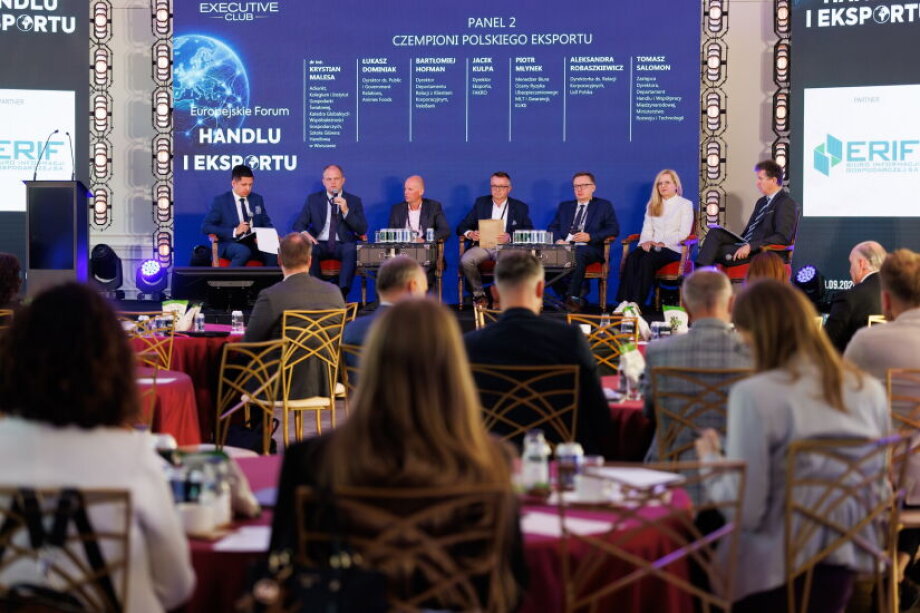










On 29 September 2026, Mała Wieś Palace hosted the 6th edition of the European Trade and Export Forum, organized by Executive Club. The event brought together business leaders, public administration representatives, institutions supporting entrepreneurs and experts to discuss the opportunities and challenges facing Polish companies on international markets.
The discussions focused on how Polish businesses can move beyond competing primarily on cost and build strong brands, technological advantages and lasting international presence. Speakers emphasized that successful expansion requires much more than a competitive product: companies need a thorough understanding of local markets, appropriate financing, organizational readiness and the patience to build long-term relationships.
The opening address by Kamil Wyszkowski, Country Representative and Executive Director of UN Global Compact Network Poland, focused on the impact of climate change on global trade and logistics. Rising temperatures, water shortages and extreme weather events are increasingly affecting infrastructure, production and supply chains. For businesses, this means that resilience, energy availability and the carbon footprint of products are becoming important elements of competitiveness and risk management.
A key discussion, “From a Local Brand to a Global Player,” explored the transformation of Polish exports and strategies for establishing a lasting presence abroad. Participants highlighted the growing importance of local market knowledge and the need to adapt not only products, but also business models and sales structures. Acquisitions, local offices and logistics infrastructure can provide companies with faster access to new markets and customers.
The Forum also addressed export financing, business risk and the security of international transactions. Experts stressed that companies entering new markets need to look beyond their immediate business partners and understand the wider network of ownership, suppliers and customers. Effective due diligence and continuous monitoring are becoming increasingly important in a rapidly changing geopolitical environment.
Another major theme was the security of infrastructure and supply chains. The war in Ukraine, the pandemic and growing geopolitical tensions have demonstrated how quickly local disruptions can affect businesses around the world. In Poland, particular attention was paid to the resilience of the transport and logistics sector, critical infrastructure and growing cyber threats. The increasing use of AI, including autonomous AI agents, is creating new opportunities for logistics and industry while also opening new areas of vulnerability.
The final panel, organized by event partner Lidl Polska, focused on equal pay and transparency in remuneration. Speakers discussed how new regulatory requirements can become an opportunity to introduce clearer salary structures, strengthen employee development and build more transparent organisations.
The 6th European Trade and Export Forum demonstrated that the future of Polish exports depends not only on entering new markets, but also on building resilient supply chains, investing in technology and developing strong Polish brands with global potential. Long-term strategic thinking, market diversification and close cooperation between business, public institutions and organizations supporting international expansion will be crucial to achieving this ambition.
The Forum concluded with the Lidl Fair Pay Gala, dedicated to transparent and equitable remuneration practices and effective people management.
Visit: executiveclub.pl/en/european-trade-and-export-forum/
(Press Materials)