



Roads are not enough
02:23
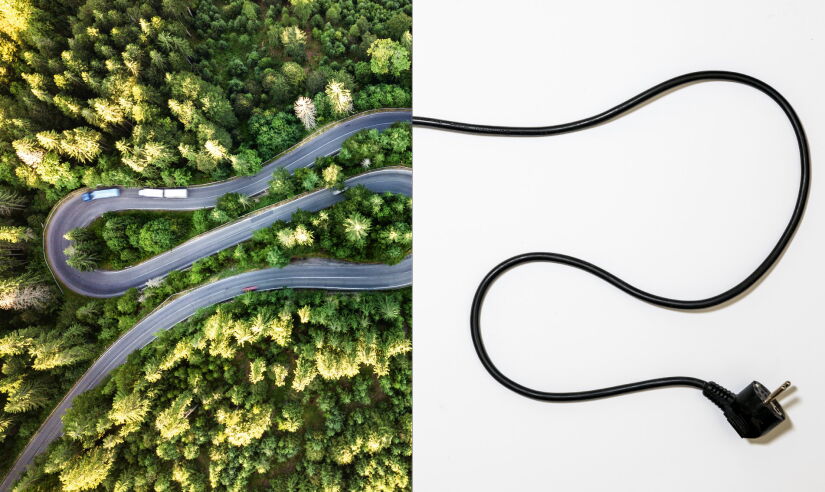
For the past few decades Poland has focused on its motorways in a bid to catch up with the rest of the world. Post-WWII, the focus of the communist government was reconstruction, including housing, factories, railways, power generation and basic road construction. Once reconstruction had reached an acceptable level, the PRL began focusing on motorways, when capital was available.
The Central Administration of Public Roads and GDDP (the predecessor of today’s GDDKiA) in the PRL faced a different reality than that of the capitalist world during their time in power. Poland had very low car ownership from the 1950s through the 1970s, with rail being the backbone of freight, moving coal, steel, machinery and other bulk goods. International trade, such as it was, was much smaller and more controlled; therefore, it made less sense to spend scarce economic resources improving or building a seldom used network of roads.
Motorways were, and are, extremely expensive to build and maintain without modern road-building equipment, asphalt technologies, or bridge and construction machinery. These technologies required capital the PRL did not have. Priorities were set, and motorways were far down on the list.
As a member of the Warsaw Pact Poland, an ally of the Soviet Union, was critical to moving troops and supplies east to west. Poland was, in the imagination of Cold War warriors, the main battlefield of any conventional conflict between the Soviets and America. Soviet planners and the PRL prioritized railways over road infrastructure.
But as the PRL faded into history, Poland saw the need for high-capacity roads as the economy shifted toward private cars, international trucking, foreign investment, logistics and integration with Western Europe. Poland’s 2004 accession into the EU adjusted priorities. The A2 Berlin–Poznań–Łódź–Warsaw corridor became the arterial connection to new markets and Western investment opportunities.
The challenge, post-PRL, was to connect national economies within CEE to the West. Decades later, the CEE looked to integrate regional economies, modernize rail and electricity networks, decarbonize energy systems, expand intermodal transport and prepare infrastructure for new sources of demand.
Growth and achievements
Poland’s high-speed road network has expanded dramatically, from 720 km in 2004 to more than 5,590 km today, or roughly 70% of the planned 7,980 km system. Since 2020, major projects have connected key cities and borders, including the S7 between Warsaw and Kraków, the S17/S19 through eastern Poland, Via Baltica to Lithuania, and the S3 from Świnoujście to the Czech border. Other recent additions include the S6 along the Baltic coast and the A2 east of Warsaw. Future investment will focus less on building an entirely new network and more on closing remaining gaps, adding new corridors, improving metropolitan bypasses and completing difficult sections in mountainous and northeastern regions.
Economic and logistics significance
In 2024, Polish-registered haulers generated 368 billion ton-kilometers of road freight, the highest figure in the EU and almost 20% of all EU road freight activity, according to the EC. Germany, with 291 billion ton-kilometers, and Spain, with 272 billion, ranked second and third, respectively. This is therefore an indication that Poland is building roads not just for domestic traffic, but for improving the infrastructure used by the EU’s largest road-freight industry.
With these new roadways, Poland improves access between Germany and central and eastern Poland; the industrial regions of Upper and Lower Silesia and European markets; Baltic ports and their southern hinterlands; Warsaw and the country's regional cities; Poland and the Baltic states; Poland and Czechia/Slovakia; and Poland and Ukraine.
Another indicator of the importance of these roads is the logistics-property market. Warehouse and logistics stock reached approximately 36.6 million m² at the end of 2025, according to CBRE. Poland has now become one of Europe’s key distribution and industrial-logistics markets, fed in large part by a modern motorway/expressway network.
EU funding has been crucial
The modernization of Poland is not only a product of hard work and a race to catch up, but also the result of the European Union’s direct investment in Poland’s future. Since joining the EU, European support has financed around 980 km of motorways, 2,930 km of expressways and 1,300 km of reconstructed roads, which is probably why you can’t seem to get where you want to go because of all the road construction.
Under the 2007-2013 Infrastructure and Environment Program, roughly €10.37 billion was allocated to 51 GDDKiA projects, followed by another €9.87 billion in the 2014-2020 period, which supported more than 2,088 km of national roads.
Looking ahead, GDDKiA plans to allocate PLN 17.3 billion under the FEnIKS program, which started in 2021 and will extend into 2027. More than PLN 13.5 billion has already been contracted as of mid-2026. In addition, Poland has secured around €438 million through the Connecting Europe Facility for projects including cross-border links with Ukraine and Slovakia.
Future spending
The largest national road program in Polish history, with roughly 2,500 km of additional roadway projects, is part of the Government Program for National Road Construction to 2030. The investment envelope for this project is approximately PLN 294.4 billion.
While this may sound like an extension of current projects, and it is, it also changes the character of investment going forward. Difficult or missing links in infrastructure, metropolitan bypasses, widening overloaded motorways, strengthening roads for heavy vehicles, tunnels through mountainous sections and improving cross-border corridors will be the main focus going forward. So, if you thought your commute was a problem before, you ain’t seen nothing yet.Travel may snarl, but unfurl that lip it’s all for Poland’s benefit.
CEE comparison
In comparing Poland to the rest of CEE, or even to its western neighbors, statistics can be deceiving. The Hungarian Central Statistical Office puts Hungary and Poland at about the same mileage when it comes to motorways at 1,851 km for Poland and 1,871 km for Hungary. Poland is therefore well ahead of Czechia, Romania and Slovakia, but nowhere near Germany (13,210 km). However, Poland has more than 3,600 additional kilometers of expressways, many of them dual-carriageway, grade-separated long-distance roads, which are excluded from the motorway statistics.
Germany and some Western European countries have substantially denser, more mature motorway networks, with the highest motorway densities in Europe being in Germany and the Netherlands. Regardless, Poland is catching up extremely fast, like a Mercedes driver on the A2.
Weaknesses in kind
In August of this year, Donald Tusk announced that his government was proposing legislation that would, according to polskieradio, “radically accelerate the process of preparing and carrying out key infrastructure projects that have a direct impact on Poland’s defense, security and economy.”
The Baltic port of Gdynia is breaking records with natural gas imports as well as consumer goods. Trade is improving, but there are geopolitical threats that make infrastructure projects existential. This is why Poland plans to fast-track a broad range of strategic infrastructure projects including not just roads but ports, rail, energy production and airports. Plans include Gdynia’s port and ferry terminal, Świnoujście and Gdynia’s outer ports, cargo and rail infrastructure in Gdańsk and improved rail connections between the Baltic ports, Warsaw, Wrocław and Upper Silesia.
While the country has made major progress in roads and logistics, its power grid may become an increasingly important constraint on future growth. According to BGK, only around 31% of Poland’s electricity production came from zero-emission sources in 2024, compared with about 70% across the EU, while transmission capacity may need to increase by 50–100% by 2040. Poland’s electricity interconnection rate is also low, at 4.3% compared with an EU average of 26.4%. With electricity demand expected to rise as manufacturing, data centers and other energy-intensive investments expand, insufficient grid capacity could become as significant a barrier to investment as poor transport links once were.
Financing
Financing that next phase may prove more difficult than financing the first. BGK’s Capital Investment in CEE: Opportunities for Local and Global Investors argues that infrastructure needs across the region remain enormous even as the traditional sources of funding that supported CEE’s first wave of modernization come under increasing pressure. As the report puts it, “Infrastructure demand in the region remains structurally high, but financing capacity is declining.”
That makes the challenge not simply one of finding more money, but of developing deeper and more durable sources of capital. CEE remains more reliant than Western Europe on banks, public institutions and government financing, while pension funds, insurers and other institutional investors play a much smaller role. As BGK observes, “the issue is not only the amount of capital, but also its quality and structure.” Bank lending and public programs can finance investment, but they do not necessarily provide the same large, recurring pools of long-duration capital available in markets with stronger pension and insurance sectors.


