



SANCTIONS ON RUSSIA MAY DIRECTLY AFFECT UP TO 10% OF POLISH SMES
10:35
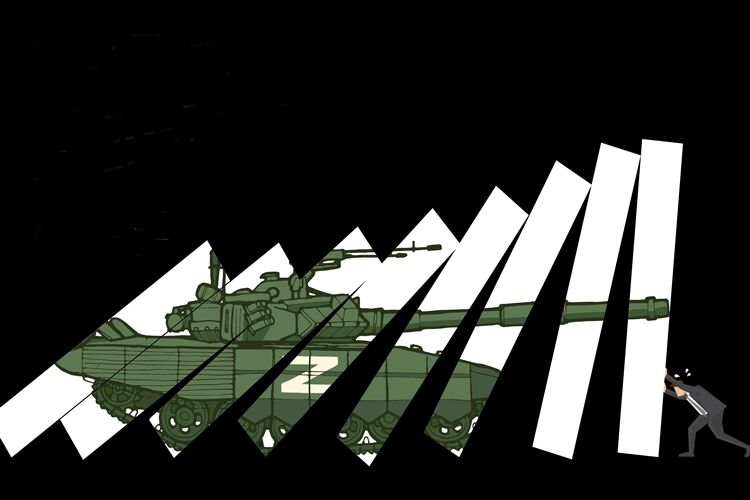
WBJ: How serious can the repercussions of the sanctions imposed on Russia and Belarus be for Polish companies?
Piotr Soroczyński: Polish enterprises will have problems for many reasons. The most obvious and immediate consequences are associated with a formal ban on the export of strategic goods and deep difficulties in making payments. But that's just the beginning of all dominoes. More and more countries are also deciding to significantly limit imports — Poland is also following this path. There are further counter-sanctions imposed by Russia, which will also hinder the activities of Polish companies. Another serious threat to companies is the seizure of property, trademarks and patents of Western companies.
In addition to these formal sanctions, Polish entrepreneurs will also be hit by the progressing significant deterioration in the financial situation of households and companies in Russia. It will be due to declines in sales and employment, but also a significant weakening of the ruble. Even if a given Polish company will be formally able to export its goods or services, Russian customers will be able to buy much less than before the war. Polish importers are also in trouble, due to possible import bans and problems in the settlement systems. To sum up, KIG estimates that the above-described problems will affect 8-10% of SMEs in Poland — both exporters and importers.
Poland is an important link in the global, and especially European, supply chain. It may turn out that the sanctions against Russia will result in lower demand for Polish products in and EU countries?
Yes, we have to take into account that the worldwide disruptions in supply chains will also affect Poland. From the point of view of Polish entrepreneurs, the most important problems here will be transport and logistics — due to connections with the Far East going through the territory of Russia — and the problems of global exporters selling to Russia for whom Polish entrepreneurs were suppliers of materials, components and finished products. I mean mainly companies from Germany, France and Italy. These problems may affect another 20-30% of companies in the Polish SME sector. Fortunately, these problems will be slightly less important for them compared to the problems that will be faced by entities directly involved in trade with Russia.
So it turns out that in total 40% of Polish companies may feel the sanctions backfiring. Which sectors and subsectors may therefore be particularly vulnerable to trade restrictions?
A good answer to this question is provided by the structure of Polish trade in goods with Russia. In 2021, of €286.4 billion of Polish imports, Russia accounted for €17.0 billion, i.e. 5.9%. These were mainly energy resources and fuels, metals, plastics and, to a much smaller extent, wood, food, machinery and equipment, and means of transport. At the same time, of €285.8 billion of Polish exports, Russia accounted for €8.0 billion, i.e. 2.8%. Our sales consisted mainly of machinery and equipment, including household appliances and audio-video devices, means of transport, base metals and products made of them, chemicals, plastics, food, furniture, construction and interior decoration products.
A particularly serious problem for Polish companies from the car and automotive parts industry as well as household appliances and electronics will be the overlapping of two important constraints: disturbances in the supply of delicate, small components and problems with the supply of steel products. The chemical industry will also have serious problems, for which the shortages of several key substances may block a wide range of production. Chemicals are important for food processing, agriculture and construction. The furniture industry will also experience severe problems. Problems with supply chains and sanctions will also be experienced by those entrepreneurs who worked to support exports to Russia by cooperating with industrialists from Germany, Italy and France.
How should Polish SMEs with exposure to the Russian market behave now, wait, or look to circumvent sanctions through third countries and try to keep trade partners from Russia, or maybe look for other markets in Asia or Africa?
All of these three moves are important. First of all, you have to take care of acquiring new recipients. For some companies, it will be possible, because they export to many markets and their goods are prepared in a fairly universal way. Some of the new customers will buy the goods for their own needs, but also for resale. In such a supply chain, certain batches of goods — let's say in a roundabout way — will also go to former recipients in Russia. It is important to emphasize in business contacts with Russian partners that today's decisions to break cooperation are caused by the war and not by hostility on our part. In the event of Russia's withdrawal from aggression, there will be a chance for a gradual restoration of trade contacts.
We mainly talk here about the negative consequences of the sanctions. Are there any sectors that can benefit from this situation?
Poland, like many countries of the EU and NATO, has found out that many risks are materializing. Risks that for decades were considered marginal. We have a lot to do in the field of security and defense — there will be very large expenses and very large tenders. Individual countries have also learned that they need to be better protected in the event of crisis situations. This crisis resilience must be realized on many levels. It must be implemented by the administration but also by enterprises and households. We need strategic stocks, places of refuge, strong civil defense, access to distributed energy sources, fuel depots and stockpiles of goods necessary to sustain the economy in times of crisis and disruptions in international supply chains. This means a serious package of expenses, tenders and investments, the beneficiaries of which may be Polish companies. And the last thing, the global supply chain is also moving toward European markets and additional suppliers located closer to recipients, from EU countries, will be needed. This is another opportunity for the Polish economy.


